Food import sampling requirements support provisional release where unseized consignments conform to standards and raw areca classification is unestab...
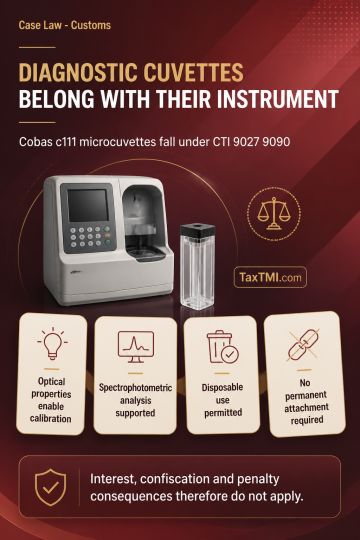
Diagnostic microcuvette classification follows sole-use analytical function, placing specialised disposable cuvettes with their analyser rather than g...
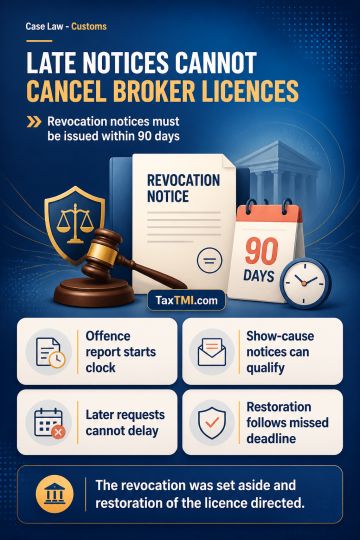
Customs Broker licensing proceedings fail when their offence-report foundation collapses and authorisation, advisory, and KYC duties remain unbreached...
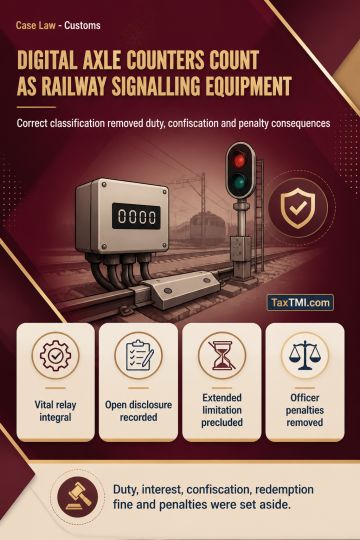
Tariff classification of Digital Axle Counters affirmed as electro-mechanical railway signalling equipment, eliminating duty, confiscation and penalty...
Amounts deposited during customs investigation under protest...
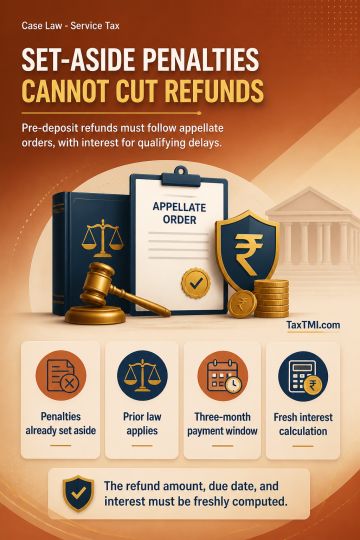
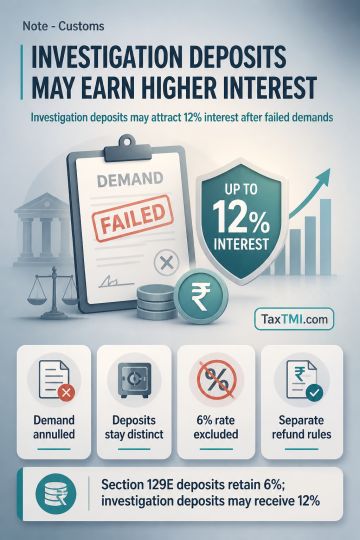
Investigation deposits refunded after failed customs demands fall outside the statutory appellate pre-deposit interest regime and may attract compensatory interest.
Contents
Summary
Note
Bookmark
Share
✓ Copied successfully !
Print
Print Options
For full text, please login
Login to TaxTMI
Verification Pending
The Email Id has not been verified. Click on the link we have sent on
Amounts deposited during customs investigation under protest retain their character as investigation deposits when the related duty demand is annulled, despite later appropriation. They are distinct from statutory appellate deposits under Section 129E; consequently, Section 129EE's notified 6% interest rate does not govern them. Where no statutory rate applies, entitlement to restitutionary interest depends on applicable binding judicial precedent. Jurisdictional precedent supported 12% interest on the refundable investigation deposit, while confining the 6% rate to amounts actually deposited under Section 129E. Section 27's protest exception and Section 27A's delayed-refund framework require separate assessment according to the payment's legal character.
Amounts deposited during customs investigation under protest retain their character as investigation deposits when the related duty demand is annulled, despite later appropriation. They are distinct from statutory appellate deposits under Section 129E; consequently, Section 129EE's notified 6% interest rate does not govern them. Where no statutory rate applies, entitlement to restitutionary interest depends on applicable binding judicial precedent. Jurisdictional precedent supported 12% interest on the refundable investigation deposit, while confining the 6% rate to amounts actually deposited under Section 129E. Section 27's protest exception and Section 27A's delayed-refund framework require separate assessment according to the payment's legal character.
Note: It is a system-generated summary and is for quick reference only.
 TaxTMI
  TaxTMI
 of 4878