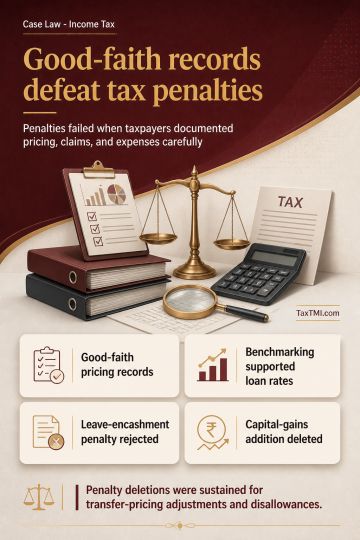
Inaccurate-particulars penalties fail where transfer-pricing documentation shows good faith and due diligence, and underlying capital-gains additions ...
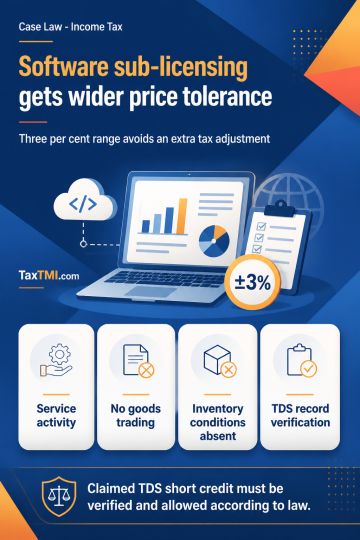
Transfer-pricing tolerance for software sub-licensing falls within the services range, eliminating the adjustment and requiring TDS-credit verificatio...
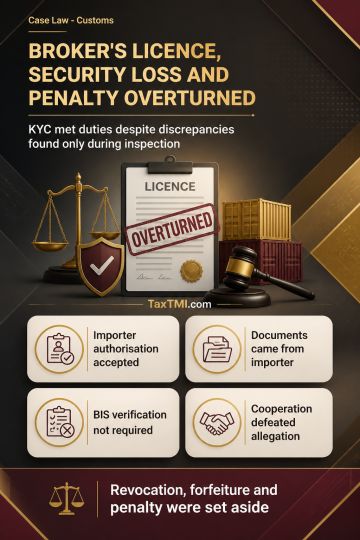
Customs Broker due diligence requires prescribed KYC, not detecting misdeclarations discoverable only through physical examination, defeating licence ...
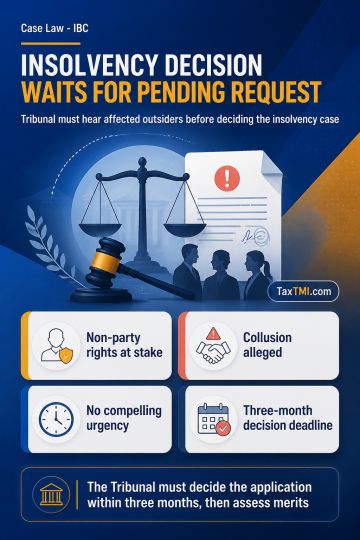
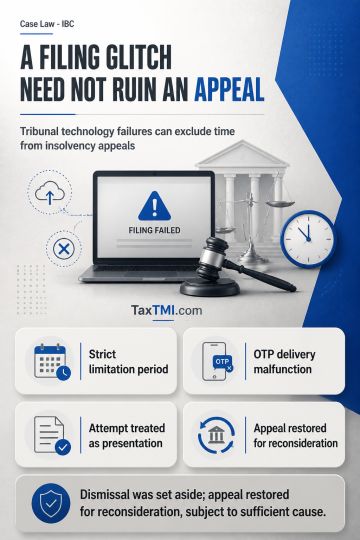
E-filing system failure permits exclusion of affected time in insolvency appeals, preventing tribunal technology defects from defeating timely filings...
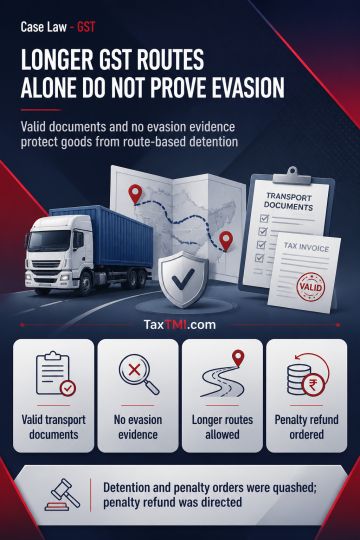
GST law does not require a transporter to declare or follow a particular route. Transporting goods by a longer route for logistical safety reasons, while carrying valid documents, does not establish mala fide intent to evade tax without material showing an intended diversion or other tax evasion. Route-based obligations under earlier VAT regimes do not apply under the GST Acts or Rules. Accordingly, detention of goods and penalty under section 129 were unsustainable solely because a longer route was used; the detention-penalty orders were quashed and refund of the penalty paid under protest was directed in accordance with law.
GST law does not require a transporter to declare or follow a particular route. Transporting goods by a longer route for logistical safety reasons, while carrying valid documents, does not establish mala fide intent to evade tax without material showing an intended diversion or other tax evasion. Route-based obligations under earlier VAT regimes do not apply under the GST Acts or Rules. Accordingly, detention of goods and penalty under section 129 were unsustainable solely because a longer route was used; the detention-penalty orders were quashed and refund of the penalty paid under protest was directed in accordance with law.
Note: It is a system-generated summary and is for quick reference only.
 TaxTMI
  TaxTMI
 of 4881