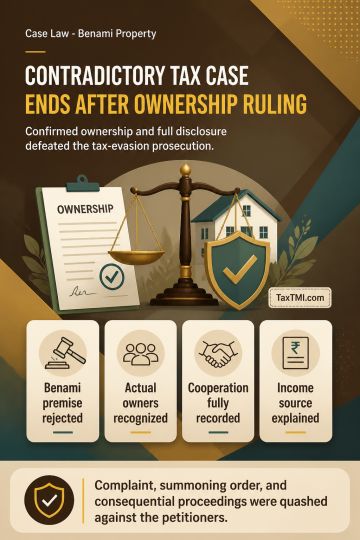
Final benami adjudication bars contradictory tax-evasion prosecution where settlement findings confirm full disclosure and cooperation without conceal...
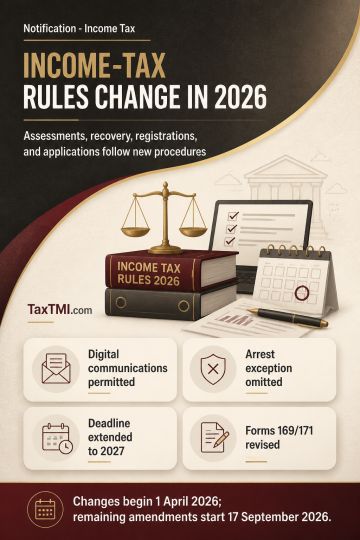
Faceless assessment and registration procedures are updated through electronic communication, revised recovery rules, extended deadlines, and replacem...
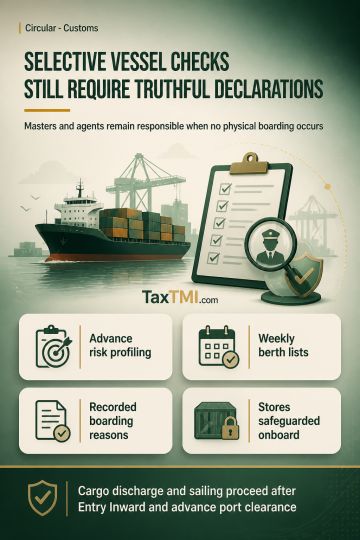
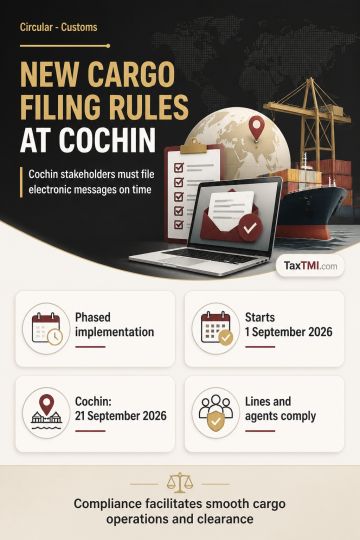
Risk-based selective vessel boarding requires accurate declarations and preserves master and agent liability where physical inspections are not select...
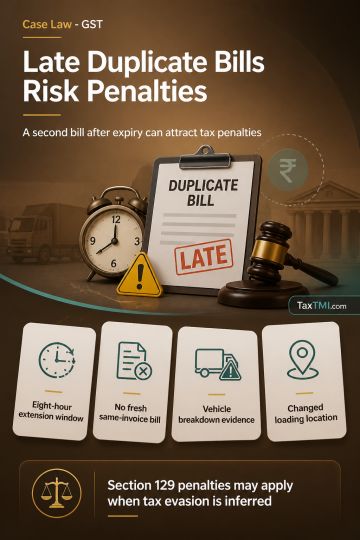
Rule 138 permits extension of an e-way bill only within eight hours after expiry and does not authorise a fresh e-way bill on the same invoice. A second bill generated after expiry may be treated as fraudulent where the claimed vehicle breakdown, repair, and subsequent goods movement lack reliable evidence. Unexplained delay, a different loading location, and modification of invoice details to generate another bill are indicators supporting an inference of intent to evade tax on a preponderance of probabilities. Such transportation may attract penalty under section 129.
Rule 138 permits extension of an e-way bill only within eight hours after expiry and does not authorise a fresh e-way bill on the same invoice. A second bill generated after expiry may be treated as fraudulent where the claimed vehicle breakdown, repair, and subsequent goods movement lack reliable evidence. Unexplained delay, a different loading location, and modification of invoice details to generate another bill are indicators supporting an inference of intent to evade tax on a preponderance of probabilities. Such transportation may attract penalty under section 129.
Note: It is a system-generated summary and is for quick reference only.
 TaxTMI
  TaxTMI
 of 4881