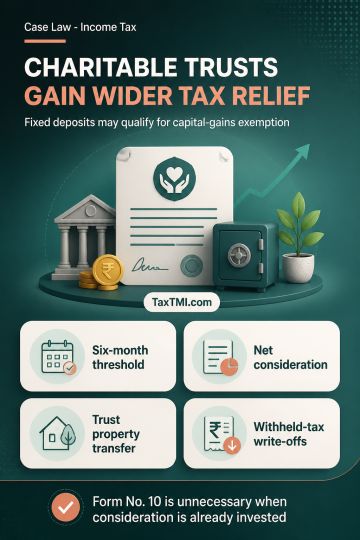
Capital-gains exemption for charitable trusts extends to qualifying fixed deposits, while unrecoverable TDS write-offs may constitute income applicati...
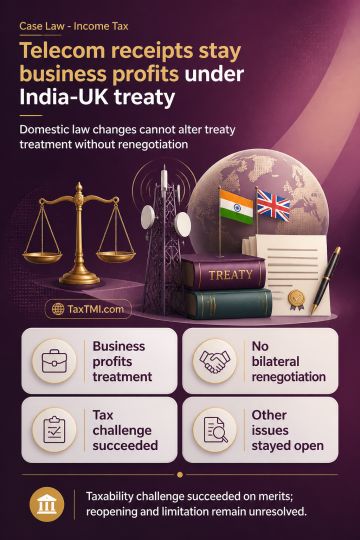
India-UK treaty characterisation of telecom-service receipts as business profits withstands unilateral domestic-law amendments for Indian tax purposes...
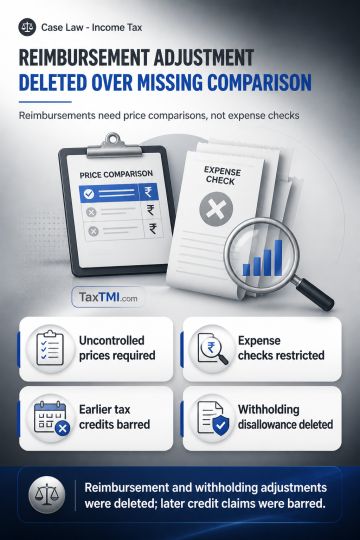
Transfer-pricing reimbursement adjustments require uncontrolled comparables and cannot become expense-genuineness reviews, resulting in deletion of th...
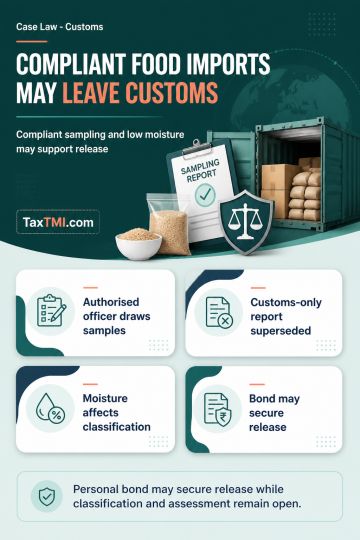
Food import sampling requirements support provisional release where unseized consignments conform to standards and raw areca classification is unestab...
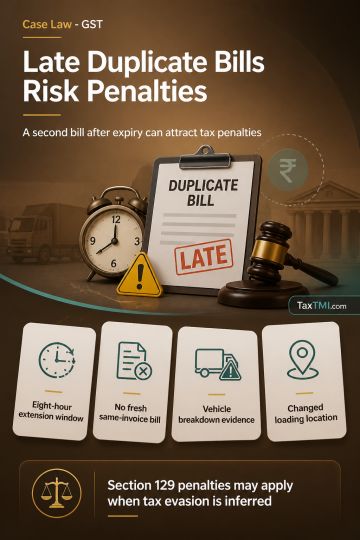
Rule 138 permits extension of an e-way bill only within eight hours after expiry and does not authorise a fresh e-way bill on the same invoice. A second bill generated after expiry may be treated as fraudulent where the claimed vehicle breakdown, repair, and subsequent goods movement lack reliable evidence. Unexplained delay, a different loading location, and modification of invoice details to generate another bill are indicators supporting an inference of intent to evade tax on a preponderance of probabilities. Such transportation may attract penalty under section 129.
Rule 138 permits extension of an e-way bill only within eight hours after expiry and does not authorise a fresh e-way bill on the same invoice. A second bill generated after expiry may be treated as fraudulent where the claimed vehicle breakdown, repair, and subsequent goods movement lack reliable evidence. Unexplained delay, a different loading location, and modification of invoice details to generate another bill are indicators supporting an inference of intent to evade tax on a preponderance of probabilities. Such transportation may attract penalty under section 129.
Note: It is a system-generated summary and is for quick reference only.
 TaxTMI
  TaxTMI
 of 4879