Settlement application eligibility requires a pending assessment when filed, preventing an extra prior-eligibility condition from blocking considerati...
Reassessment for unreturned property sales survives where transfer information, non-filing, and unsupported exemption claims establish a prima facie l...
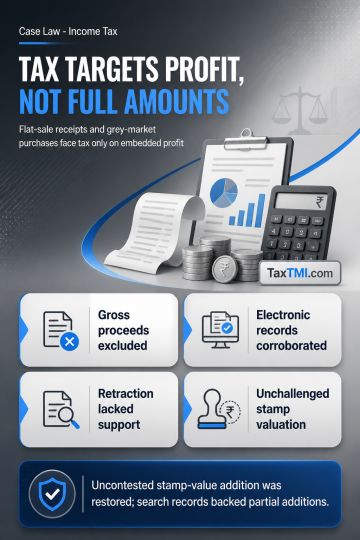
Profit-element taxation limits additions for unaccounted flat-sale receipts and grey-market purchases, while reliable search records support partial a...
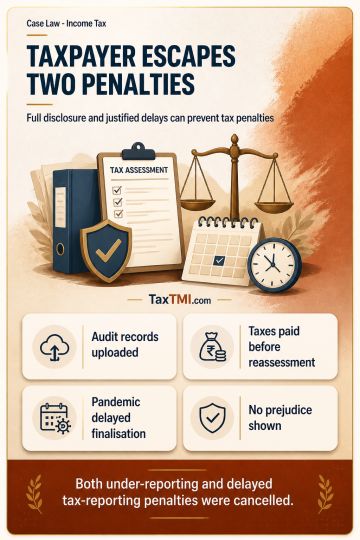
Section 271(1)(c) treats concealment of income and furnishing inaccurate particulars as distinct penal defaults, requiring clear identification and proof of the specific charge. Mere non-disclosure does not establish inaccurate particulars unless the return contains incorrect or false details. An explanation offered during assessment, not found false and used to quantify the addition, may support bona fides and prevent application of Explanation 1. Although tax penalties do not require proof of mens rea, an addition alone does not make penalty automatic. On these facts, the absence of a specific default and failure to satisfy Explanation 1 led to deletion of the penalty.
Section 271(1)(c) treats concealment of income and furnishing inaccurate particulars as distinct penal defaults, requiring clear identification and proof of the specific charge. Mere non-disclosure does not establish inaccurate particulars unless the return contains incorrect or false details. An explanation offered during assessment, not found false and used to quantify the addition, may support bona fides and prevent application of Explanation 1. Although tax penalties do not require proof of mens rea, an addition alone does not make penalty automatic. On these facts, the absence of a specific default and failure to satisfy Explanation 1 led to deletion of the penalty.
Note: It is a system-generated summary and is for quick reference only.
 TaxTMI
  TaxTMI
 of 4879