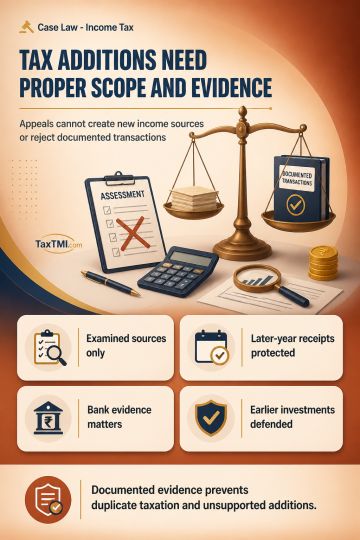
Appellate enhancement limits protect against new income sources, while documented credits and prior-year investments resist unexplained-income additio...
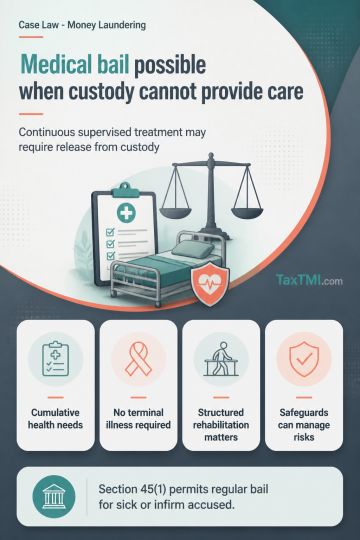
Section 45(1) of the PMLA permits regular bail for an accused who is sick or infirm. "Sick" and "infirm" operate disjunctively and do not require terminal illness, irreversible deterioration, imminent danger to life, surgery, or hospitalisation. Infirmity may result from substantial physical impairment without an immediate life-threatening condition. Medical needs must be assessed cumulatively, including coexisting conditions and the need for structured, continuous, supervised rehabilitation. Hospital referrals, diagnostic tests, or conservative management do not alone establish adequate care; the material issue is whether custody can effectively deliver the prescribed treatment. Bail safeguards may address risks to witnesses, evidence, investigation, and trial.
Section 45(1) of the PMLA permits regular bail for an accused who is sick or infirm. "Sick" and "infirm" operate disjunctively and do not require terminal illness, irreversible deterioration, imminent danger to life, surgery, or hospitalisation. Infirmity may result from substantial physical impairment without an immediate life-threatening condition. Medical needs must be assessed cumulatively, including coexisting conditions and the need for structured, continuous, supervised rehabilitation. Hospital referrals, diagnostic tests, or conservative management do not alone establish adequate care; the material issue is whether custody can effectively deliver the prescribed treatment. Bail safeguards may address risks to witnesses, evidence, investigation, and trial.
Note: It is a system-generated summary and is for quick reference only.
 TaxTMI
  TaxTMI
 of 4879