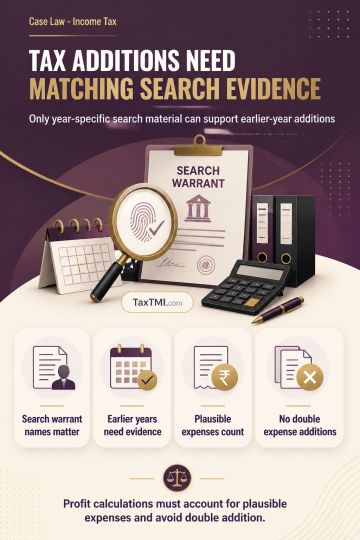
Section 153C requires person-specific search authority and year-specific incriminating material for unabated assessments while preventing unsupported ...
Equivalent-value attachment can reach pre-existing assets, but jointly owned property remains protected beyond the accused's attributable proceeds of ...
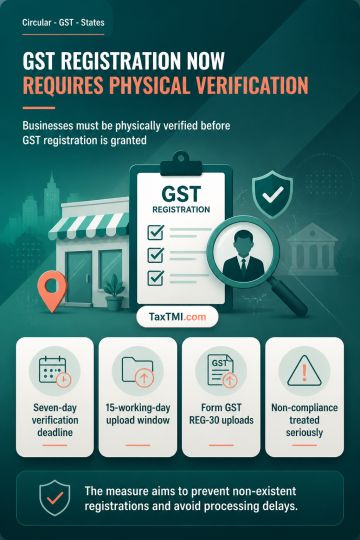
Pre-registration physical verification becomes mandatory to prevent non-existent business registrations and support timely GST registration processing...
Page of 4886
Press 'Enter' after typing page number.
841 to 860 of 97714 Results
❮
❯
❯❯
0 / 200
Expand Note
Add to Folder
No Folders have been created
+
Are you sure you want to delete "My most important" ?
Regular scrutiny assessment under section 143(3) requires the...
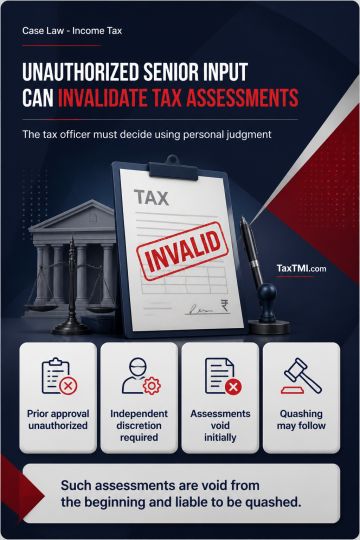
Independent assessment discretion: unauthorised superior-officer consultation can invalidate regular scrutiny assessments by displacing the Assessing Officer's own judgment.
Contents
Summary
Note
Bookmark
Share
✓ Copied successfully !
Print
Print Options
For full text, please login
Login to TaxTMI
Verification Pending
The Email Id has not been verified. Click on the link we have sent on
Regular scrutiny assessment under section 143(3) requires the Assessing Officer to exercise quasi-judicial discretion independently. Absent statutory authority, consultation with and prior approval from an Additional Commissioner during the assessment process constitutes unauthorised superior-officer participation and negates the Assessing Officer's independent application of mind. Such assessments are void ab initio and liable to be quashed. A superior officer may consult subordinates without displacing the superior officer's discretion, but subordinate consultation with a superior officer displaces the discretion vested exclusively in the Assessing Officer.
Regular scrutiny assessment under section 143(3) requires the Assessing Officer to exercise quasi-judicial discretion independently. Absent statutory authority, consultation with and prior approval from an Additional Commissioner during the assessment process constitutes unauthorised superior-officer participation and negates the Assessing Officer's independent application of mind. Such assessments are void ab initio and liable to be quashed. A superior officer may consult subordinates without displacing the superior officer's discretion, but subordinate consultation with a superior officer displaces the discretion vested exclusively in the Assessing Officer.
Note: It is a system-generated summary and is for quick reference only.
 TaxTMI
  TaxTMI
 of 4886