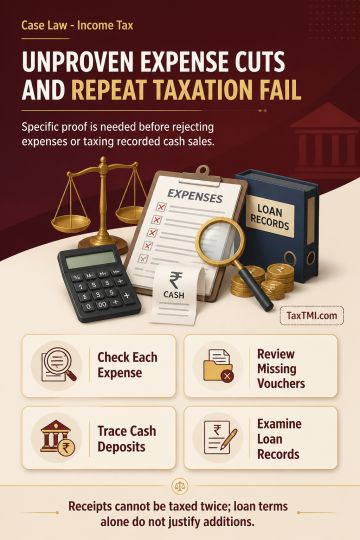
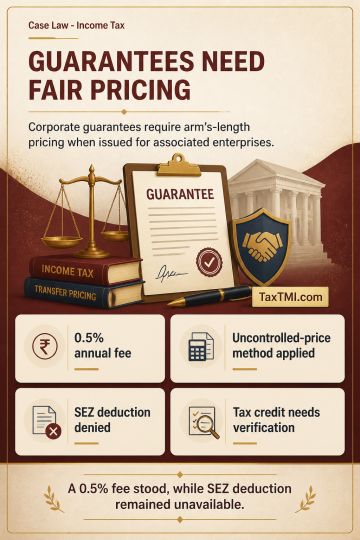
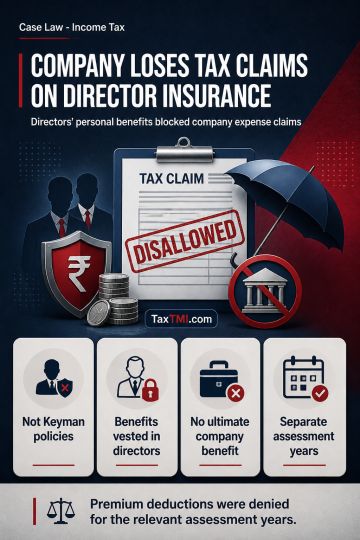
Capital-gains exemption for charitable trusts extends to qualifying fixed deposits, while unrecoverable TDS write-offs may constitute income applicati...
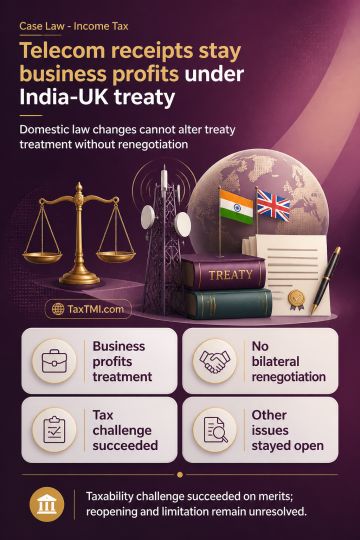
India-UK treaty characterisation of telecom-service receipts as business profits withstands unilateral domestic-law amendments for Indian tax purposes...
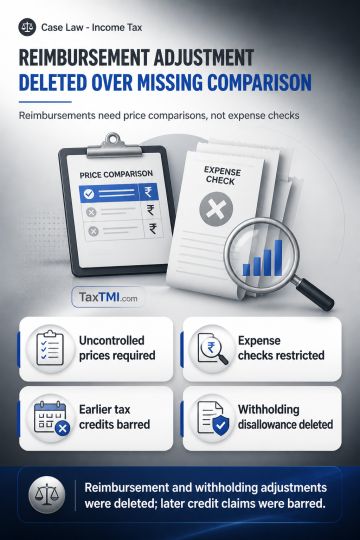
Transfer-pricing reimbursement adjustments require uncontrolled comparables and cannot become expense-genuineness reviews, resulting in deletion of th...
Food import sampling requirements support provisional release where unseized consignments conform to standards and raw areca classification is unestab...
Regular scrutiny assessment under section 143(3) requires the...
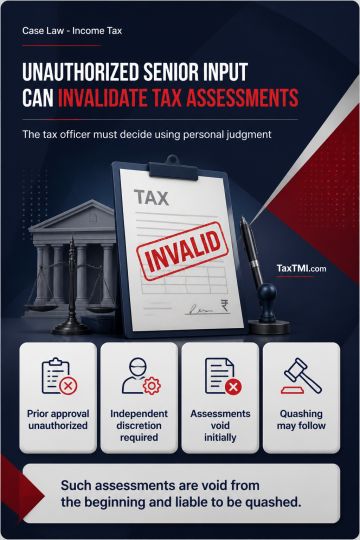
Independent assessment discretion: unauthorised superior-officer consultation can invalidate regular scrutiny assessments by displacing the Assessing Officer's own judgment.
Contents
Summary
Note
Bookmark
Share
✓ Copied successfully !
Print
Print Options
For full text, please login
Login to TaxTMI
Verification Pending
The Email Id has not been verified. Click on the link we have sent on
Regular scrutiny assessment under section 143(3) requires the Assessing Officer to exercise quasi-judicial discretion independently. Absent statutory authority, consultation with and prior approval from an Additional Commissioner during the assessment process constitutes unauthorised superior-officer participation and negates the Assessing Officer's independent application of mind. Such assessments are void ab initio and liable to be quashed. A superior officer may consult subordinates without displacing the superior officer's discretion, but subordinate consultation with a superior officer displaces the discretion vested exclusively in the Assessing Officer.
Regular scrutiny assessment under section 143(3) requires the Assessing Officer to exercise quasi-judicial discretion independently. Absent statutory authority, consultation with and prior approval from an Additional Commissioner during the assessment process constitutes unauthorised superior-officer participation and negates the Assessing Officer's independent application of mind. Such assessments are void ab initio and liable to be quashed. A superior officer may consult subordinates without displacing the superior officer's discretion, but subordinate consultation with a superior officer displaces the discretion vested exclusively in the Assessing Officer.
Note: It is a system-generated summary and is for quick reference only.
 TaxTMI
  TaxTMI
 of 4879