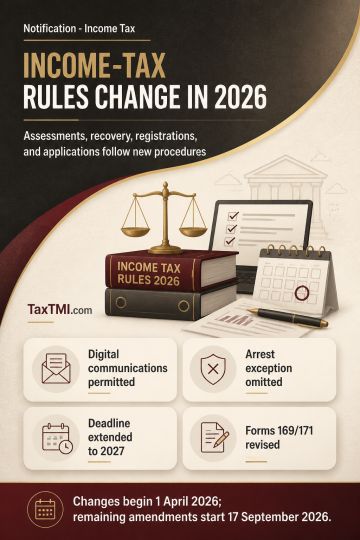
Faceless assessment and registration procedures are updated through electronic communication, revised recovery rules, extended deadlines, and replacem...
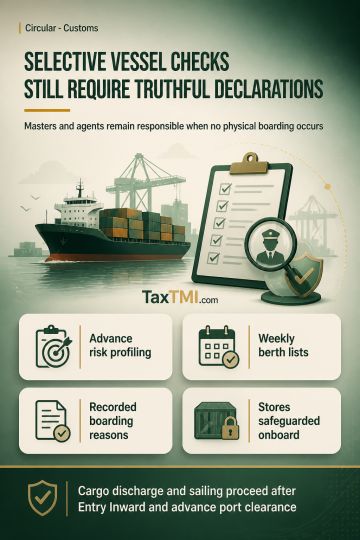
Risk-based selective vessel boarding requires accurate declarations and preserves master and agent liability where physical inspections are not select...
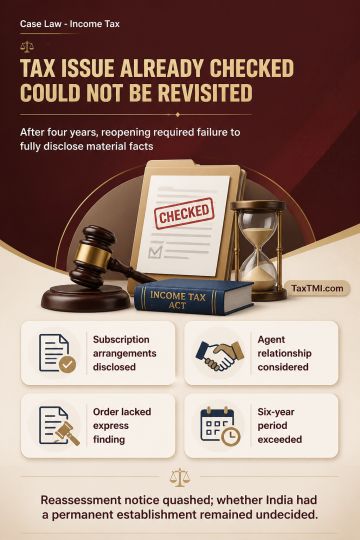
Permanent-establishment reassessment cannot revisit scrutinised disclosures; extended reopening fails without undisclosed material facts and within st...
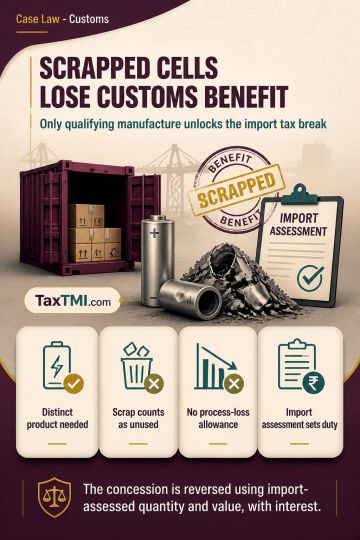
End-use based customs duty concession for imported lithium-ion cells applies only where the specified manufacture results in a new product with a distinct nature, character, use or name. Cells damaged, rejected or scrapped during battery or battery-pack assembly or testing, and subsequently sold as scrap, do not satisfy that end-use. In the absence of a separate allowance for process loss or wastage, they are treated as unutilised or defective goods under the IGCR Rules. The concession must therefore be reversed through payment of the differential duty otherwise payable at import, with applicable interest. Duty is calculated on the quantity and value assessed at import, without regard to the scrap sale value.
End-use based customs duty concession for imported lithium-ion cells applies only where the specified manufacture results in a new product with a distinct nature, character, use or name. Cells damaged, rejected or scrapped during battery or battery-pack assembly or testing, and subsequently sold as scrap, do not satisfy that end-use. In the absence of a separate allowance for process loss or wastage, they are treated as unutilised or defective goods under the IGCR Rules. The concession must therefore be reversed through payment of the differential duty otherwise payable at import, with applicable interest. Duty is calculated on the quantity and value assessed at import, without regard to the scrap sale value.
Note: It is a system-generated summary and is for quick reference only.
 TaxTMI
  TaxTMI
 of 4879