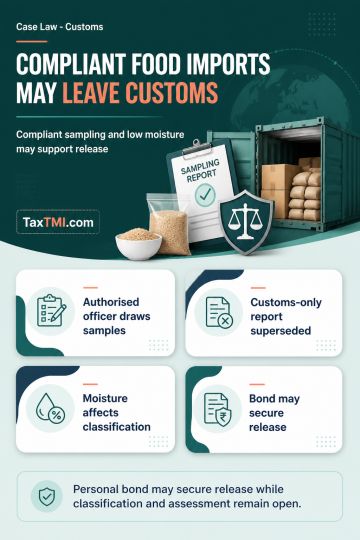
Food import sampling requirements support provisional release where unseized consignments conform to standards and raw areca classification is unestab...
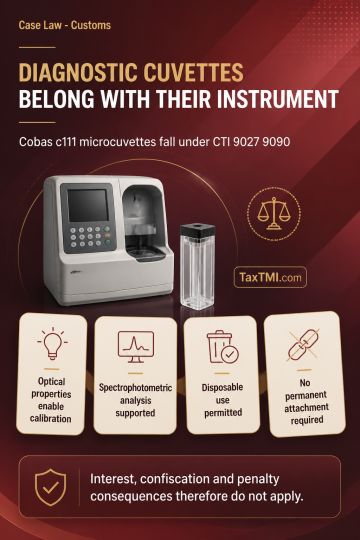
Diagnostic microcuvette classification follows sole-use analytical function, placing specialised disposable cuvettes with their analyser rather than g...
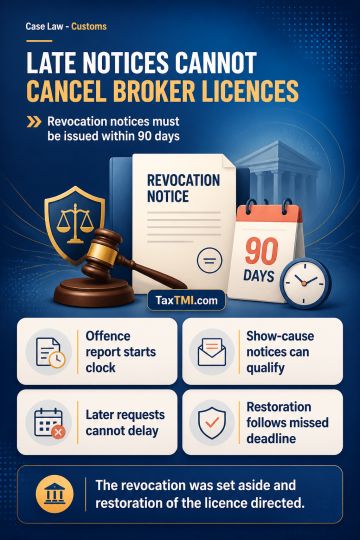
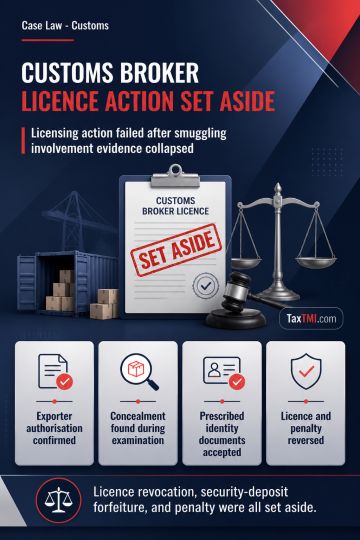
Customs Broker licensing proceedings fail when their offence-report foundation collapses and authorisation, advisory, and KYC duties remain unbreached...
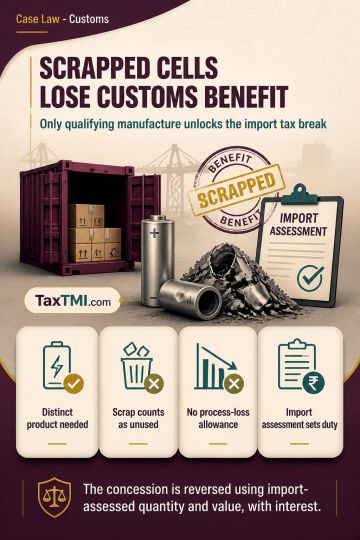
End-use based customs duty concession for imported lithium-ion cells applies only where the specified manufacture results in a new product with a distinct nature, character, use or name. Cells damaged, rejected or scrapped during battery or battery-pack assembly or testing, and subsequently sold as scrap, do not satisfy that end-use. In the absence of a separate allowance for process loss or wastage, they are treated as unutilised or defective goods under the IGCR Rules. The concession must therefore be reversed through payment of the differential duty otherwise payable at import, with applicable interest. Duty is calculated on the quantity and value assessed at import, without regard to the scrap sale value.
End-use based customs duty concession for imported lithium-ion cells applies only where the specified manufacture results in a new product with a distinct nature, character, use or name. Cells damaged, rejected or scrapped during battery or battery-pack assembly or testing, and subsequently sold as scrap, do not satisfy that end-use. In the absence of a separate allowance for process loss or wastage, they are treated as unutilised or defective goods under the IGCR Rules. The concession must therefore be reversed through payment of the differential duty otherwise payable at import, with applicable interest. Duty is calculated on the quantity and value assessed at import, without regard to the scrap sale value.
Note: It is a system-generated summary and is for quick reference only.
 TaxTMI
  TaxTMI
 of 4881