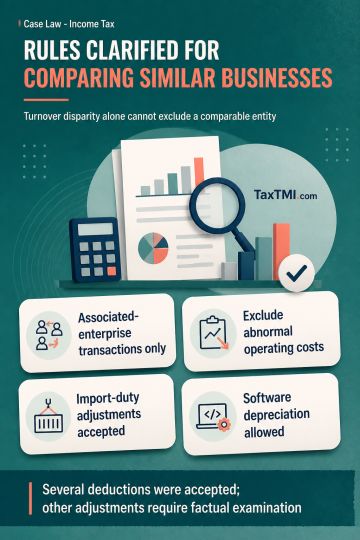
Transfer-pricing comparability requires material turnover effects; adjustments must cover only associated-enterprise transactions and exclude abnormal...
Commodity derivatives position limits adopt revised breach penalties, broad commodity criteria, and client open-position limits based on deliverable s...
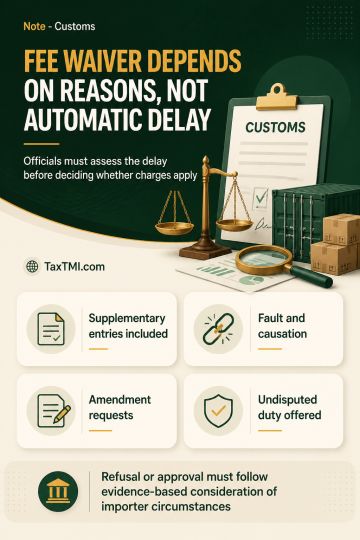
Late-presentation charges for a Bill of Entry arise only where the proper officer, after assessing the reasons for delay, is satisfied that no sufficient cause exists. Regulation 4(3) prescribes the charging framework and permits waiver where the reasons are satisfactory; automated calculation cannot replace this statutory assessment. For supplementary Bills of Entry covering excess cargo subsequently identified as part of a timely declared consignment, waiver depends on causation, importer fault, bona fide and prompt corrective action, amendment requests, and willingness to discharge undisputed duty. A legally sustainable refusal or grant of waiver requires a reasoned evaluation of evidence rather than mechanical reliance on delayed filing.
Late-presentation charges for a Bill of Entry arise only where the proper officer, after assessing the reasons for delay, is satisfied that no sufficient cause exists. Regulation 4(3) prescribes the charging framework and permits waiver where the reasons are satisfactory; automated calculation cannot replace this statutory assessment. For supplementary Bills of Entry covering excess cargo subsequently identified as part of a timely declared consignment, waiver depends on causation, importer fault, bona fide and prompt corrective action, amendment requests, and willingness to discharge undisputed duty. A legally sustainable refusal or grant of waiver requires a reasoned evaluation of evidence rather than mechanical reliance on delayed filing.
Note: It is a system-generated summary and is for quick reference only.
 TaxTMI
  TaxTMI
 of 4884