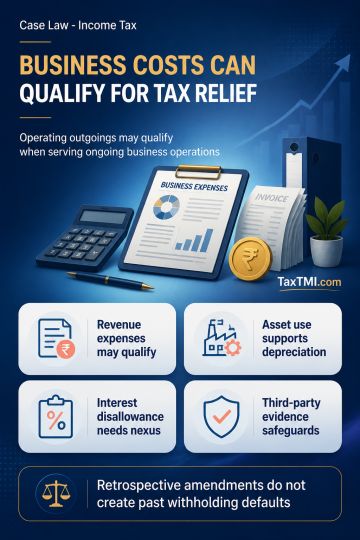
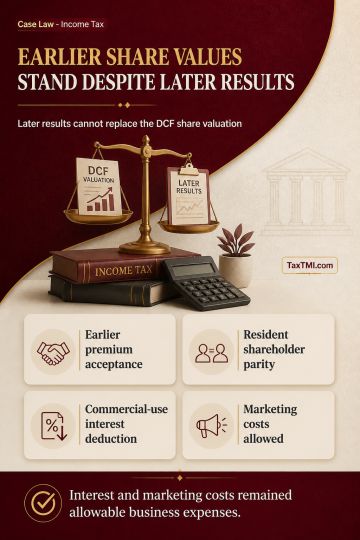
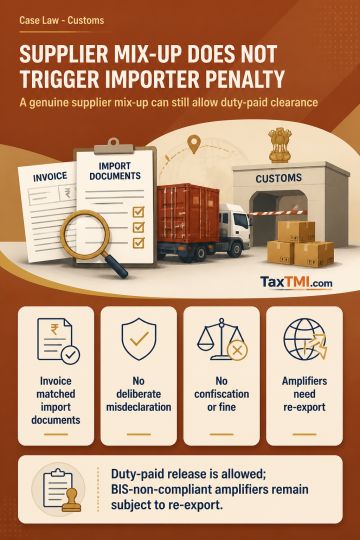
Business expenditure and depreciation rules allow operational outgoings while limiting disallowances for personal elements and unsupported third-party...
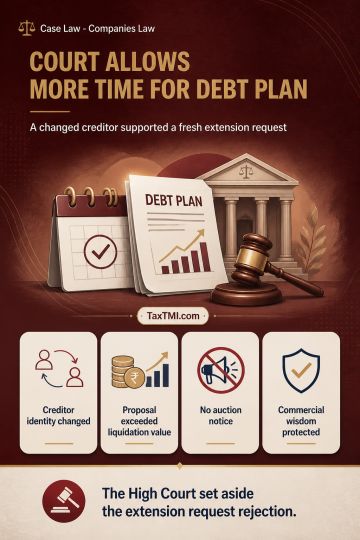
Compromise-and-arrangement extensions may accommodate debt assignment where creditor commercial judgment supports value maximisation and avoids proced...
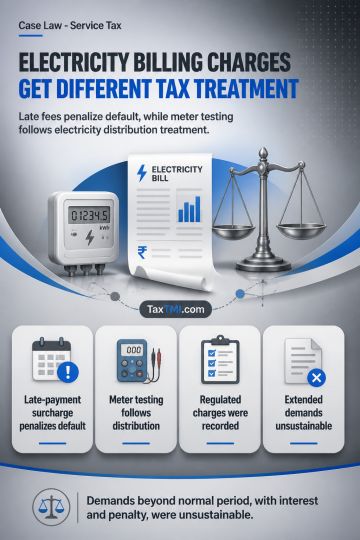
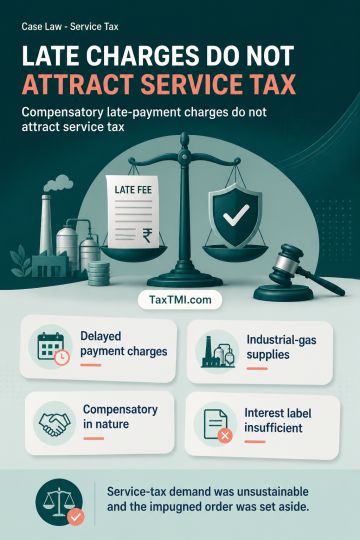
Delayed-payment surcharge is not taxable tolerance consideration where it penalises default, while meter testing follows electricity distribution trea...
Sufficient cause for delayed revenue income-tax appeals requires bona fides, due diligence and a credible explanation; otherwise limitation bars appea...
Inverted-duty-structure refunds remain available for unchanged-rate apparel supplies despite trader status and require tax-period-specific computation...
Page of 4881
Press 'Enter' after typing page number.
781 to 800 of 97618 Results
❮
❯
❯❯
0 / 200
Expand Note
Add to Folder
No Folders have been created
+
Are you sure you want to delete "My most important" ?
GST rate reductions on cinema admission tickets must be passed to consumers through a commensurate price reduction, even where State rules prescribe maximum ticket prices. A maximum-price cap does not prevent lower pricing. Retaining cum-tax ticket prices while increasing the base price, without cogent justification and without challenging the computation, constituted failure to pass on the tax benefit; cost and market factors were immaterial. Where ticket recipients cannot be identified, the profiteered amount, with interest, is payable in equal shares to the Central and State Consumer Welfare Funds. An anti-profiteering penalty cannot be imposed retrospectively where the penalty provision entered into force after the investigated period.
GST rate reductions on cinema admission tickets must be passed to consumers through a commensurate price reduction, even where State rules prescribe maximum ticket prices. A maximum-price cap does not prevent lower pricing. Retaining cum-tax ticket prices while increasing the base price, without cogent justification and without challenging the computation, constituted failure to pass on the tax benefit; cost and market factors were immaterial. Where ticket recipients cannot be identified, the profiteered amount, with interest, is payable in equal shares to the Central and State Consumer Welfare Funds. An anti-profiteering penalty cannot be imposed retrospectively where the penalty provision entered into force after the investigated period.
Note: It is a system-generated summary and is for quick reference only.
 TaxTMI
  TaxTMI
 of 4881