Pre-existing disputes over outcome-based professional fees can bar Section 9 insolvency proceedings where contractual entitlement requires investigati...
Corresponding scheduled offences preserve money-laundering jurisdiction despite repeal of the central corruption provision where conduct remains cover...
Concurrent anticipatory-bail jurisdiction permits applications before either forum, while secured evidence may negate custodial interrogation in GST e...
Page of 4881
Press 'Enter' after typing page number.
621 to 640 of 97618 Results
❮
❯
❯❯
0 / 200
Expand Note
Add to Folder
No Folders have been created
+
Are you sure you want to delete "My most important" ?
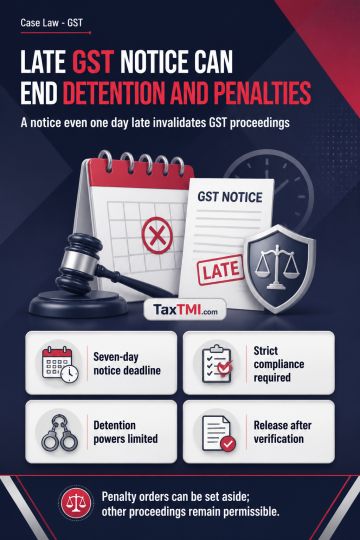
Mandatory seven-day period for passing a detention penalty order after service of notice under section 129(3) is binding because of the term "shall". A penalty order issued after that period violates the statutory time limit and vitiates the detention penalty proceedings. Such an order is void from inception and a nullity; an appellate order affirming it must also be set aside, with consequential relief.
Mandatory seven-day period for passing a detention penalty order after service of notice under section 129(3) is binding because of the term "shall". A penalty order issued after that period violates the statutory time limit and vitiates the detention penalty proceedings. Such an order is void from inception and a nullity; an appellate order affirming it must also be set aside, with consequential relief.
Note: It is a system-generated summary and is for quick reference only.
 TaxTMI
  TaxTMI
 of 4881