Coercive recovery during GST searches is restrained pending scrutiny, preserving normal business operations and requiring adherence to investigation g...
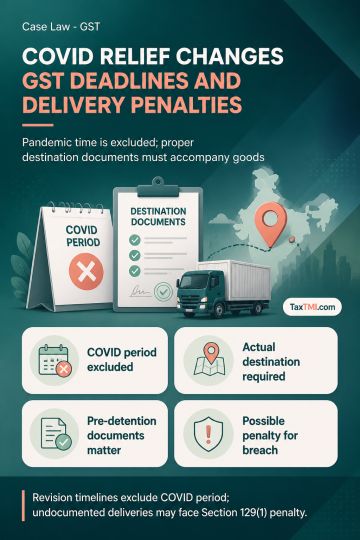
COVID-19 limitation exclusion and destination-specific e-way bills govern revisional timelines and penalties for undocumented third-party plywood deli...
Questions arising from miscellaneous application orders cannot challenge unaltered Tribunal findings, leaving the original order separately challengea...
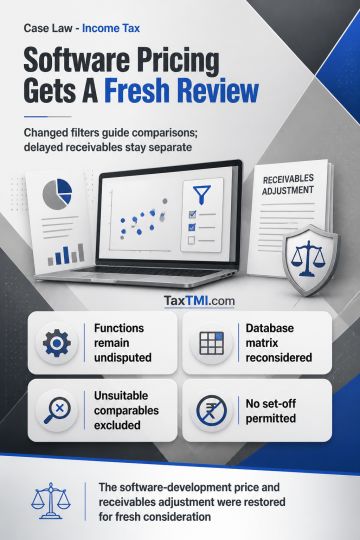
Transfer-pricing comparability filters require fresh arm's-length analysis, while delayed receivables need separate reconsideration with working-capit...
Page of 4879
Press 'Enter' after typing page number.
421 to 440 of 97567 Results
❮
❯
❯❯
0 / 200
Expand Note
Add to Folder
No Folders have been created
+
Are you sure you want to delete "My most important" ?
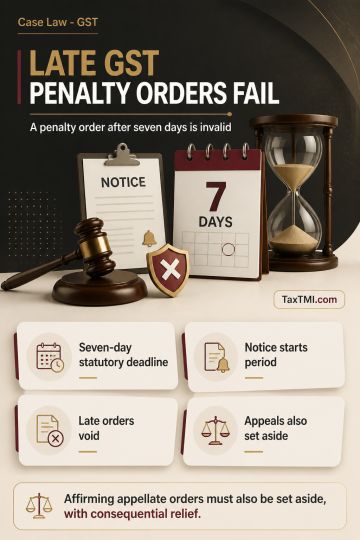
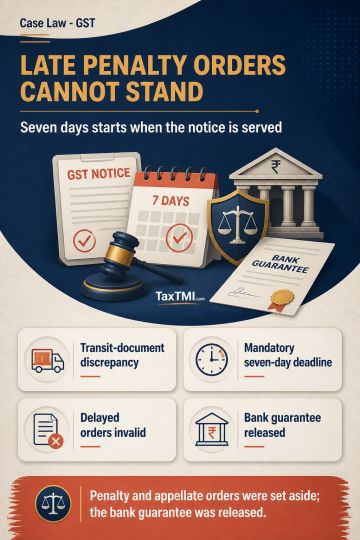
Mandatory seven-day period for passing a detention penalty order after service of notice under section 129(3) is binding because of the term "shall". A penalty order issued after that period violates the statutory time limit and vitiates the detention penalty proceedings. Such an order is void from inception and a nullity; an appellate order affirming it must also be set aside, with consequential relief.
Mandatory seven-day period for passing a detention penalty order after service of notice under section 129(3) is binding because of the term "shall". A penalty order issued after that period violates the statutory time limit and vitiates the detention penalty proceedings. Such an order is void from inception and a nullity; an appellate order affirming it must also be set aside, with consequential relief.
Note: It is a system-generated summary and is for quick reference only.
 TaxTMI
  TaxTMI
 of 4879