Capital-gains exemption for charitable trusts extends to qualifying fixed deposits, while unrecoverable TDS write-offs may constitute income applicati...
India-UK treaty characterisation of telecom-service receipts as business profits withstands unilateral domestic-law amendments for Indian tax purposes...
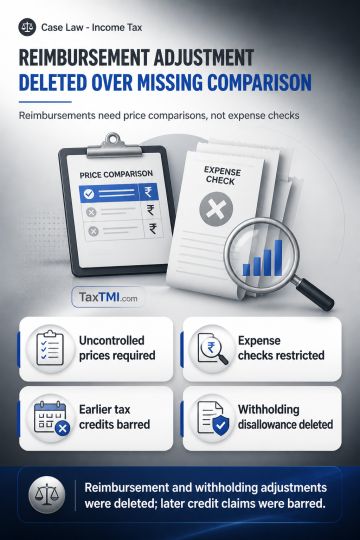
Transfer-pricing reimbursement adjustments require uncontrolled comparables and cannot become expense-genuineness reviews, resulting in deletion of th...
Page of 4881
Press 'Enter' after typing page number.
281 to 300 of 97618 Results
❮
❯
❯❯
0 / 200
Expand Note
Add to Folder
No Folders have been created
+
Are you sure you want to delete "My most important" ?
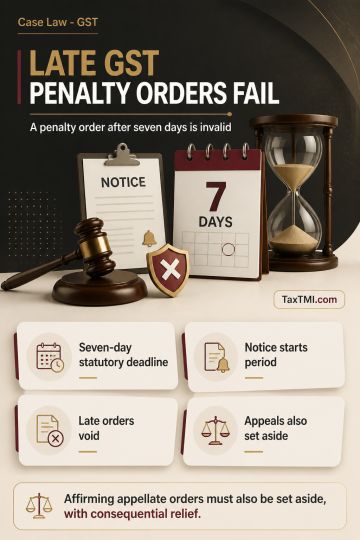
Mandatory seven-day period for passing a detention penalty order after service of notice under section 129(3) is binding because of the term "shall". A penalty order issued after that period violates the statutory time limit and vitiates the detention penalty proceedings. Such an order is void from inception and a nullity; an appellate order affirming it must also be set aside, with consequential relief.
Mandatory seven-day period for passing a detention penalty order after service of notice under section 129(3) is binding because of the term "shall". A penalty order issued after that period violates the statutory time limit and vitiates the detention penalty proceedings. Such an order is void from inception and a nullity; an appellate order affirming it must also be set aside, with consequential relief.
Note: It is a system-generated summary and is for quick reference only.
 TaxTMI
  TaxTMI
 of 4881