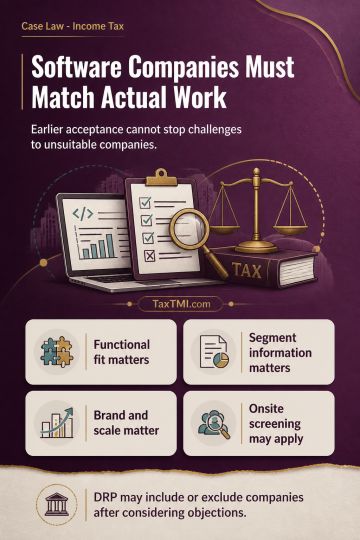
Transfer-pricing comparability permits fresh objections and filters where software service comparables are functionally unsuitable for arm's-length pr...
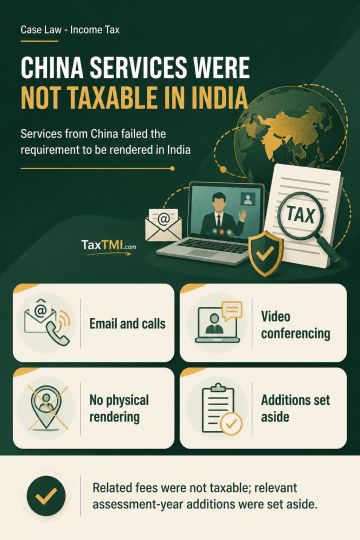
Territorial rendering requirement excludes China-based management and consultancy services from fees for technical services under the India-China DTAA...
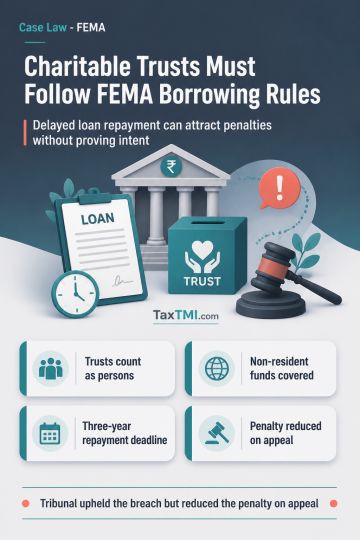
FEMA borrowing restrictions bind charitable trusts, and civil penalties apply without proving intent for delayed repayment of non-resident rupee loans...
COVID-19 limitation exclusion applies to judicial,...
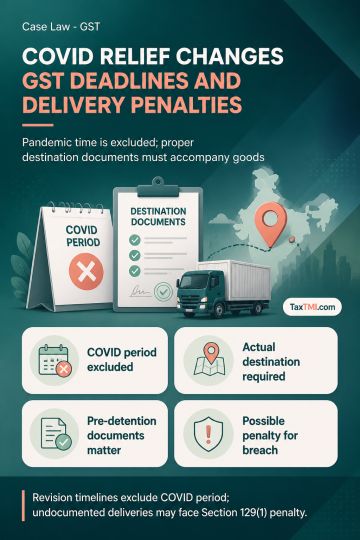
COVID-19 limitation exclusion and destination-specific e-way bills govern revisional timelines and penalties for undocumented third-party plywood deliveries.
Contents
Summary
Note
Bookmark
Share
✓ Copied successfully !
Print
Print Options
For full text, please login
Login to TaxTMI
Verification Pending
The Email Id has not been verified. Click on the link we have sent on
COVID-19 limitation exclusion applies to judicial, quasi-judicial and departmental proceedings, and must be excluded when calculating the period for exercising revisional powers where the statutory period overlaps that exclusion. For transport compliance, an e-way bill and tax invoice must cover the actual movement and destination of goods. Documents issued after detention do not cure the absence of destination-specific documentation at interception, particularly where no evidence supports a claimed technical glitch. Such undocumented third-party unloading may be treated as a wilful contravention intended to evade tax and may attract penalty under Section 129(1).
COVID-19 limitation exclusion applies to judicial, quasi-judicial and departmental proceedings, and must be excluded when calculating the period for exercising revisional powers where the statutory period overlaps that exclusion. For transport compliance, an e-way bill and tax invoice must cover the actual movement and destination of goods. Documents issued after detention do not cure the absence of destination-specific documentation at interception, particularly where no evidence supports a claimed technical glitch. Such undocumented third-party unloading may be treated as a wilful contravention intended to evade tax and may attract penalty under Section 129(1).
Note: It is a system-generated summary and is for quick reference only.
 TaxTMI
  TaxTMI
 of 4881