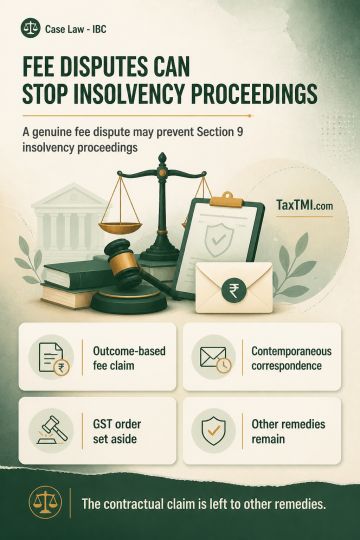
Pre-existing disputes over outcome-based professional fees can bar Section 9 insolvency proceedings where contractual entitlement requires investigati...
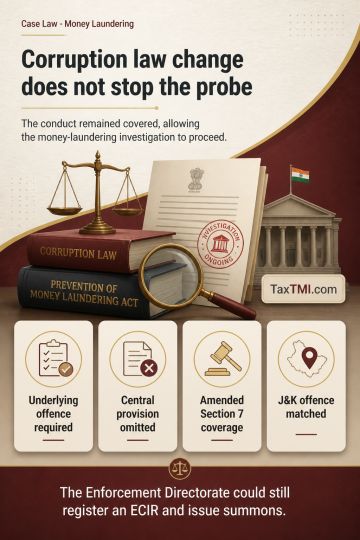
Corresponding scheduled offences preserve money-laundering jurisdiction despite repeal of the central corruption provision where conduct remains cover...
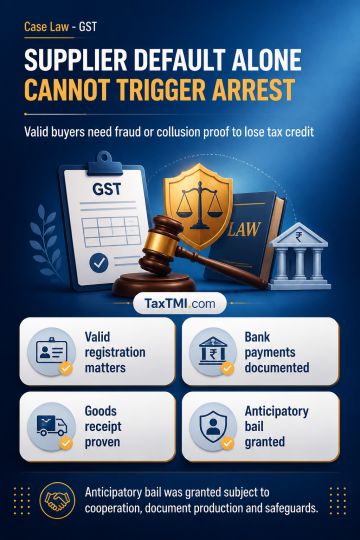
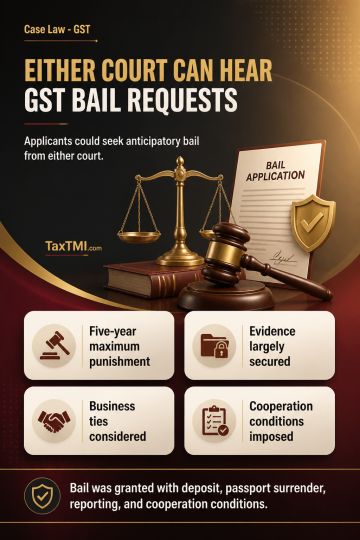
Concurrent anticipatory-bail jurisdiction permits applications before either forum, while secured evidence may negate custodial interrogation in GST e...
Page of 4881
Press 'Enter' after typing page number.
621 to 640 of 97618 Results
❮
❯
❯❯
0 / 200
Expand Note
Add to Folder
No Folders have been created
+
Are you sure you want to delete "My most important" ?
COVID-19 limitation exclusion applies to judicial,...
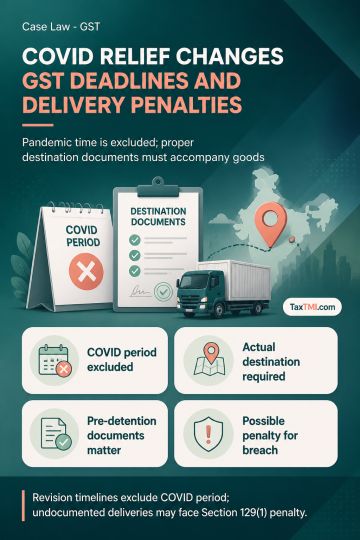
COVID-19 limitation exclusion and destination-specific e-way bills govern revisional timelines and penalties for undocumented third-party plywood deliveries.
Contents
Summary
Note
Bookmark
Share
✓ Copied successfully !
Print
Print Options
For full text, please login
Login to TaxTMI
Verification Pending
The Email Id has not been verified. Click on the link we have sent on
COVID-19 limitation exclusion applies to judicial, quasi-judicial and departmental proceedings, and must be excluded when calculating the period for exercising revisional powers where the statutory period overlaps that exclusion. For transport compliance, an e-way bill and tax invoice must cover the actual movement and destination of goods. Documents issued after detention do not cure the absence of destination-specific documentation at interception, particularly where no evidence supports a claimed technical glitch. Such undocumented third-party unloading may be treated as a wilful contravention intended to evade tax and may attract penalty under Section 129(1).
COVID-19 limitation exclusion applies to judicial, quasi-judicial and departmental proceedings, and must be excluded when calculating the period for exercising revisional powers where the statutory period overlaps that exclusion. For transport compliance, an e-way bill and tax invoice must cover the actual movement and destination of goods. Documents issued after detention do not cure the absence of destination-specific documentation at interception, particularly where no evidence supports a claimed technical glitch. Such undocumented third-party unloading may be treated as a wilful contravention intended to evade tax and may attract penalty under Section 129(1).
Note: It is a system-generated summary and is for quick reference only.
 TaxTMI
  TaxTMI
 of 4881