Mandatory textile export qualifiers distinguish flame-retardant fabrics from other listed fabrics for automated identification under the textiles ince...
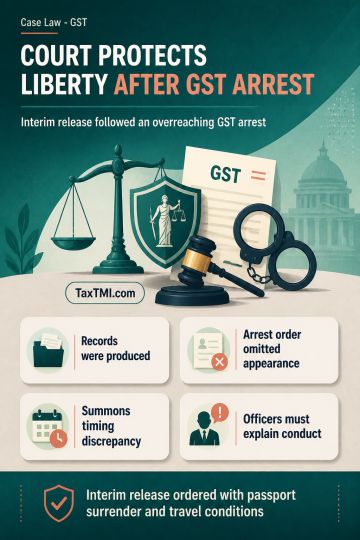
Personal liberty safeguards restrict arrest after court-directed GST appearance, requiring interim release where authorities overreach pending proceed...
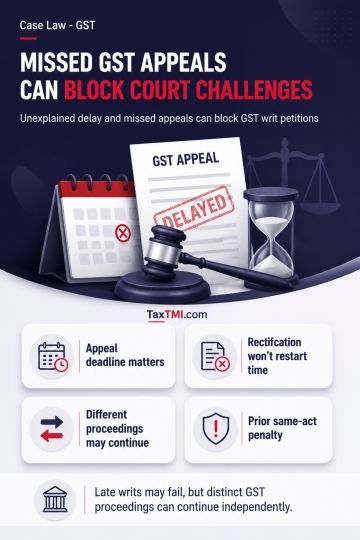
Alternative statutory remedy and delay bar GST writ challenges despite pending rectification, while distinct subject matter permits parallel proceedin...
COVID-19 limitation exclusion applies to judicial,...
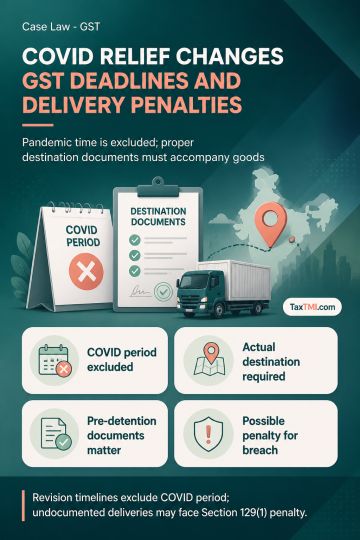
COVID-19 limitation exclusion and destination-specific e-way bills govern revisional timelines and penalties for undocumented third-party plywood deliveries.
Contents
Summary
Note
Bookmark
Share
✓ Copied successfully !
Print
Print Options
For full text, please login
Login to TaxTMI
Verification Pending
The Email Id has not been verified. Click on the link we have sent on
COVID-19 limitation exclusion applies to judicial, quasi-judicial and departmental proceedings, and must be excluded when calculating the period for exercising revisional powers where the statutory period overlaps that exclusion. For transport compliance, an e-way bill and tax invoice must cover the actual movement and destination of goods. Documents issued after detention do not cure the absence of destination-specific documentation at interception, particularly where no evidence supports a claimed technical glitch. Such undocumented third-party unloading may be treated as a wilful contravention intended to evade tax and may attract penalty under Section 129(1).
COVID-19 limitation exclusion applies to judicial, quasi-judicial and departmental proceedings, and must be excluded when calculating the period for exercising revisional powers where the statutory period overlaps that exclusion. For transport compliance, an e-way bill and tax invoice must cover the actual movement and destination of goods. Documents issued after detention do not cure the absence of destination-specific documentation at interception, particularly where no evidence supports a claimed technical glitch. Such undocumented third-party unloading may be treated as a wilful contravention intended to evade tax and may attract penalty under Section 129(1).
Note: It is a system-generated summary and is for quick reference only.
 TaxTMI
  TaxTMI
 of 4881