Strict construction of customs exemptions denied concession for brake components, while limitation restricted differential duty to timely Bills of Ent...
Way Leave Permissions cannot be retrospectively revived through insolvency plans, and affected infrastructure holders require safety review and hearin...
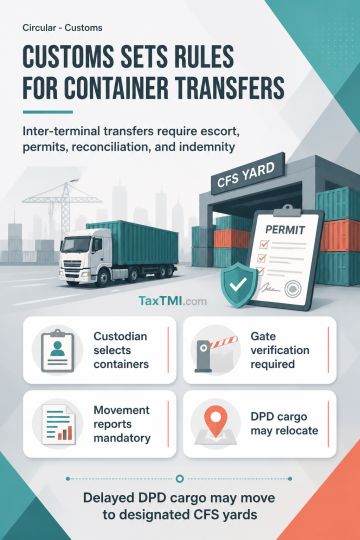
Inter-terminal container movement requires customs escort, permit reconciliation, and indemnity, while delayed DPD cargo may move to designated CFS ya...
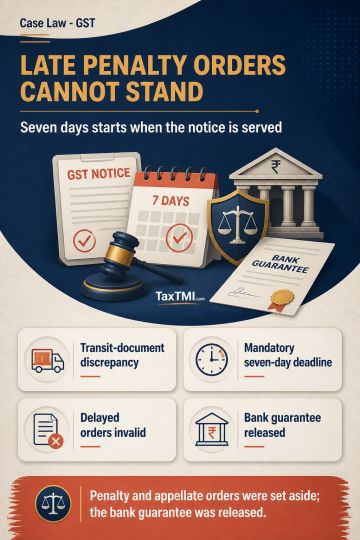
Section 129(3) of the CGST/KGST Act imposes a mandatory seven-day period, measured from service of notice, for issuing a detention-penalty order concerning a transit-document discrepancy. The term "shall" requires strict compliance because the provision authorises coercive detention and seizure; the absence of an express consequence for delay does not make the limit directory. An order passed after the prescribed period is illegal and without jurisdiction, with consequential setting aside of the penalty and appellate orders and release of the bank guarantee.
Section 129(3) of the CGST/KGST Act imposes a mandatory seven-day period, measured from service of notice, for issuing a detention-penalty order concerning a transit-document discrepancy. The term "shall" requires strict compliance because the provision authorises coercive detention and seizure; the absence of an express consequence for delay does not make the limit directory. An order passed after the prescribed period is illegal and without jurisdiction, with consequential setting aside of the penalty and appellate orders and release of the bank guarantee.
Note: It is a system-generated summary and is for quick reference only.
 TaxTMI
  TaxTMI
 of 4881