Settlement application eligibility requires a pending assessment when filed, preventing an extra prior-eligibility condition from blocking considerati...
Reassessment for unreturned property sales survives where transfer information, non-filing, and unsupported exemption claims establish a prima facie l...
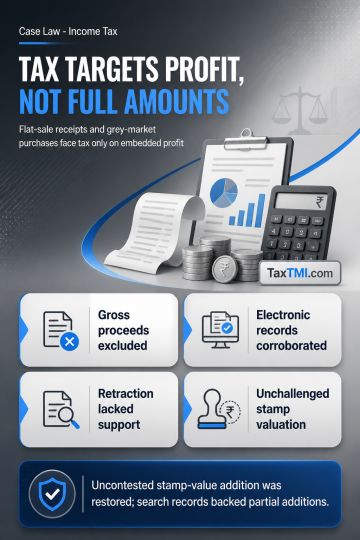
Profit-element taxation limits additions for unaccounted flat-sale receipts and grey-market purchases, while reliable search records support partial a...
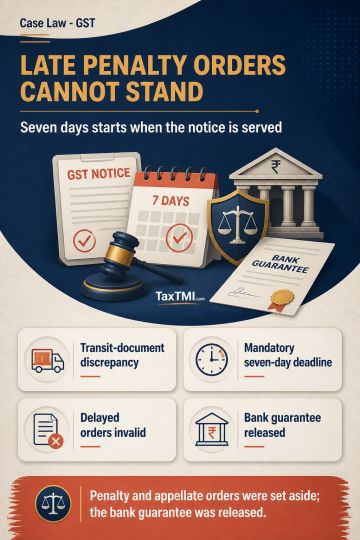
Section 129(3) of the CGST/KGST Act imposes a mandatory seven-day period, measured from service of notice, for issuing a detention-penalty order concerning a transit-document discrepancy. The term "shall" requires strict compliance because the provision authorises coercive detention and seizure; the absence of an express consequence for delay does not make the limit directory. An order passed after the prescribed period is illegal and without jurisdiction, with consequential setting aside of the penalty and appellate orders and release of the bank guarantee.
Section 129(3) of the CGST/KGST Act imposes a mandatory seven-day period, measured from service of notice, for issuing a detention-penalty order concerning a transit-document discrepancy. The term "shall" requires strict compliance because the provision authorises coercive detention and seizure; the absence of an express consequence for delay does not make the limit directory. An order passed after the prescribed period is illegal and without jurisdiction, with consequential setting aside of the penalty and appellate orders and release of the bank guarantee.
Note: It is a system-generated summary and is for quick reference only.
 TaxTMI
  TaxTMI
 of 4879