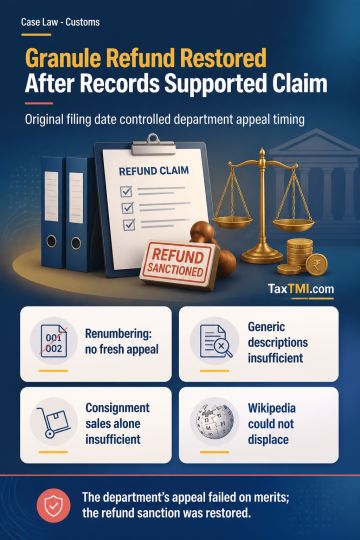
Departmental appeal limitation after call-book recall preserves original filing, while documented correlation supports SAD refund on imported granules...
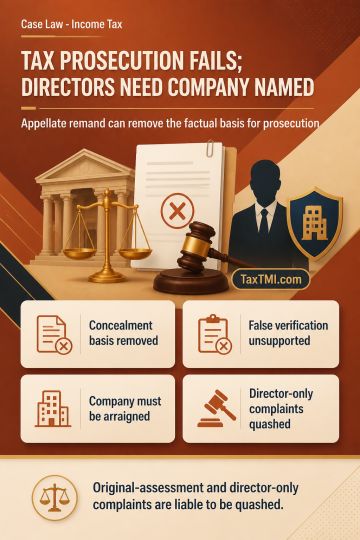
Income-tax prosecution fails when appellate remand removes its factual foundation; directors require company arraignment for vicarious criminal liabil...
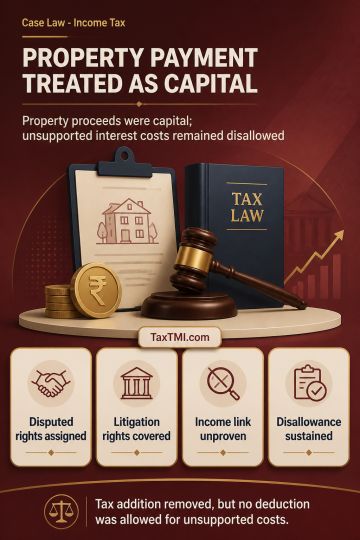
Capital character of assignment consideration prevents taxation as residuary income, while unsupported interest-related expenditure remains non-deduct...
Make-available condition shields regional support-service receipts from Indian taxation where no independent capability or permanent establishment exi...
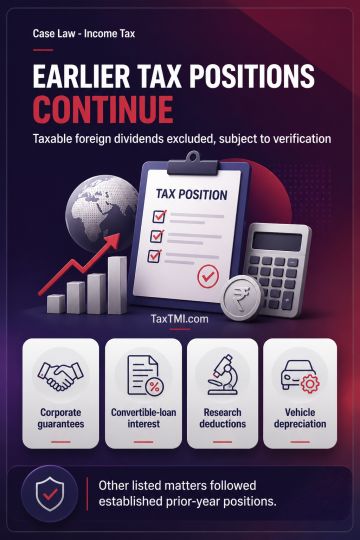
Transfer-pricing treatment of corporate guarantees and convertible loans followed prior-year consistency, with taxable foreign dividends excluded from...
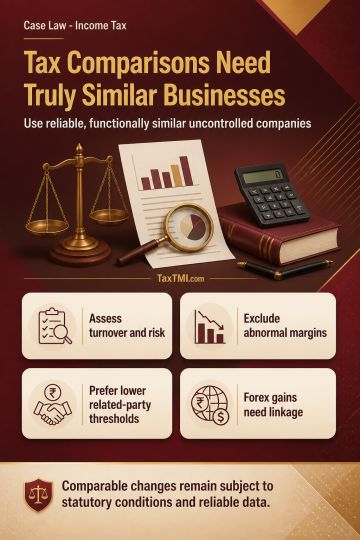
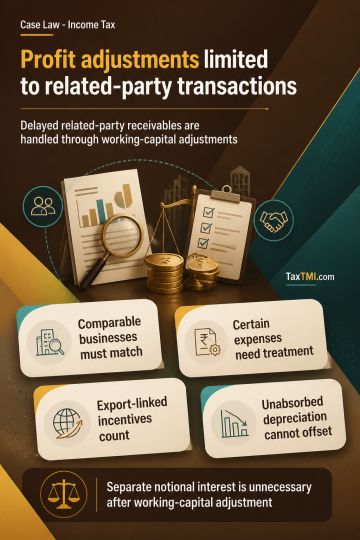
Transfer-pricing benchmarking confines adjustments to associated-enterprise transactions and integrates delayed receivables through TNMM working-capit...
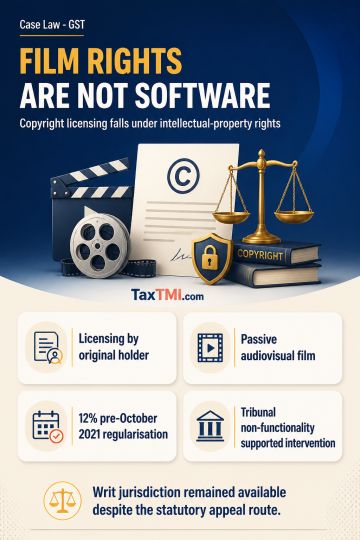
Writ jurisdiction remained available despite a statutory appellate remedy because the disputed GST classification involved an apparent jurisdictional error of law without factual dispute; the non-functionality of the Tribunal when the petitions were filed also supported intervention. Licensing of copyright in cinematographic films by the original holder was classified as intellectual-property rights in goods other than information technology software: a passive audiovisual film lacks the computer-based manipulation or interactivity required for software, and its delivery method does not alter the supply's character. Pre-1 October 2021 GST regularisation at 12% on an "as is where is" basis extended to producer-to-distributor theatrical-rights licensing and could not be confined to downstream transactions, rendering the contrary classification and demands erroneous.
Writ jurisdiction remained available despite a statutory appellate remedy because the disputed GST classification involved an apparent jurisdictional error of law without factual dispute; the non-functionality of the Tribunal when the petitions were filed also supported intervention. Licensing of copyright in cinematographic films by the original holder was classified as intellectual-property rights in goods other than information technology software: a passive audiovisual film lacks the computer-based manipulation or interactivity required for software, and its delivery method does not alter the supply's character. Pre-1 October 2021 GST regularisation at 12% on an "as is where is" basis extended to producer-to-distributor theatrical-rights licensing and could not be confined to downstream transactions, rendering the contrary classification and demands erroneous.
Note: It is a system-generated summary and is for quick reference only.
 TaxTMI
  TaxTMI
 of 4894