Capital-gains exemption for charitable trusts extends to qualifying fixed deposits, while unrecoverable TDS write-offs may constitute income applicati...
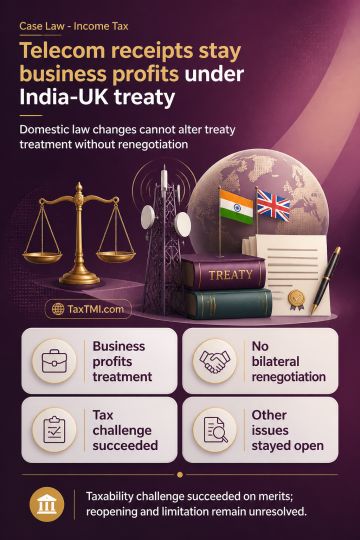
India-UK treaty characterisation of telecom-service receipts as business profits withstands unilateral domestic-law amendments for Indian tax purposes...
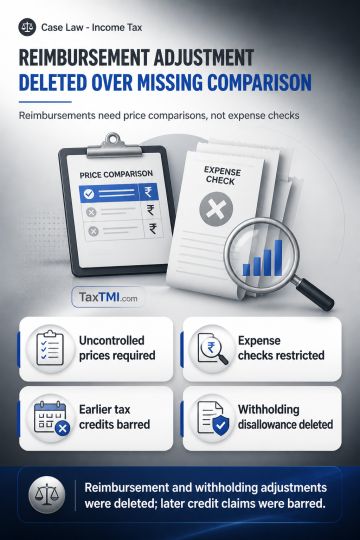
Transfer-pricing reimbursement adjustments require uncontrolled comparables and cannot become expense-genuineness reviews, resulting in deletion of th...
Page of 4881
Press 'Enter' after typing page number.
281 to 300 of 97618 Results
❮
❯
❯❯
0 / 200
Expand Note
Add to Folder
No Folders have been created
+
Are you sure you want to delete "My most important" ?
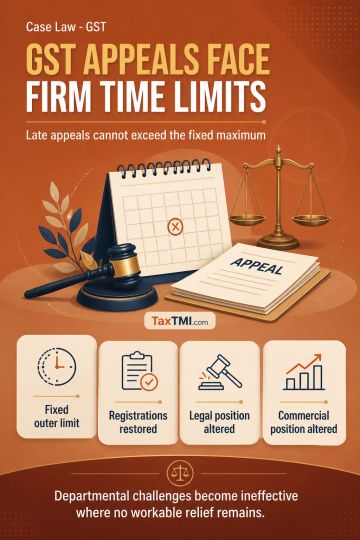
Section 107(4) of the GST law fixes an outer limit on an appellate authority's power to condone delay in appeals against cancellation of registration. Extraordinary writ jurisdiction cannot enlarge that statutory appellate jurisdiction; condonation beyond the prescribed maximum is legally unsustainable. Where the Department has implemented appellate directions by restoring cancelled GST registrations, it cannot seek annulment without addressing the resulting alteration of the taxpayers' legal and commercial position. The departmental appeals consequently become infructuous where no effective or workable relief remains available.
Section 107(4) of the GST law fixes an outer limit on an appellate authority's power to condone delay in appeals against cancellation of registration. Extraordinary writ jurisdiction cannot enlarge that statutory appellate jurisdiction; condonation beyond the prescribed maximum is legally unsustainable. Where the Department has implemented appellate directions by restoring cancelled GST registrations, it cannot seek annulment without addressing the resulting alteration of the taxpayers' legal and commercial position. The departmental appeals consequently become infructuous where no effective or workable relief remains available.
Note: It is a system-generated summary and is for quick reference only.
 TaxTMI
  TaxTMI
 of 4881