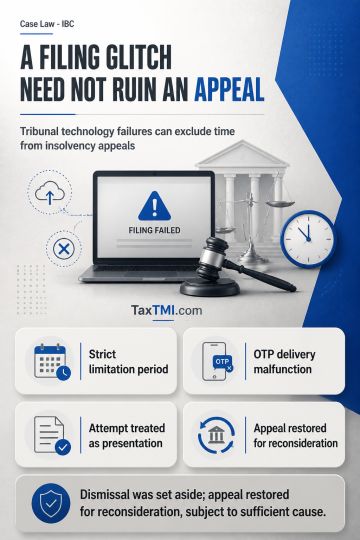
E-filing system failure permits exclusion of affected time in insolvency appeals, preventing tribunal technology defects from defeating timely filings...
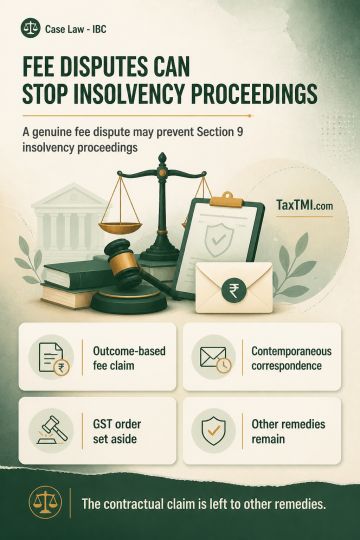
Pre-existing disputes over outcome-based professional fees can bar Section 9 insolvency proceedings where contractual entitlement requires investigati...
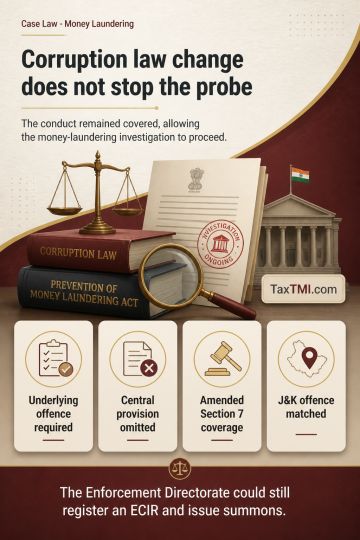
Corresponding scheduled offences preserve money-laundering jurisdiction despite repeal of the central corruption provision where conduct remains cover...
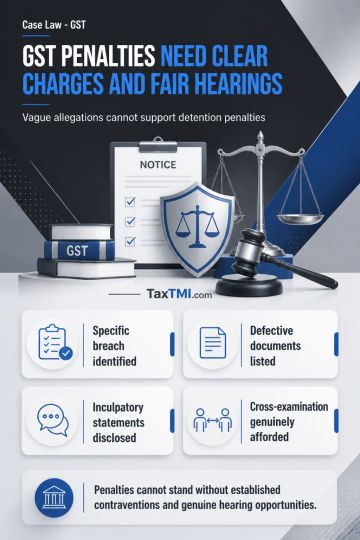
GST detention penalties under section 129 require a pleaded and established contravention of the Act or Rules. A show-cause notice must identify the defective documents and the precise legal provision allegedly breached; a vague allegation of diversion or unloading at an undeclared destination is insufficient. Reliance on inculpatory statements requires their disclosure, and an offered personal hearing and cross-examination opportunity must be genuinely afforded before adjudication. Appellate review must address material natural-justice objections and identify the statutory contravention rather than rely on route or invoicing observations alone.
GST detention penalties under section 129 require a pleaded and established contravention of the Act or Rules. A show-cause notice must identify the defective documents and the precise legal provision allegedly breached; a vague allegation of diversion or unloading at an undeclared destination is insufficient. Reliance on inculpatory statements requires their disclosure, and an offered personal hearing and cross-examination opportunity must be genuinely afforded before adjudication. Appellate review must address material natural-justice objections and identify the statutory contravention rather than rely on route or invoicing observations alone.
Note: It is a system-generated summary and is for quick reference only.
 TaxTMI
  TaxTMI
 of 4884