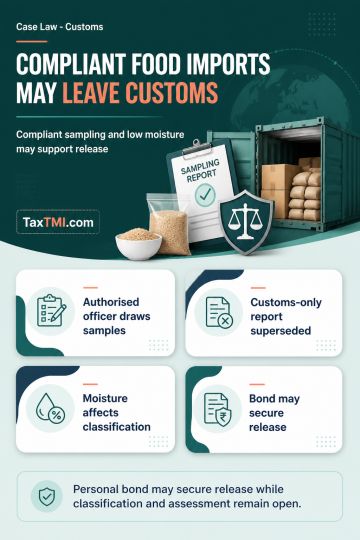
Food import sampling requirements support provisional release where unseized consignments conform to standards and raw areca classification is unestab...
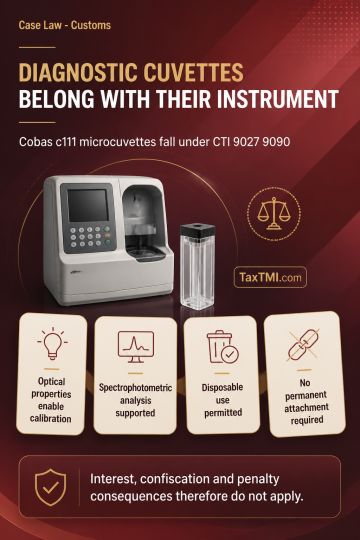
Diagnostic microcuvette classification follows sole-use analytical function, placing specialised disposable cuvettes with their analyser rather than g...
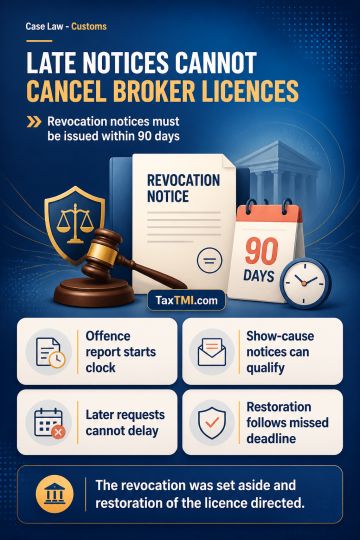
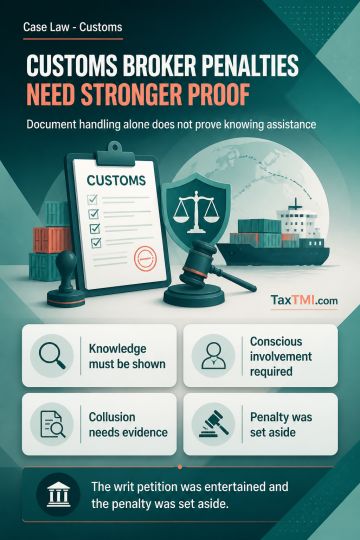
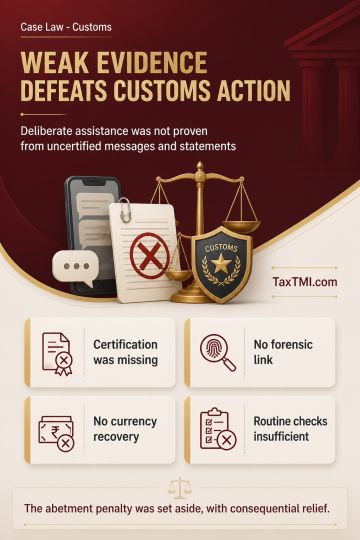
Customs Broker licensing proceedings fail when their offence-report foundation collapses and authorisation, advisory, and KYC duties remain unbreached...
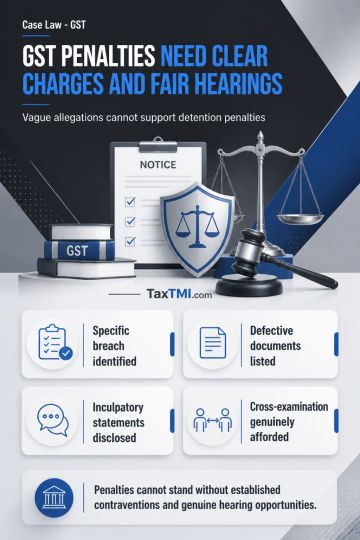
GST detention penalties under section 129 require a pleaded and established contravention of the Act or Rules. A show-cause notice must identify the defective documents and the precise legal provision allegedly breached; a vague allegation of diversion or unloading at an undeclared destination is insufficient. Reliance on inculpatory statements requires their disclosure, and an offered personal hearing and cross-examination opportunity must be genuinely afforded before adjudication. Appellate review must address material natural-justice objections and identify the statutory contravention rather than rely on route or invoicing observations alone.
GST detention penalties under section 129 require a pleaded and established contravention of the Act or Rules. A show-cause notice must identify the defective documents and the precise legal provision allegedly breached; a vague allegation of diversion or unloading at an undeclared destination is insufficient. Reliance on inculpatory statements requires their disclosure, and an offered personal hearing and cross-examination opportunity must be genuinely afforded before adjudication. Appellate review must address material natural-justice objections and identify the statutory contravention rather than rely on route or invoicing observations alone.
Note: It is a system-generated summary and is for quick reference only.
 TaxTMI
  TaxTMI
 of 4881