Transfer-pricing tolerance for software sub-licensing falls within the services range, eliminating the adjustment and requiring TDS-credit verificatio...
Customs Broker due diligence requires prescribed KYC, not detecting misdeclarations discoverable only through physical examination, defeating licence ...
E-filing system failure permits exclusion of affected time in insolvency appeals, preventing tribunal technology defects from defeating timely filings...
Pre-existing disputes over outcome-based professional fees can bar Section 9 insolvency proceedings where contractual entitlement requires investigati...
Corresponding scheduled offences preserve money-laundering jurisdiction despite repeal of the central corruption provision where conduct remains cover...
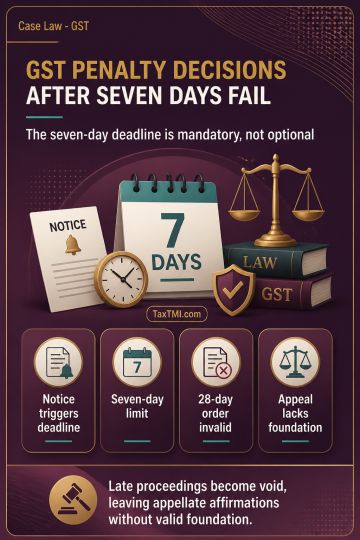
Section 129(3) requires a detention-penalty order to be passed within seven days of service of notice. The seven-day period is mandatory, not directory; an order made after that period, including one issued 28 days after notice, breaches the statutory requirement. Such delay vitiates the detention-penalty proceedings, renders the original order void ab initio and a nullity, and leaves no valid basis for an appellate order affirming the penalty.
Section 129(3) requires a detention-penalty order to be passed within seven days of service of notice. The seven-day period is mandatory, not directory; an order made after that period, including one issued 28 days after notice, breaches the statutory requirement. Such delay vitiates the detention-penalty proceedings, renders the original order void ab initio and a nullity, and leaves no valid basis for an appellate order affirming the penalty.
Note: It is a system-generated summary and is for quick reference only.
 TaxTMI
  TaxTMI
 of 4886