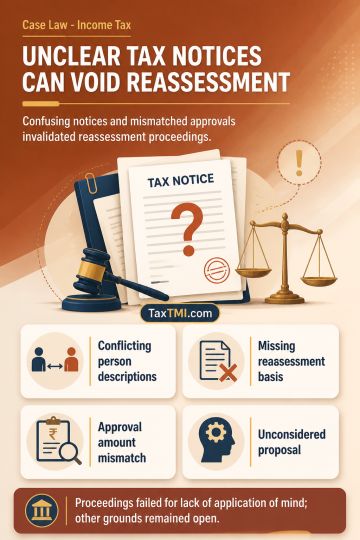
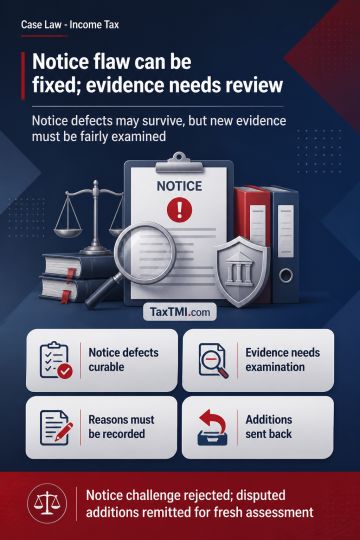
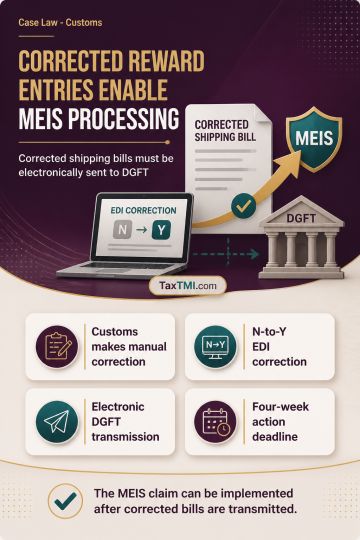
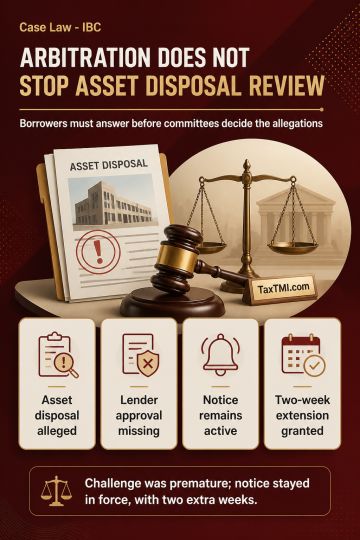
Capital Asset Conversion Requires Proven Business Stock Treatment; Paper Consideration in Spousal Flat Transfers Does Not Create Taxable Business Inco...
Human-probability test defeats political donation deduction where banking records mask accommodation-entry fund layering and evidence shows non-genuin...
Commercial property status protects capital-gains exemption when residential-house ownership limits are tested, while agricultural-land character gove...
Investigation deposits refunded after failed customs demands fall outside the statutory appellate pre-deposit interest regime and may attract compensa...
Resolution plan finality extinguishes unquantified operational-creditor claims and pending proceedings unless the approved plan expressly preserves th...
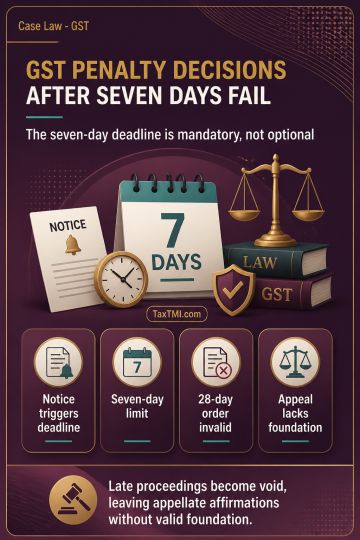
Section 129(3) requires a detention-penalty order to be passed within seven days of service of notice. The seven-day period is mandatory, not directory; an order made after that period, including one issued 28 days after notice, breaches the statutory requirement. Such delay vitiates the detention-penalty proceedings, renders the original order void ab initio and a nullity, and leaves no valid basis for an appellate order affirming the penalty.
Section 129(3) requires a detention-penalty order to be passed within seven days of service of notice. The seven-day period is mandatory, not directory; an order made after that period, including one issued 28 days after notice, breaches the statutory requirement. Such delay vitiates the detention-penalty proceedings, renders the original order void ab initio and a nullity, and leaves no valid basis for an appellate order affirming the penalty.
Note: It is a system-generated summary and is for quick reference only.
 TaxTMI
  TaxTMI
 of 4884