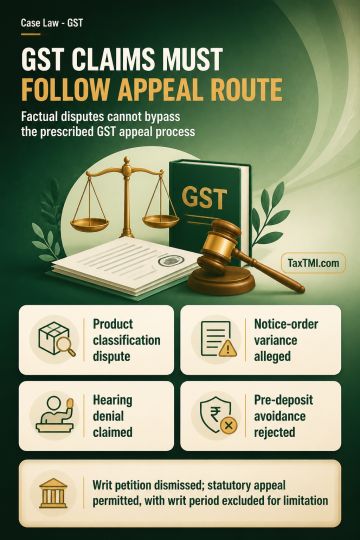
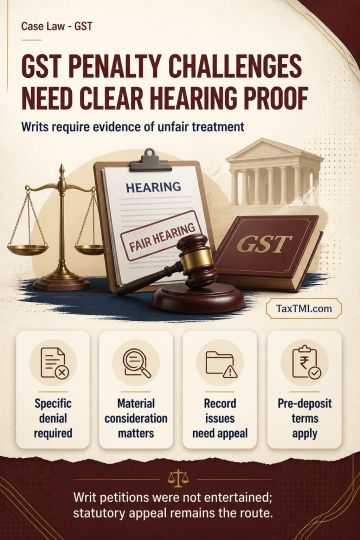
Alternative statutory remedy under GST bars writ challenge where classification, notice variance, and hearing disputes require factual appellate revie...
Duplicate PAN cancellation timeframe requires prior administrative representation before judicial intervention, ensuring a time-bound decision on the ...
Natural justice and pre-CIRP labour awards protect termination compensation, permitting withdrawal of court deposits despite later insolvency resoluti...
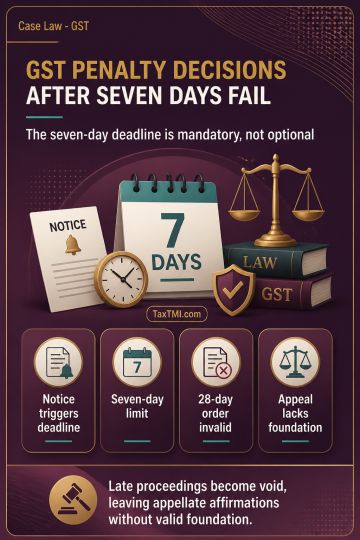
Section 129(3) requires a detention-penalty order to be passed within seven days of service of notice. The seven-day period is mandatory, not directory; an order made after that period, including one issued 28 days after notice, breaches the statutory requirement. Such delay vitiates the detention-penalty proceedings, renders the original order void ab initio and a nullity, and leaves no valid basis for an appellate order affirming the penalty.
Section 129(3) requires a detention-penalty order to be passed within seven days of service of notice. The seven-day period is mandatory, not directory; an order made after that period, including one issued 28 days after notice, breaches the statutory requirement. Such delay vitiates the detention-penalty proceedings, renders the original order void ab initio and a nullity, and leaves no valid basis for an appellate order affirming the penalty.
Note: It is a system-generated summary and is for quick reference only.
 TaxTMI
  TaxTMI
 of 4894