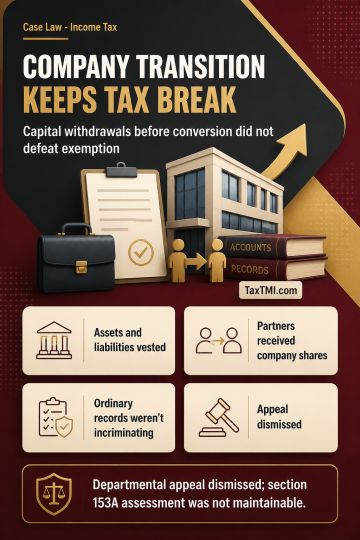
Permanent-establishment reassessment cannot revisit scrutinised disclosures; extended reopening fails without undisclosed material facts and within st...
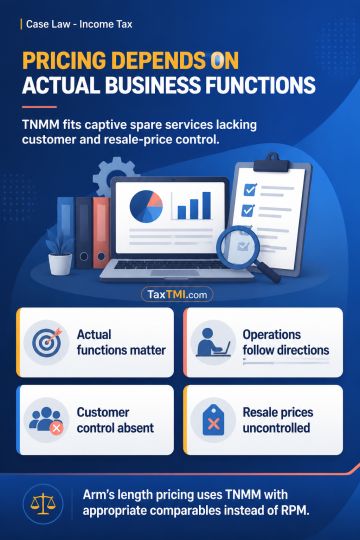
Modified returns after business reorganisation must be assessed within pending proceedings, barring parallel scrutiny and consequential transfer prici...
Turnover mismatches under percentage-completion accounting cannot alone establish suppressed income where customer advances remain recorded as liabili...
Page of 4881
Press 'Enter' after typing page number.
541 to 560 of 97618 Results
❮
❯
❯❯
0 / 200
Expand Note
Add to Folder
No Folders have been created
+
Are you sure you want to delete "My most important" ?
Fraudulent removal and replacement of financed, hypothecated machinery with lower-value machinery can establish fraudulent trading through cumulative documentary and circumstantial evidence. Financing records, invoices, hypothecation, independent valuations, physical indications of removal, lack of creditor consent, and an unsupported explanation for substituted machinery supported the inference of fraudulent intent. A technical dispute over the machinery's identity did not remove the Adjudicating Authority's jurisdiction. The Appellate Tribunal upheld fraudulent trading under the Code and affirmed the contribution direction, finding no basis to treat the quantified depletion of the corporate debtor's assets as arbitrary; depreciation and realisable-value arguments did not displace that finding.
Fraudulent removal and replacement of financed, hypothecated machinery with lower-value machinery can establish fraudulent trading through cumulative documentary and circumstantial evidence. Financing records, invoices, hypothecation, independent valuations, physical indications of removal, lack of creditor consent, and an unsupported explanation for substituted machinery supported the inference of fraudulent intent. A technical dispute over the machinery's identity did not remove the Adjudicating Authority's jurisdiction. The Appellate Tribunal upheld fraudulent trading under the Code and affirmed the contribution direction, finding no basis to treat the quantified depletion of the corporate debtor's assets as arbitrary; depreciation and realisable-value arguments did not displace that finding.
Note: It is a system-generated summary and is for quick reference only.
 TaxTMI
  TaxTMI
 of 4881