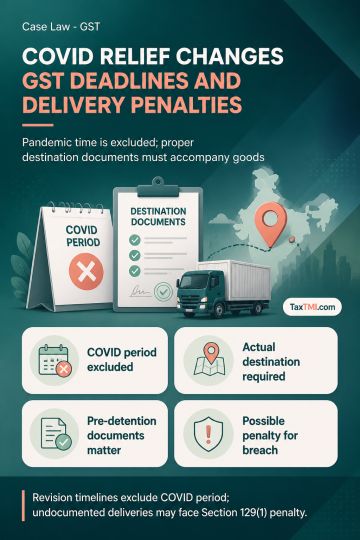
COVID-19 limitation exclusion and destination-specific e-way bills govern revisional timelines and penalties for undocumented third-party plywood deli...
Questions arising from miscellaneous application orders cannot challenge unaltered Tribunal findings, leaving the original order separately challengea...
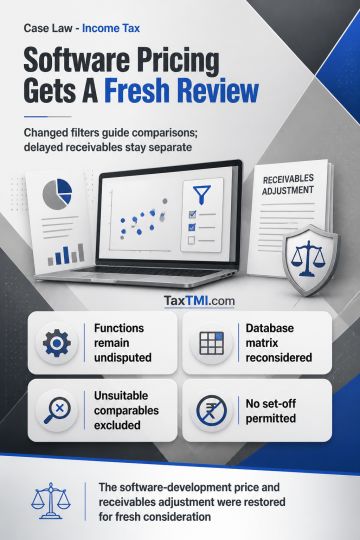
Transfer-pricing comparability filters require fresh arm's-length analysis, while delayed receivables need separate reconsideration with working-capit...
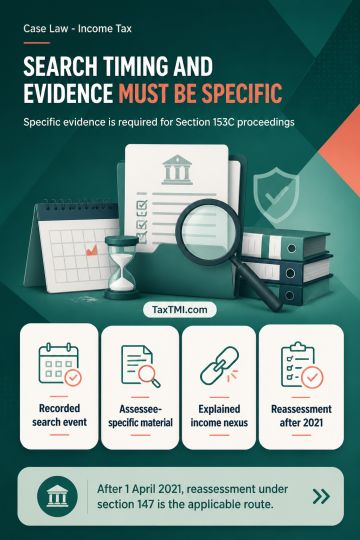
Section 153C jurisdiction requires timely deemed search and assessee-specific satisfaction material; otherwise reassessment must use the proper statut...
Taxability of non-resident receipts depends on a real and substantive nexus between India and the income-producing right or activity, or on a specific statutory deeming provision; an Indian payer's residence, accounting treatment, expenditure claim or remittance alone is insufficient. Overseas contractual rights, settlement and market exploitation do not create Indian accrual merely through foreign anti-trust allegations unsupported by a judicial finding or admission. Advance-ruling jurisdiction is confined to the applicant and transaction, and prima facie tax avoidance requires an identified Indian tax incidence. Extended reassessment limitation requires a qualifying asset belonging to the assessee and prior meaningful opportunity on that ground. Protective assessment may address uncertainty over the taxable person but cannot support protective recovery; TDS refunds may be secured pending substantive assessment.
Taxability of non-resident receipts depends on a real and substantive nexus between India and the income-producing right or activity, or on a specific statutory deeming provision; an Indian payer's residence, accounting treatment, expenditure claim or remittance alone is insufficient. Overseas contractual rights, settlement and market exploitation do not create Indian accrual merely through foreign anti-trust allegations unsupported by a judicial finding or admission. Advance-ruling jurisdiction is confined to the applicant and transaction, and prima facie tax avoidance requires an identified Indian tax incidence. Extended reassessment limitation requires a qualifying asset belonging to the assessee and prior meaningful opportunity on that ground. Protective assessment may address uncertainty over the taxable person but cannot support protective recovery; TDS refunds may be secured pending substantive assessment.
Note: It is a system-generated summary and is for quick reference only.
 TaxTMI
  TaxTMI
 of 4881