Independent manufacturing undertaking eligibility preserves Section 80IA/80IB deductions, while machinery kept ready for use qualifies for depreciatio...
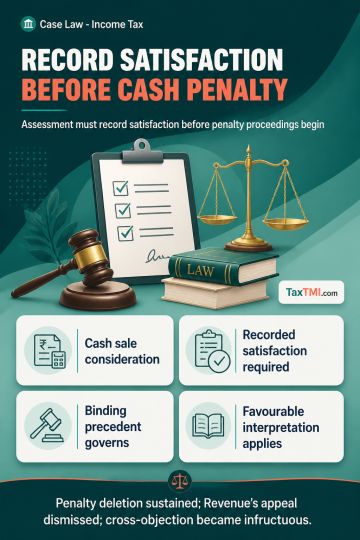
Assessing Officer Satisfaction Requirement Bars Penalty for Cash Receipt in Immovable-Property Sale Cases Where Initiation Lacks Recorded Satisfaction...
Self-assessed import entries remain appealable, while bona fide classification disputes without misdeclaration cannot justify confiscation or penaltie...
Actual-user customs exemption conditions permit turnkey project transfers when imported windmill components are exclusively used for installation and ...
Customs offence disqualification excludes civil contraventions, preventing refusal of a private bonded warehouse licence based solely on monetary pena...
Taxability of non-resident receipts depends on a real and substantive nexus between India and the income-producing right or activity, or on a specific statutory deeming provision; an Indian payer's residence, accounting treatment, expenditure claim or remittance alone is insufficient. Overseas contractual rights, settlement and market exploitation do not create Indian accrual merely through foreign anti-trust allegations unsupported by a judicial finding or admission. Advance-ruling jurisdiction is confined to the applicant and transaction, and prima facie tax avoidance requires an identified Indian tax incidence. Extended reassessment limitation requires a qualifying asset belonging to the assessee and prior meaningful opportunity on that ground. Protective assessment may address uncertainty over the taxable person but cannot support protective recovery; TDS refunds may be secured pending substantive assessment.
Taxability of non-resident receipts depends on a real and substantive nexus between India and the income-producing right or activity, or on a specific statutory deeming provision; an Indian payer's residence, accounting treatment, expenditure claim or remittance alone is insufficient. Overseas contractual rights, settlement and market exploitation do not create Indian accrual merely through foreign anti-trust allegations unsupported by a judicial finding or admission. Advance-ruling jurisdiction is confined to the applicant and transaction, and prima facie tax avoidance requires an identified Indian tax incidence. Extended reassessment limitation requires a qualifying asset belonging to the assessee and prior meaningful opportunity on that ground. Protective assessment may address uncertainty over the taxable person but cannot support protective recovery; TDS refunds may be secured pending substantive assessment.
Note: It is a system-generated summary and is for quick reference only.
 TaxTMI
  TaxTMI
 of 4881