Capital-gains exemption for charitable trusts extends to qualifying fixed deposits, while unrecoverable TDS write-offs may constitute income applicati...
India-UK treaty characterisation of telecom-service receipts as business profits withstands unilateral domestic-law amendments for Indian tax purposes...
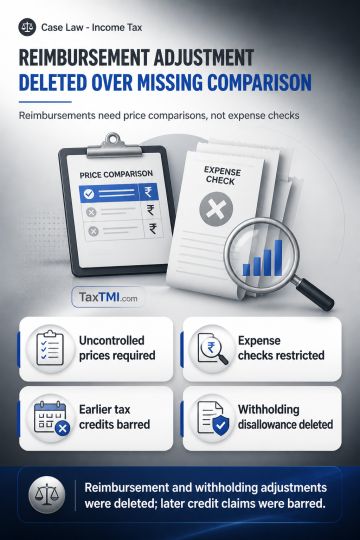
Transfer-pricing reimbursement adjustments require uncontrolled comparables and cannot become expense-genuineness reviews, resulting in deletion of th...
Page of 4881
Press 'Enter' after typing page number.
281 to 300 of 97618 Results
❮
❯
❯❯
0 / 200
Expand Note
Add to Folder
No Folders have been created
+
Are you sure you want to delete "My most important" ?
Taxability of non-resident receipts depends on a real and substantive nexus between India and the income-producing right or activity, or on a specific statutory deeming provision; an Indian payer's residence, accounting treatment, expenditure claim or remittance alone is insufficient. Overseas contractual rights, settlement and market exploitation do not create Indian accrual merely through foreign anti-trust allegations unsupported by a judicial finding or admission. Advance-ruling jurisdiction is confined to the applicant and transaction, and prima facie tax avoidance requires an identified Indian tax incidence. Extended reassessment limitation requires a qualifying asset belonging to the assessee and prior meaningful opportunity on that ground. Protective assessment may address uncertainty over the taxable person but cannot support protective recovery; TDS refunds may be secured pending substantive assessment.
Taxability of non-resident receipts depends on a real and substantive nexus between India and the income-producing right or activity, or on a specific statutory deeming provision; an Indian payer's residence, accounting treatment, expenditure claim or remittance alone is insufficient. Overseas contractual rights, settlement and market exploitation do not create Indian accrual merely through foreign anti-trust allegations unsupported by a judicial finding or admission. Advance-ruling jurisdiction is confined to the applicant and transaction, and prima facie tax avoidance requires an identified Indian tax incidence. Extended reassessment limitation requires a qualifying asset belonging to the assessee and prior meaningful opportunity on that ground. Protective assessment may address uncertainty over the taxable person but cannot support protective recovery; TDS refunds may be secured pending substantive assessment.
Note: It is a system-generated summary and is for quick reference only.
 TaxTMI
  TaxTMI
 of 4881