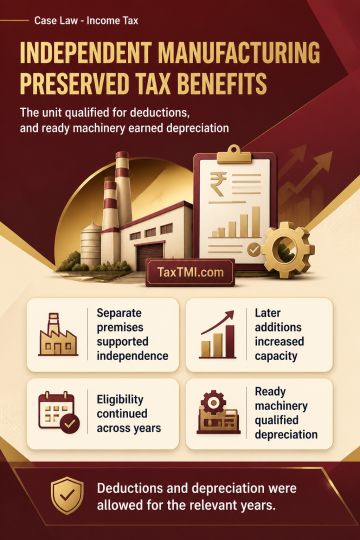
Independent manufacturing undertaking eligibility preserves Section 80IA/80IB deductions, while machinery kept ready for use qualifies for depreciatio...
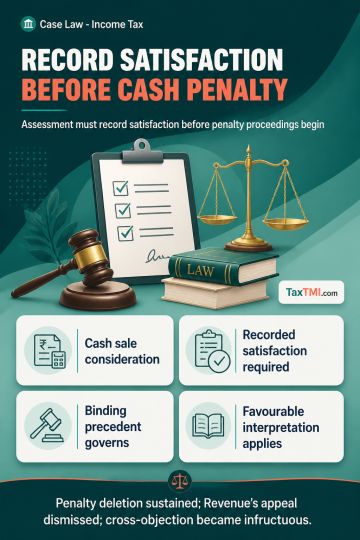
Assessing Officer Satisfaction Requirement Bars Penalty for Cash Receipt in Immovable-Property Sale Cases Where Initiation Lacks Recorded Satisfaction...
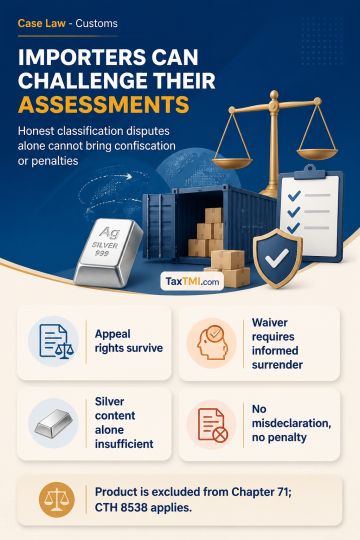
Self-assessed import entries remain appealable, while bona fide classification disputes without misdeclaration cannot justify confiscation or penaltie...
Actual-user customs exemption conditions permit turnkey project transfers when imported windmill components are exclusively used for installation and ...
Customs offence disqualification excludes civil contraventions, preventing refusal of a private bonded warehouse licence based solely on monetary pena...
Scheduled-offence status under the Prevention of Money...
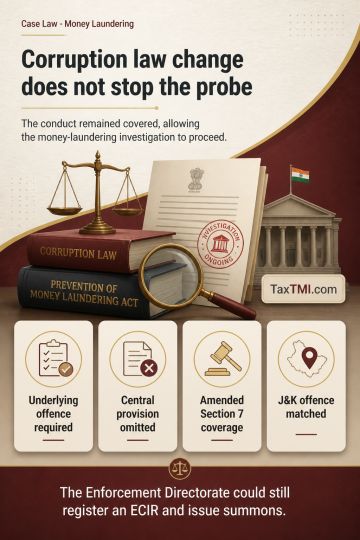
Corresponding scheduled offences preserve money-laundering jurisdiction despite repeal of the central corruption provision where conduct remains covered by amended law.
Contents
Summary
Note
Bookmark
Share
✓ Copied successfully !
Print
Print Options
For full text, please login
Login to TaxTMI
Verification Pending
The Email Id has not been verified. Click on the link we have sent on
Scheduled-offence status under the Prevention of Money Laundering Act depends on an underlying offence and is necessary to establish proceeds of crime and support a money-laundering investigation. Section 2(2) extends a Central enactment listed in the Schedule to its corresponding law applicable in Jammu and Kashmir. Although Section 13(1)(d) of the Central Prevention of Corruption Act was omitted, amended Section 7 continues to cover obtaining an undue advantage through abuse of official position or corrupt or illegal means. Criminal misconduct under Section 5(1)(d) of the J&K Act therefore remained a corresponding scheduled offence, sustaining Enforcement Directorate jurisdiction to register an ECIR and issue summons.
Scheduled-offence status under the Prevention of Money Laundering Act depends on an underlying offence and is necessary to establish proceeds of crime and support a money-laundering investigation. Section 2(2) extends a Central enactment listed in the Schedule to its corresponding law applicable in Jammu and Kashmir. Although Section 13(1)(d) of the Central Prevention of Corruption Act was omitted, amended Section 7 continues to cover obtaining an undue advantage through abuse of official position or corrupt or illegal means. Criminal misconduct under Section 5(1)(d) of the J&K Act therefore remained a corresponding scheduled offence, sustaining Enforcement Directorate jurisdiction to register an ECIR and issue summons.
Note: It is a system-generated summary and is for quick reference only.
 TaxTMI
  TaxTMI
 of 4884