Capital-gains exemption for charitable trusts extends to qualifying fixed deposits, while unrecoverable TDS write-offs may constitute income applicati...
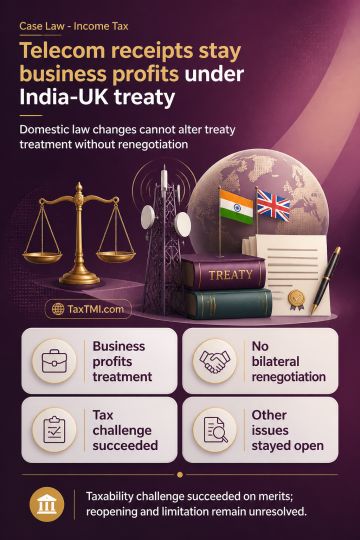
India-UK treaty characterisation of telecom-service receipts as business profits withstands unilateral domestic-law amendments for Indian tax purposes...
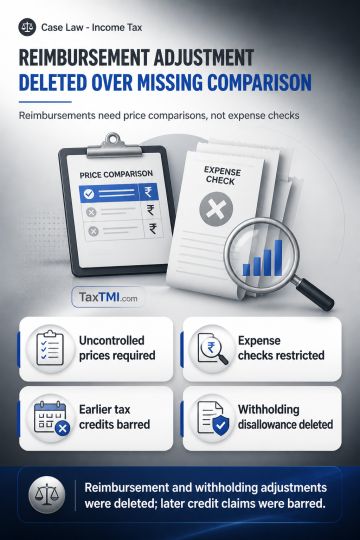
Transfer-pricing reimbursement adjustments require uncontrolled comparables and cannot become expense-genuineness reviews, resulting in deletion of th...
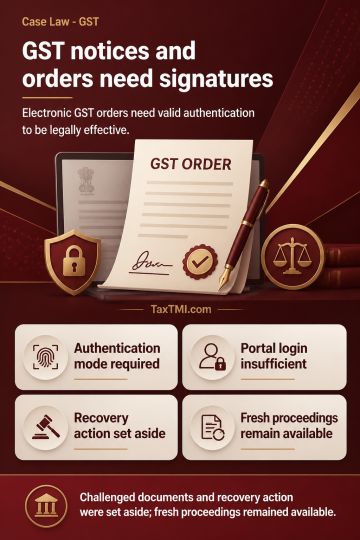
Mandatory authentication under Rule 26(3) requires every electronic GST notice and adjudication order to bear a digital signature, e-signature, or another notified verification mode. An officer's portal login authenticates access only; it does not authenticate or attribute a document's contents. Electronic documents issued without a signature or notified authentication mode lack legal existence, and the defect is jurisdictional rather than curable. The unsigned show cause notice, adjudication order, and consequential recovery action were set aside, while fresh proceedings remained available in accordance with law. A statutory appeal does not bar writ jurisdiction where the challenged order lacks legal existence.
Mandatory authentication under Rule 26(3) requires every electronic GST notice and adjudication order to bear a digital signature, e-signature, or another notified verification mode. An officer's portal login authenticates access only; it does not authenticate or attribute a document's contents. Electronic documents issued without a signature or notified authentication mode lack legal existence, and the defect is jurisdictional rather than curable. The unsigned show cause notice, adjudication order, and consequential recovery action were set aside, while fresh proceedings remained available in accordance with law. A statutory appeal does not bar writ jurisdiction where the challenged order lacks legal existence.
Note: It is a system-generated summary and is for quick reference only.
 TaxTMI
  TaxTMI
 of 4886