Section 153C requires person-specific search authority and year-specific incriminating material for unabated assessments while preventing unsupported ...
Equivalent-value attachment can reach pre-existing assets, but jointly owned property remains protected beyond the accused's attributable proceeds of ...
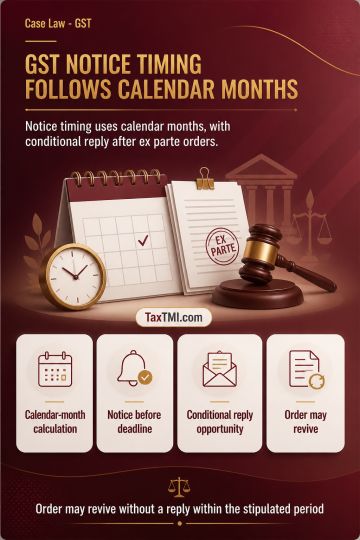
GST show cause notices required at least three months before the outer deadline for adjudication are assessed by the minimum interval between notice and final determination, rather than by mechanically deriving an independent limitation date through backward counting. The intervening period is computed in calendar months, excluding the date of notice; this may render a notice timely before expiry of the adjudication deadline. Where an ex parte adjudication order is made while challenge proceedings and interim protection are pending, a conditional opportunity to reply may be granted, with merits left open; the order may revive if no reply is filed within the stipulated period.
GST show cause notices required at least three months before the outer deadline for adjudication are assessed by the minimum interval between notice and final determination, rather than by mechanically deriving an independent limitation date through backward counting. The intervening period is computed in calendar months, excluding the date of notice; this may render a notice timely before expiry of the adjudication deadline. Where an ex parte adjudication order is made while challenge proceedings and interim protection are pending, a conditional opportunity to reply may be granted, with merits left open; the order may revive if no reply is filed within the stipulated period.
Note: It is a system-generated summary and is for quick reference only.
 TaxTMI
  TaxTMI
 of 4881