Effective hearing in GST adjudication requires actual opportunity to respond; ineffective service through a former auditor invalidated ex parte procee...
Third-party search material requires special assessment route, rendering general reassessment notices without jurisdiction when it forms the proceedin...
Transfer-pricing adjustments must be confined to international associated-enterprise transactions, while functionally dissimilar comparables remain ex...
Insolvency moratorium bars income-tax revision proceedings against corporate debtors until the moratorium ends, preserving merits for later determinat...
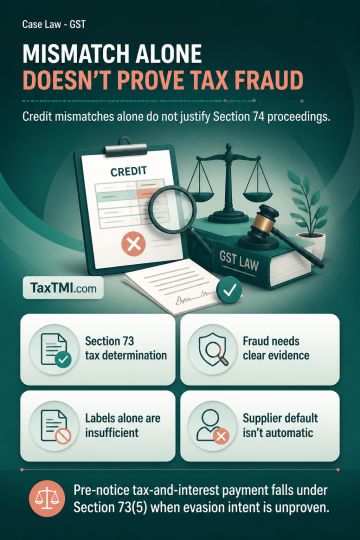
Input tax credit mismatches between Forms GSTR-3B and GSTR-2A may support tax determination under section 73, but do not by themselves justify section 74 proceedings or penalties. Section 74 requires clear evidence connecting wrongful credit availment with fraud, wilful misstatement, or suppression of facts intended to evade tax; merely reciting those terms is insufficient. Payment of tax and interest before notice, including after verification, falls within section 73(5) where no intent to evade is established. A supplier's default cannot automatically be attributed to the recipient as suppression.
Input tax credit mismatches between Forms GSTR-3B and GSTR-2A may support tax determination under section 73, but do not by themselves justify section 74 proceedings or penalties. Section 74 requires clear evidence connecting wrongful credit availment with fraud, wilful misstatement, or suppression of facts intended to evade tax; merely reciting those terms is insufficient. Payment of tax and interest before notice, including after verification, falls within section 73(5) where no intent to evade is established. A supplier's default cannot automatically be attributed to the recipient as suppression.
Note: It is a system-generated summary and is for quick reference only.
 TaxTMI
  TaxTMI
 of 4891