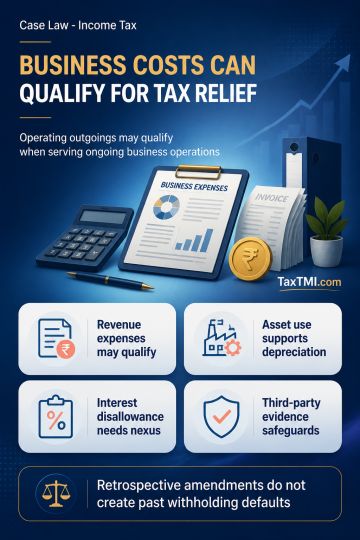
Business expenditure and depreciation rules allow operational outgoings while limiting disallowances for personal elements and unsupported third-party...
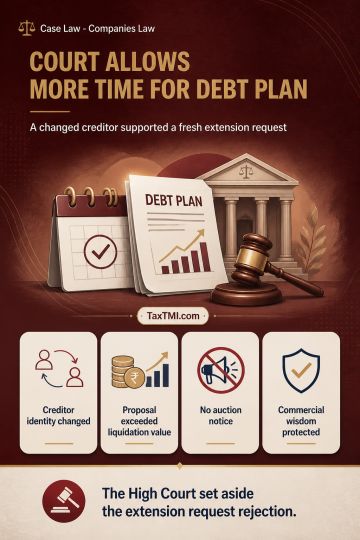
Compromise-and-arrangement extensions may accommodate debt assignment where creditor commercial judgment supports value maximisation and avoids proced...
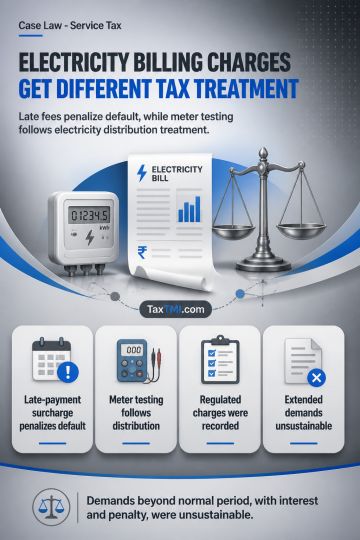
Delayed-payment surcharge is not taxable tolerance consideration where it penalises default, while meter testing follows electricity distribution trea...
Sufficient cause for delayed revenue income-tax appeals requires bona fides, due diligence and a credible explanation; otherwise limitation bars appea...
Inverted-duty-structure refunds remain available for unchanged-rate apparel supplies despite trader status and require tax-period-specific computation...
Page of 4881
Press 'Enter' after typing page number.
781 to 800 of 97618 Results
❮
❯
❯❯
0 / 200
Expand Note
Add to Folder
No Folders have been created
+
Are you sure you want to delete "My most important" ?
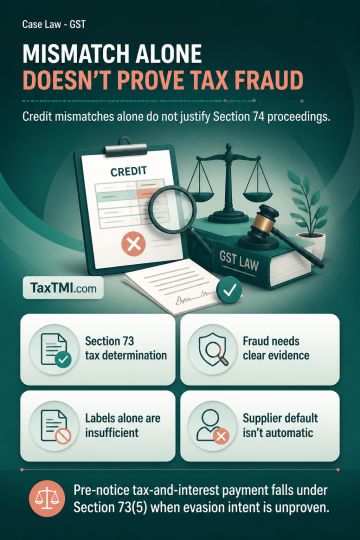
Input tax credit mismatches between Forms GSTR-3B and GSTR-2A may support tax determination under section 73, but do not by themselves justify section 74 proceedings or penalties. Section 74 requires clear evidence connecting wrongful credit availment with fraud, wilful misstatement, or suppression of facts intended to evade tax; merely reciting those terms is insufficient. Payment of tax and interest before notice, including after verification, falls within section 73(5) where no intent to evade is established. A supplier's default cannot automatically be attributed to the recipient as suppression.
Input tax credit mismatches between Forms GSTR-3B and GSTR-2A may support tax determination under section 73, but do not by themselves justify section 74 proceedings or penalties. Section 74 requires clear evidence connecting wrongful credit availment with fraud, wilful misstatement, or suppression of facts intended to evade tax; merely reciting those terms is insufficient. Payment of tax and interest before notice, including after verification, falls within section 73(5) where no intent to evade is established. A supplier's default cannot automatically be attributed to the recipient as suppression.
Note: It is a system-generated summary and is for quick reference only.
 TaxTMI
  TaxTMI
 of 4881