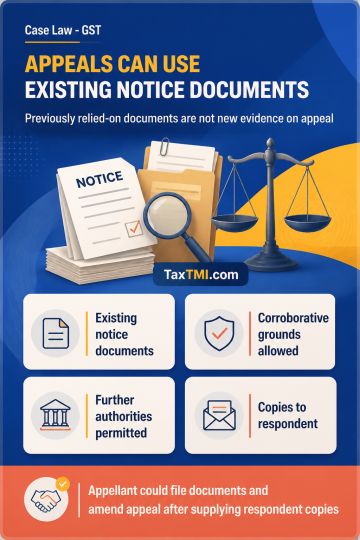
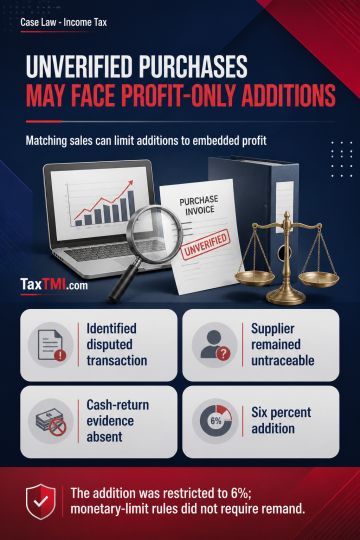
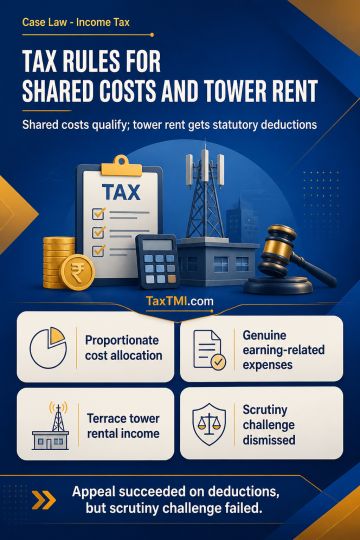
Additional evidence in departmental appeals may include show-cause-notice material without introducing a new case where it merely corroborates existin...
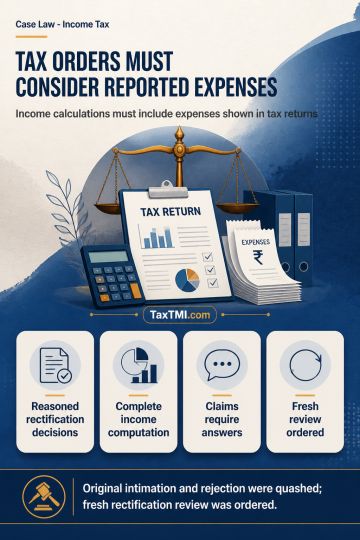
Reasoned rectification orders require consideration of expenditure disclosed in income-tax returns, preventing revision based on incomplete income com...
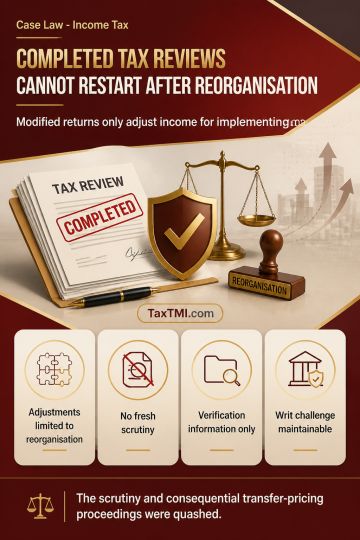
Modified returns after business reorganisations cannot trigger fresh scrutiny once the original assessment was complete, invalidating related transfer...
Third-party loose sheets require reliable nexus before supporting unexplained expenditure additions; presumptions do not establish payer identity or o...
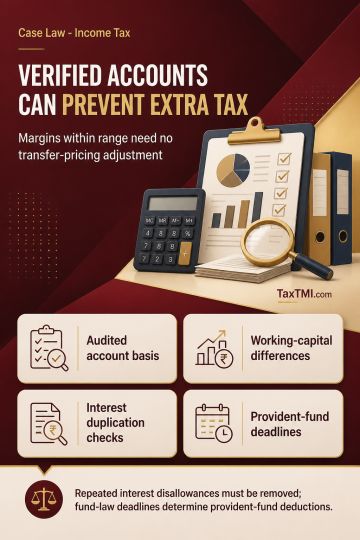
TNMM comparability using audited accounts and working-capital adjustments can eliminate unwarranted transfer-pricing additions where verified margins ...
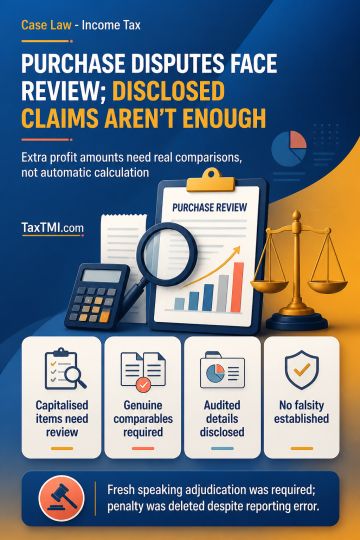
Gross-profit additions on disputed purchases require reasoned appellate determination; disclosed claims alone do not support inaccurate-particulars pe...
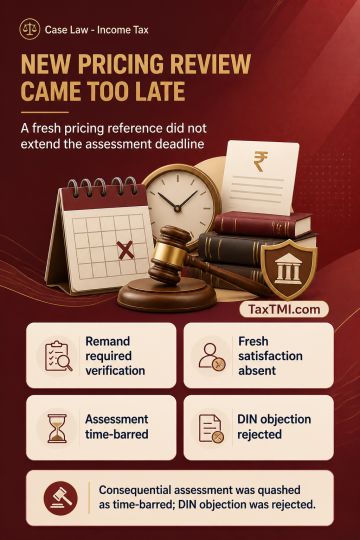
Limitation after transfer-pricing remand: fresh TPO reference did not extend the assessment deadline, rendering the consequential assessment time-barr...
Interim judicial restraint on tax deduction prevents default, while supporting reasonable cause and penalty deletion for foreign-leg LFC reimbursement...
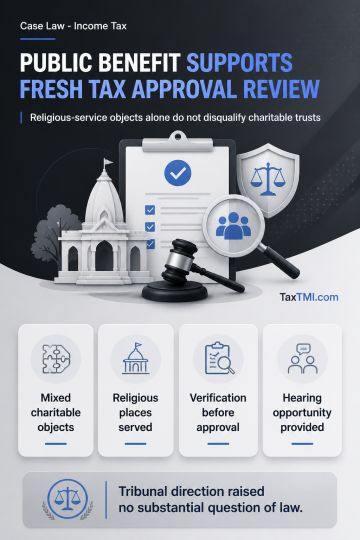
Section 13(1)(b)'s restriction on trusts benefiting a particular religious community applies when exemption under section 11 is considered, rather than at the section 12A registration stage. A trust whose objects are largely charitable and directed to the public at large is not disqualified merely because its objects include services to pilgrims and religious places. Where the trust is not established wholly for a particular religious community, its application for approval under section 80G(5) requires fresh consideration after verification and an opportunity of hearing. No substantial question of law arose from the Tribunal's direction for such reconsideration.
Section 13(1)(b)'s restriction on trusts benefiting a particular religious community applies when exemption under section 11 is considered, rather than at the section 12A registration stage. A trust whose objects are largely charitable and directed to the public at large is not disqualified merely because its objects include services to pilgrims and religious places. Where the trust is not established wholly for a particular religious community, its application for approval under section 80G(5) requires fresh consideration after verification and an opportunity of hearing. No substantial question of law arose from the Tribunal's direction for such reconsideration.
Note: It is a system-generated summary and is for quick reference only.
 TaxTMI
  TaxTMI
 of 4894