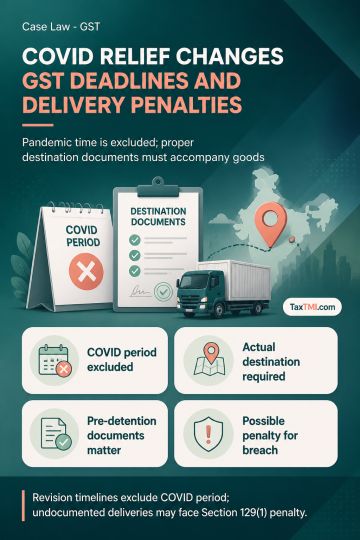
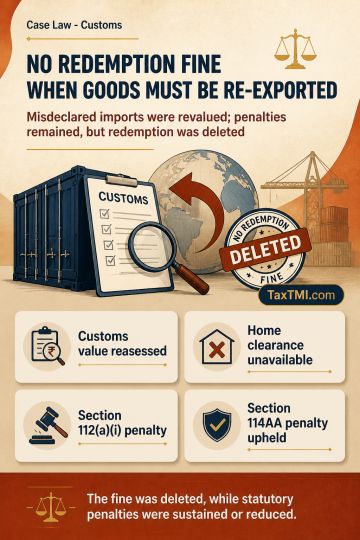
COVID-19 limitation exclusion and destination-specific e-way bills govern revisional timelines and penalties for undocumented third-party plywood deli...
Questions arising from miscellaneous application orders cannot challenge unaltered Tribunal findings, leaving the original order separately challengea...
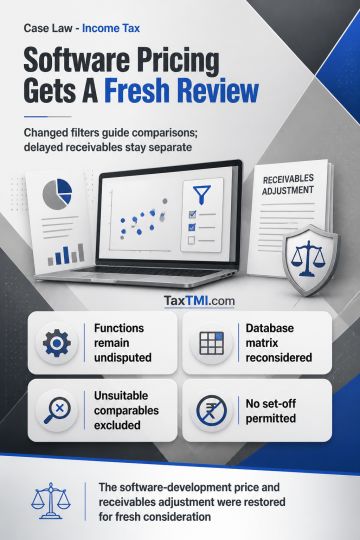
Transfer-pricing comparability filters require fresh arm's-length analysis, while delayed receivables need separate reconsideration with working-capit...
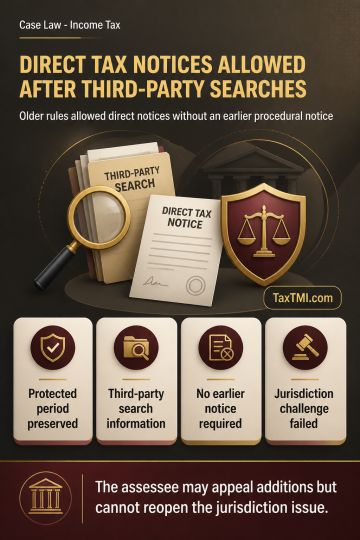
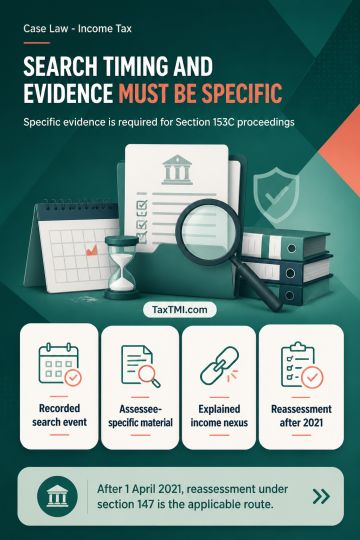
Section 153C jurisdiction requires timely deemed search and assessee-specific satisfaction material; otherwise reassessment must use the proper statut...
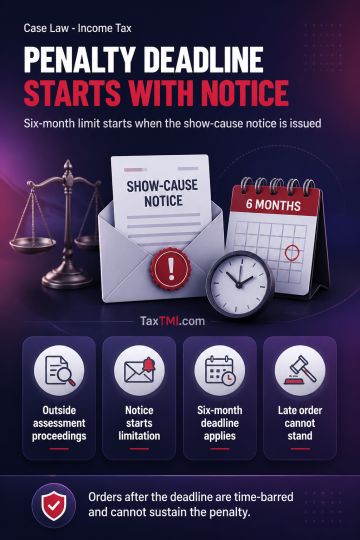
Penalty proceedings under section 271D that are not initiated during an assessment or other proceeding fall outside the first alternative limitation period in section 275(1)(c). In that situation, the show-cause notice constitutes the latest point at which action to impose the penalty is regarded as initiated. The penalty order must therefore be made within six months from the end of the month in which that notice is issued. An order made after that deadline is time-barred and cannot sustain the penalty.
Penalty proceedings under section 271D that are not initiated during an assessment or other proceeding fall outside the first alternative limitation period in section 275(1)(c). In that situation, the show-cause notice constitutes the latest point at which action to impose the penalty is regarded as initiated. The penalty order must therefore be made within six months from the end of the month in which that notice is issued. An order made after that deadline is time-barred and cannot sustain the penalty.
Note: It is a system-generated summary and is for quick reference only.
 TaxTMI
  TaxTMI
 of 4881