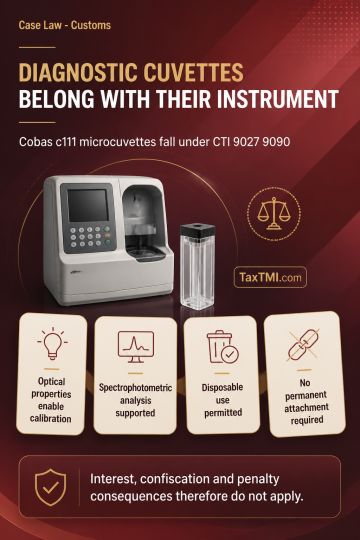
Diagnostic microcuvette classification follows sole-use analytical function, placing specialised disposable cuvettes with their analyser rather than g...
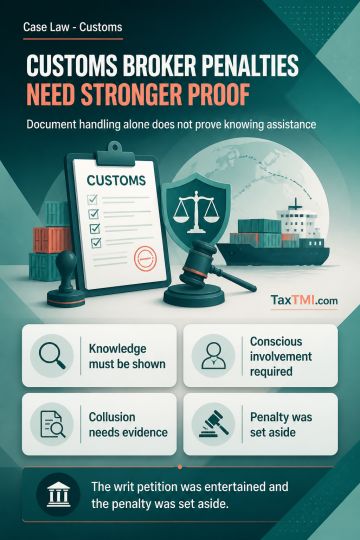
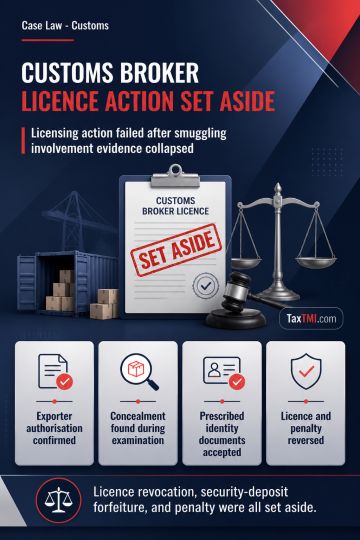
Customs Broker licensing proceedings fail when their offence-report foundation collapses and authorisation, advisory, and KYC duties remain unbreached...
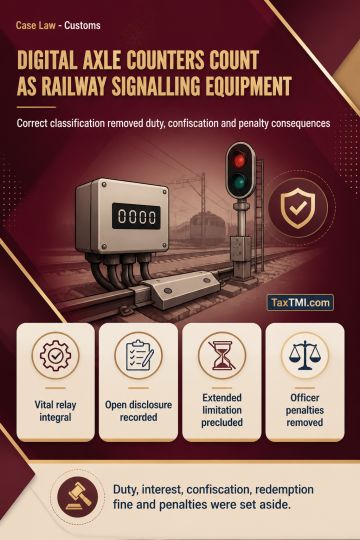
Tariff classification of Digital Axle Counters affirmed as electro-mechanical railway signalling equipment, eliminating duty, confiscation and penalty...
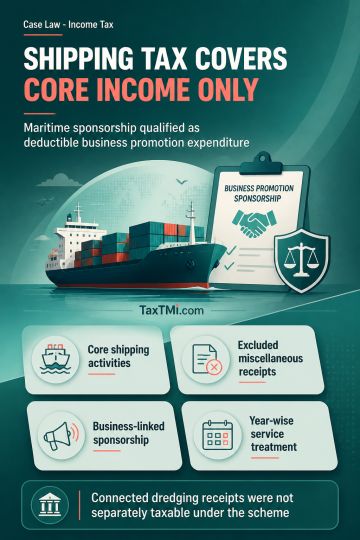
The Tonnage Tax Scheme confines relevant shipping income to profits from specified core and prescribed incidental shipping activities. Receipts from tender-document sales, contractor-delay damages, leased quarters, training fees, other operating income, and salary recoveries from resigned employees fell outside that scope, whereas scrap and empties sales, exchange differences, waste-oil sales, insurance claims, and provision reversals were treated as connected with dredging operations or not separately taxable. Service charges received differing treatment across assessment years in line with earlier determinations. Sponsorship for a maritime investment event qualified as business promotion expenditure because it had a direct business nexus and met commercial expediency, notwithstanding its accounting classification as donation; under the scheme, its debit or disallowance did not affect taxable-profit computation.
The Tonnage Tax Scheme confines relevant shipping income to profits from specified core and prescribed incidental shipping activities. Receipts from tender-document sales, contractor-delay damages, leased quarters, training fees, other operating income, and salary recoveries from resigned employees fell outside that scope, whereas scrap and empties sales, exchange differences, waste-oil sales, insurance claims, and provision reversals were treated as connected with dredging operations or not separately taxable. Service charges received differing treatment across assessment years in line with earlier determinations. Sponsorship for a maritime investment event qualified as business promotion expenditure because it had a direct business nexus and met commercial expediency, notwithstanding its accounting classification as donation; under the scheme, its debit or disallowance did not affect taxable-profit computation.
Note: It is a system-generated summary and is for quick reference only.
 TaxTMI
  TaxTMI
 of 4883