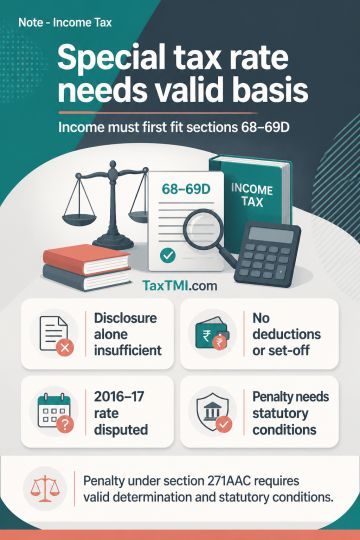
Section 115BBE classification requires a valid deeming-provision basis before special taxation, while the enhanced rate's temporal application remains...
Coercive recovery during GST searches is restrained pending scrutiny, preserving normal business operations and requiring adherence to investigation g...
Discharge-stage scrutiny in a money-laundering prosecution is confined to whether the available material creates a strong suspicion reasonably connecting the accused with the alleged offence; it does not permit a roving enquiry or trial-level weighing of evidence. Statements indicating that funds were arranged and delivered at a co-accused's request, rather than through ordinary business, together with the absence of contemporaneous proof of goods supplied, supported the allegation. Bank records and statements from persons involved in arranging and delivering cash provided prima facie corroboration that the accused knowingly assisted a process connected with proceeds of crime. The High Court upheld refusal of discharge and dismissed the criminal revision.
Discharge-stage scrutiny in a money-laundering prosecution is confined to whether the available material creates a strong suspicion reasonably connecting the accused with the alleged offence; it does not permit a roving enquiry or trial-level weighing of evidence. Statements indicating that funds were arranged and delivered at a co-accused's request, rather than through ordinary business, together with the absence of contemporaneous proof of goods supplied, supported the allegation. Bank records and statements from persons involved in arranging and delivering cash provided prima facie corroboration that the accused knowingly assisted a process connected with proceeds of crime. The High Court upheld refusal of discharge and dismissed the criminal revision.
Note: It is a system-generated summary and is for quick reference only.
 TaxTMI
  TaxTMI
 of 4881