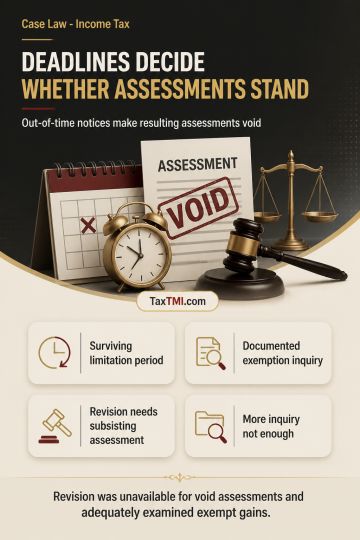
Independent manufacturing undertaking eligibility preserves Section 80IA/80IB deductions, while machinery kept ready for use qualifies for depreciatio...
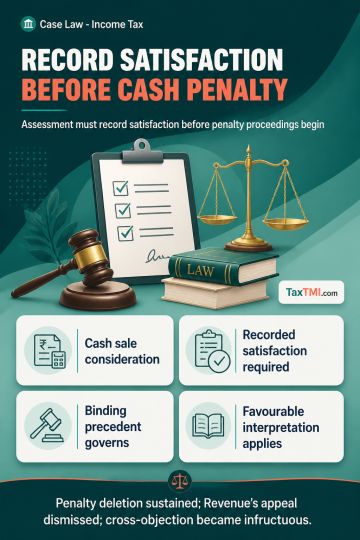
Assessing Officer Satisfaction Requirement Bars Penalty for Cash Receipt in Immovable-Property Sale Cases Where Initiation Lacks Recorded Satisfaction...
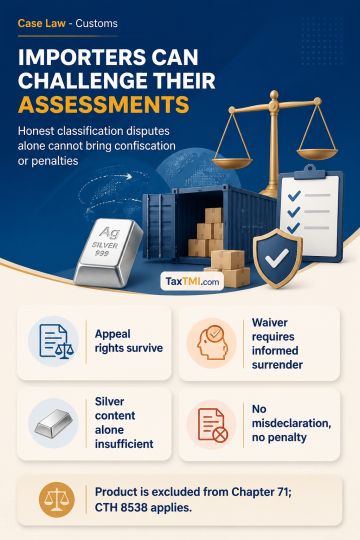
Self-assessed import entries remain appealable, while bona fide classification disputes without misdeclaration cannot justify confiscation or penaltie...
Actual-user customs exemption conditions permit turnkey project transfers when imported windmill components are exclusively used for installation and ...
Customs offence disqualification excludes civil contraventions, preventing refusal of a private bonded warehouse licence based solely on monetary pena...
Discharge-stage scrutiny in a money-laundering prosecution is confined to whether the available material creates a strong suspicion reasonably connecting the accused with the alleged offence; it does not permit a roving enquiry or trial-level weighing of evidence. Statements indicating that funds were arranged and delivered at a co-accused's request, rather than through ordinary business, together with the absence of contemporaneous proof of goods supplied, supported the allegation. Bank records and statements from persons involved in arranging and delivering cash provided prima facie corroboration that the accused knowingly assisted a process connected with proceeds of crime. The High Court upheld refusal of discharge and dismissed the criminal revision.
Discharge-stage scrutiny in a money-laundering prosecution is confined to whether the available material creates a strong suspicion reasonably connecting the accused with the alleged offence; it does not permit a roving enquiry or trial-level weighing of evidence. Statements indicating that funds were arranged and delivered at a co-accused's request, rather than through ordinary business, together with the absence of contemporaneous proof of goods supplied, supported the allegation. Bank records and statements from persons involved in arranging and delivering cash provided prima facie corroboration that the accused knowingly assisted a process connected with proceeds of crime. The High Court upheld refusal of discharge and dismissed the criminal revision.
Note: It is a system-generated summary and is for quick reference only.
 TaxTMI
  TaxTMI
 of 4881