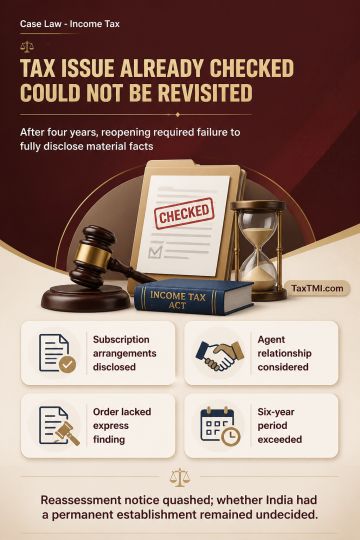
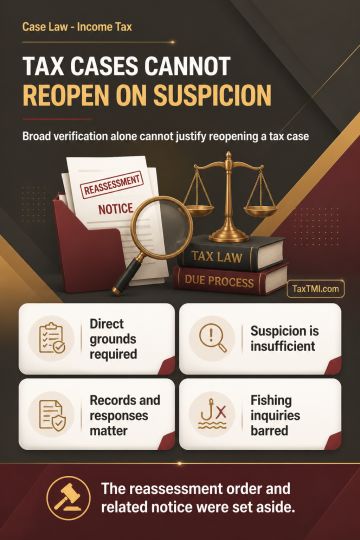
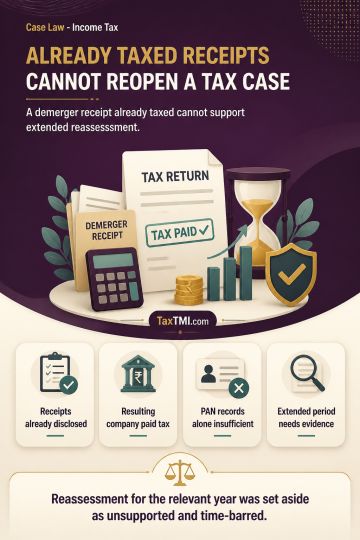
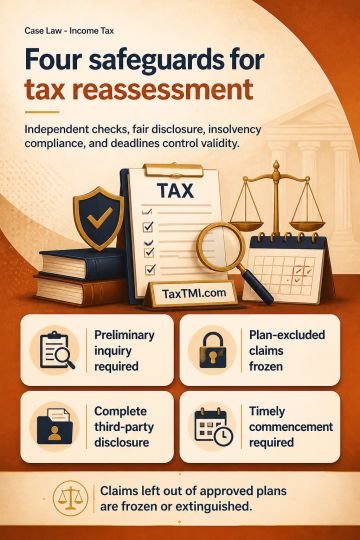
Permanent-establishment reassessment cannot revisit scrutinised disclosures; extended reopening fails without undisclosed material facts and within st...
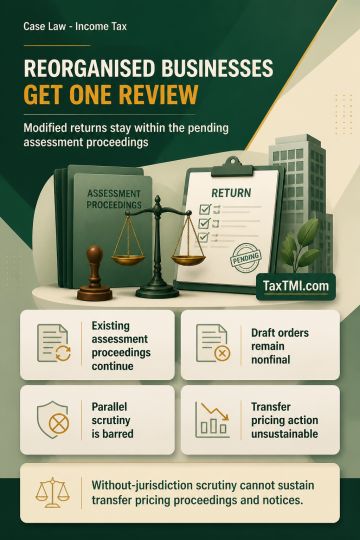
Modified returns after business reorganisation must be assessed within pending proceedings, barring parallel scrutiny and consequential transfer prici...
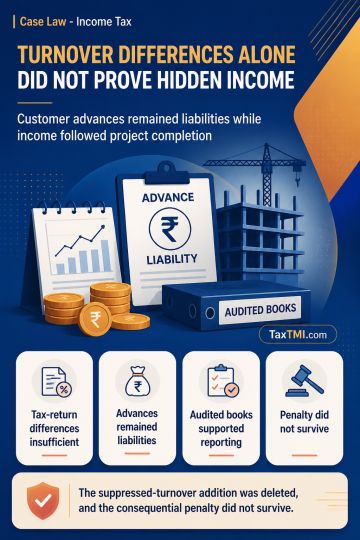
Turnover mismatches under percentage-completion accounting cannot alone establish suppressed income where customer advances remain recorded as liabili...
Page of 4881
Press 'Enter' after typing page number.
541 to 560 of 97618 Results
❮
❯
❯❯
0 / 200
Expand Note
Add to Folder
No Folders have been created
+
Are you sure you want to delete "My most important" ?
GST treats each financial year as a separate tax period for...
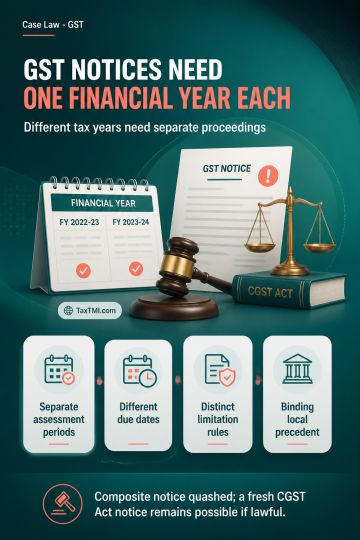
Year-wise GST tax periods make composite show cause notices impermissible, requiring separate proceedings despite contrary non-jurisdictional precedent.
Contents
Summary
Note
Bookmark
Share
✓ Copied successfully !
Print
Print Options
For full text, please login
Login to TaxTMI
Verification Pending
The Email Id has not been verified. Click on the link we have sent on
GST treats each financial year as a separate tax period for assessment, annual returns, demand limitation and recovery. A composite show cause notice covering multiple financial years improperly combines distinct periods with different due dates, limitation requirements, grounds and response obligations, and is therefore impermissible. Jurisdictional High Court precedent requiring year-wise notices remains binding on authorities notwithstanding a contrary High Court view and an in-limine dismissal of a special leave petition against that view, which does not trigger merger. The composite notice was quashed, with liberty to issue a fresh notice under the CGST Act if legally permissible.
GST treats each financial year as a separate tax period for assessment, annual returns, demand limitation and recovery. A composite show cause notice covering multiple financial years improperly combines distinct periods with different due dates, limitation requirements, grounds and response obligations, and is therefore impermissible. Jurisdictional High Court precedent requiring year-wise notices remains binding on authorities notwithstanding a contrary High Court view and an in-limine dismissal of a special leave petition against that view, which does not trigger merger. The composite notice was quashed, with liberty to issue a fresh notice under the CGST Act if legally permissible.
Note: It is a system-generated summary and is for quick reference only.
 TaxTMI
  TaxTMI
 of 4881