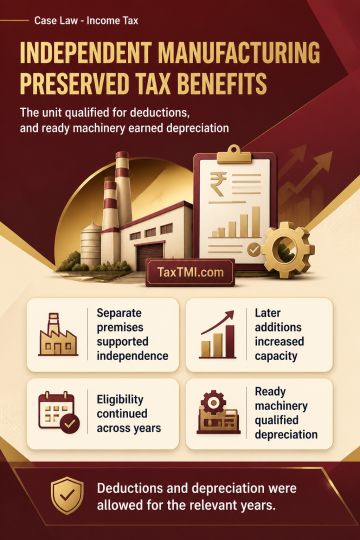
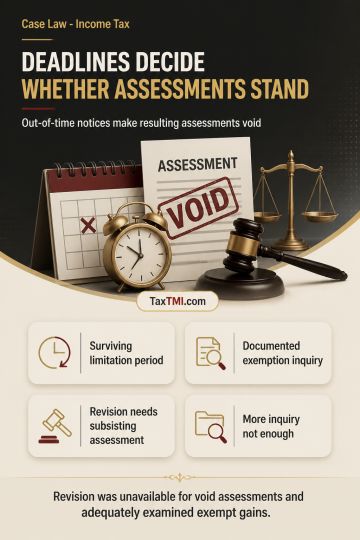
Independent manufacturing undertaking eligibility preserves Section 80IA/80IB deductions, while machinery kept ready for use qualifies for depreciatio...
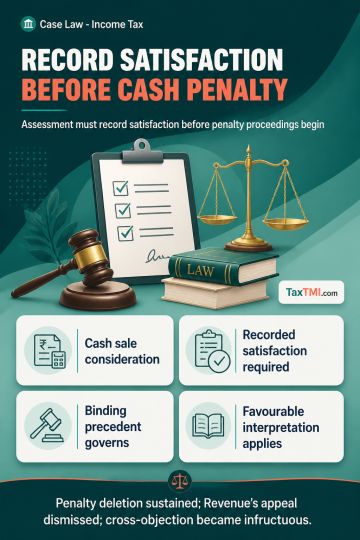
Assessing Officer Satisfaction Requirement Bars Penalty for Cash Receipt in Immovable-Property Sale Cases Where Initiation Lacks Recorded Satisfaction...
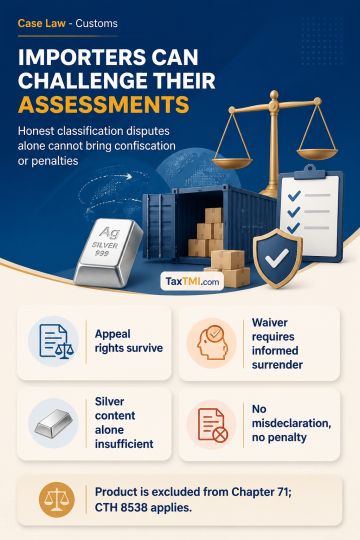
Self-assessed import entries remain appealable, while bona fide classification disputes without misdeclaration cannot justify confiscation or penaltie...
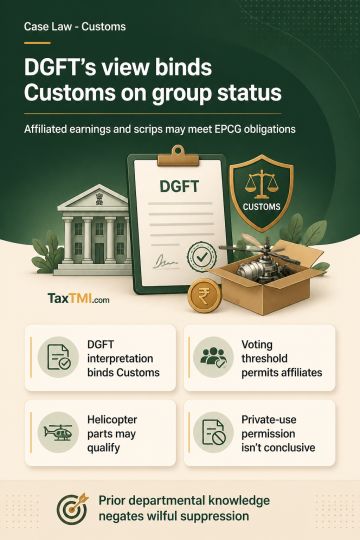
Actual-user customs exemption conditions permit turnkey project transfers when imported windmill components are exclusively used for installation and ...
Customs offence disqualification excludes civil contraventions, preventing refusal of a private bonded warehouse licence based solely on monetary pena...
GST treats each financial year as a separate tax period for...
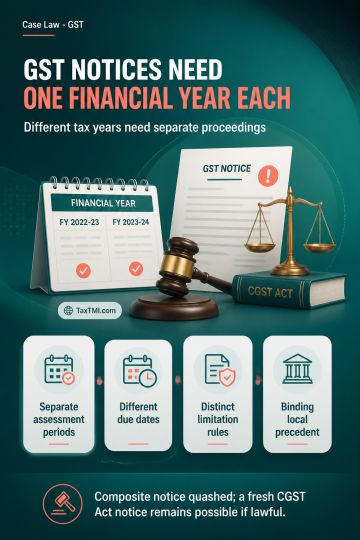
Year-wise GST tax periods make composite show cause notices impermissible, requiring separate proceedings despite contrary non-jurisdictional precedent.
Contents
Summary
Note
Bookmark
Share
✓ Copied successfully !
Print
Print Options
For full text, please login
Login to TaxTMI
Verification Pending
The Email Id has not been verified. Click on the link we have sent on
GST treats each financial year as a separate tax period for assessment, annual returns, demand limitation and recovery. A composite show cause notice covering multiple financial years improperly combines distinct periods with different due dates, limitation requirements, grounds and response obligations, and is therefore impermissible. Jurisdictional High Court precedent requiring year-wise notices remains binding on authorities notwithstanding a contrary High Court view and an in-limine dismissal of a special leave petition against that view, which does not trigger merger. The composite notice was quashed, with liberty to issue a fresh notice under the CGST Act if legally permissible.
GST treats each financial year as a separate tax period for assessment, annual returns, demand limitation and recovery. A composite show cause notice covering multiple financial years improperly combines distinct periods with different due dates, limitation requirements, grounds and response obligations, and is therefore impermissible. Jurisdictional High Court precedent requiring year-wise notices remains binding on authorities notwithstanding a contrary High Court view and an in-limine dismissal of a special leave petition against that view, which does not trigger merger. The composite notice was quashed, with liberty to issue a fresh notice under the CGST Act if legally permissible.
Note: It is a system-generated summary and is for quick reference only.
 TaxTMI
  TaxTMI
 of 4884