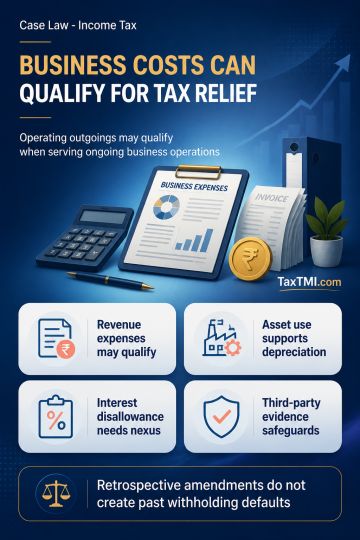
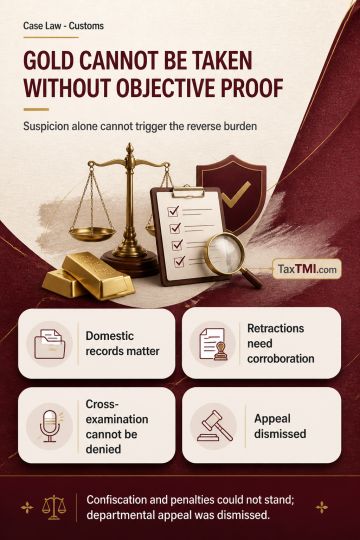
Business expenditure and depreciation rules allow operational outgoings while limiting disallowances for personal elements and unsupported third-party...
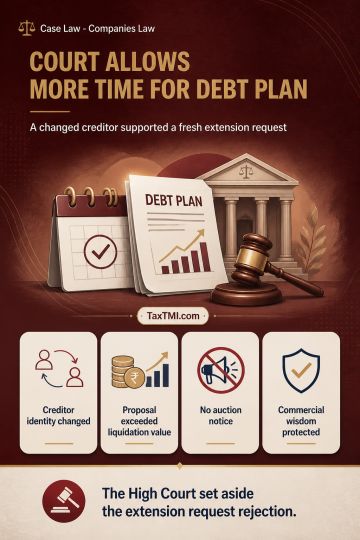
Compromise-and-arrangement extensions may accommodate debt assignment where creditor commercial judgment supports value maximisation and avoids proced...
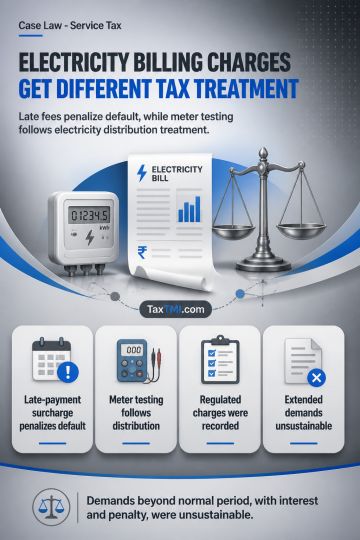
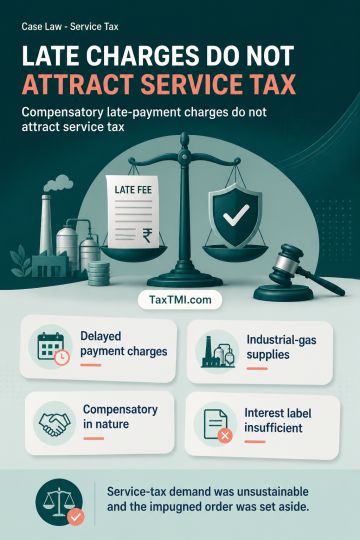
Delayed-payment surcharge is not taxable tolerance consideration where it penalises default, while meter testing follows electricity distribution trea...
Sufficient cause for delayed revenue income-tax appeals requires bona fides, due diligence and a credible explanation; otherwise limitation bars appea...
Inverted-duty-structure refunds remain available for unchanged-rate apparel supplies despite trader status and require tax-period-specific computation...
Page of 4881
Press 'Enter' after typing page number.
781 to 800 of 97618 Results
❮
❯
❯❯
0 / 200
Expand Note
Add to Folder
No Folders have been created
+
Are you sure you want to delete "My most important" ?
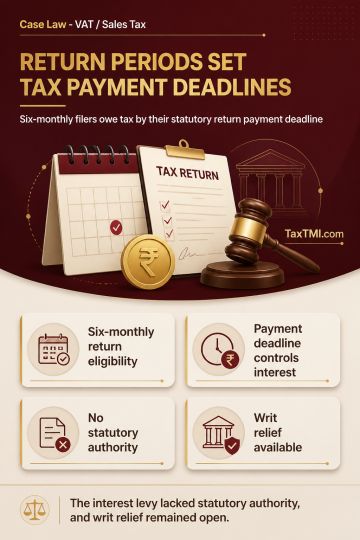
Interest for delayed tax payment under Section 30(2) arises only where tax remains unpaid by the due date fixed under the Act or rules. For a taxpayer entitled to file six-monthly MVAT returns based on the preceding year's undisputed tax liability, that return periodicity determines the payment due date. Turnover, perceived legislative intent, unjust enrichment, or alleged colourable tax planning cannot alter that statutory position. An interest levy imposed contrary to this framework lacks statutory authority. Where no statutory appeal lies against an interest demand, writ jurisdiction remains available; the separate credit-note mismatch challenge was not pursued.
Interest for delayed tax payment under Section 30(2) arises only where tax remains unpaid by the due date fixed under the Act or rules. For a taxpayer entitled to file six-monthly MVAT returns based on the preceding year's undisputed tax liability, that return periodicity determines the payment due date. Turnover, perceived legislative intent, unjust enrichment, or alleged colourable tax planning cannot alter that statutory position. An interest levy imposed contrary to this framework lacks statutory authority. Where no statutory appeal lies against an interest demand, writ jurisdiction remains available; the separate credit-note mismatch challenge was not pursued.
Note: It is a system-generated summary and is for quick reference only.
 TaxTMI
  TaxTMI
 of 4881