Loading...

⚠ ✕
❮ Top
☎ Help
☰
×

By creating an account you can:

Logo TaxTMI
Call Us / Help / Feedback✕

Contact Us At :

✉ E-mail: [email protected]

✆ Call / WhatsApp at: +91 99117 96707

For more information, Check Contact Us

FAQs :

To know Frequently Asked Questions, Check FAQs

Most Asked Video Tutorials :

For more tutorials, Check Video Tutorials

Submit Feedback/Suggestion :

Email :
Please provide your email address so we can follow up on your feedback.
Category :
Description :
Min 15 characters 0/2000
Make Most of Text Search ✕
  1. Checkout this video tutorial: How to search effectively on TaxTMI.
  2. Put words in double quotes for exact word search, eg: "income tax"
  3. Avoid noise words such as : 'and, of, the, a'
  4. Sort by Relevance to get the most relevant document.
  5. Press Enter to add multiple terms/multiple phrases, and then click on Search to Search.
  6. Text Search
  7. The system will try to fetch results that contains ALL your words.
  8. Once you add keywords, you'll see a new 'Search In' filter that makes your results even more precise.
  9. Text Search
╳
Add to...
You have not created any category. Kindly create one to bookmark this item!
✕
Create New Category
Hide
Title :
Description :
❮❮ Hide
❮ Default View
Expand ❯❯
Close ✕
🔎 Filters / Advanced Search ❯
TEXT

Press 'Enter' to add multiple search terms. Rules for Better Search

Search In
Main Text + AI Text ❯
  • Main Text
  • Main Text + AI Text
  • AI Text
Law:
---- All Laws---- ❯
  • ---- All Laws----
  • Income Tax
  • Direct Taxes
  • Benami Property
  • Central GST Laws
  • SGST - State GST Laws
  • Customs
  • FTP - Foreign Trade Policy
  • SEZ - Special Economic Zone
  • FEMA - Foreign Exchange Management
  • Companies Law
  • SEBI - Securities & Exchange Board of India
  • IBC - Insolvency and Bankruptcy
  • Law of Competition
  • PMLA - Money-Laundering
  • Indian Laws
  • Bill / Finance Bills
  • Wealth Tax
  • Service Tax
  • Central Excise
  • VAT / Sales Tax
Month:
---- All Months ---- ❯
  • ---- All Months ----
  • January
  • February
  • March
  • April
  • May
  • June
  • July
  • August
  • September
  • October
  • November
  • December
Year:
---- All Years ---- ❯
  • ---- All Years ----
  • 2026
  • 2025
  • 2024
  • 2023
  • 2022
  • 2021
  • 2020
  • 2019
  • 2018
  • 2017
  • 2016
  • 2015
  • 2014
  • 2013
  • 2012
  • 2011
Sort By: ?
In Sort By 'Default', exact matches for text search are shown at the top, followed by the remaining results in their regular order.
Relevance Default Date
☰   Show Results ❯
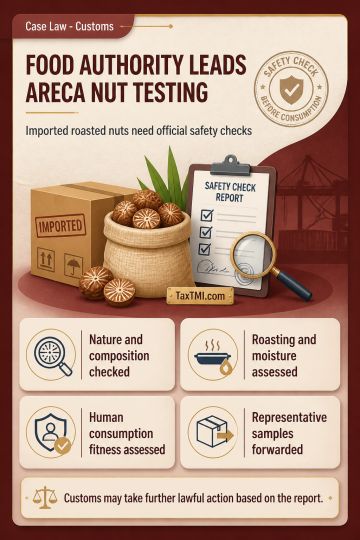
    Food safety testing of imported areca nuts requires examination by the competent authority, while Customs may pursue lawful further action.
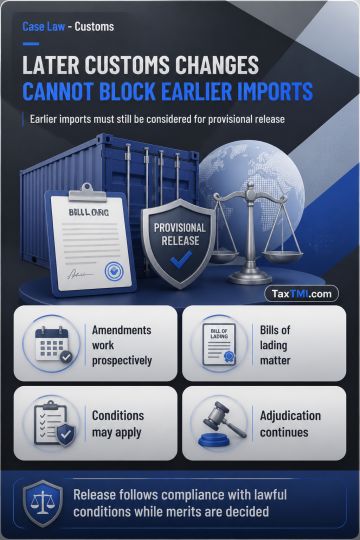
    Prospective customs notification amendments cannot bar provisional release consideration for earlier imports when bills of lading predate their commen...
    Prospective customs exemption amendments cannot govern pre-commencement imports, while provisional release remains subject to lawful conditions.
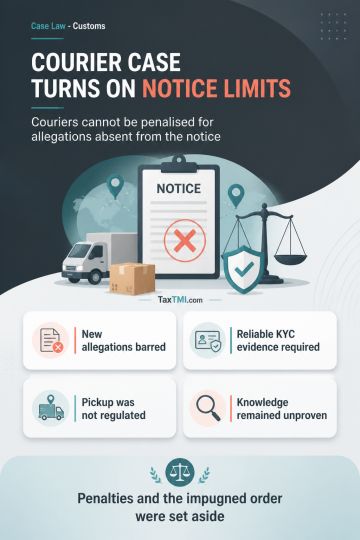
    Show-cause notice limits: courier penalties failed where new allegations, invalid KYC objections, and knowledge of prohibited exports were unproven.
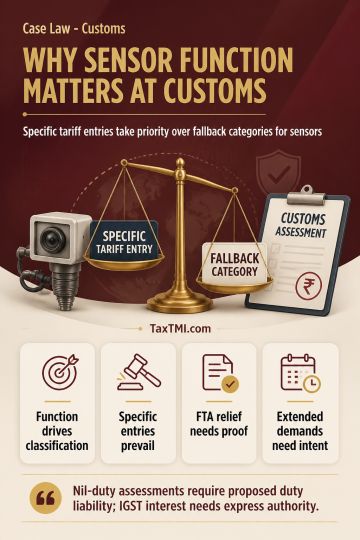
    Automotive sensor classification follows objective characteristics and specific tariff entries, limiting residual classifications, unsupported reclass...
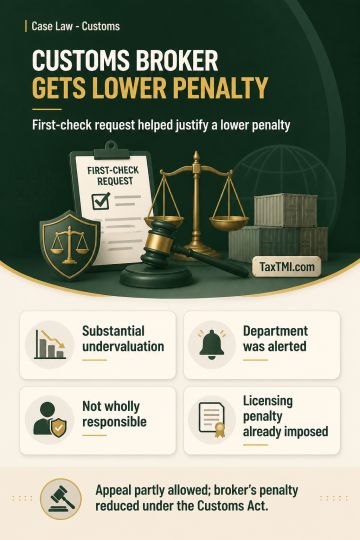
    Penalty proportionality in customs undervaluation reduced sanctions where the broker sought first check and lacked sole responsibility.
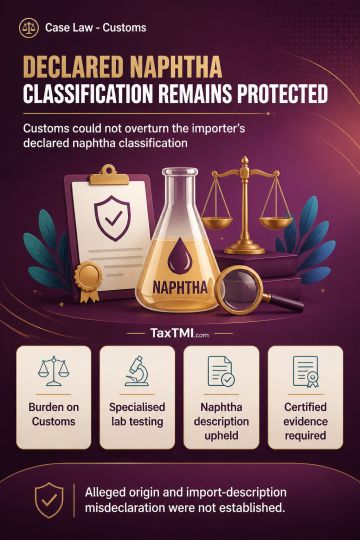
    Customs reclassification burden and certified electronic evidence protected declared naphtha classification and defeated alleged origin misdeclaration...
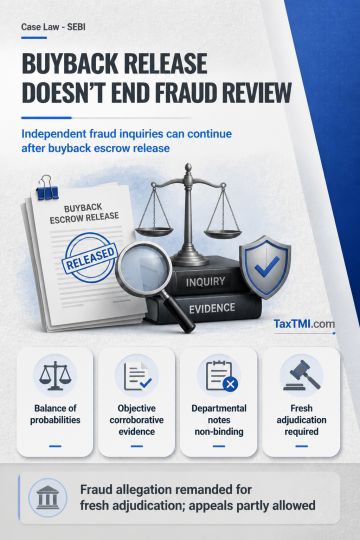
    Buyback escrow release does not immunise alleged market fraud, which requires evidence on the balance of probabilities.
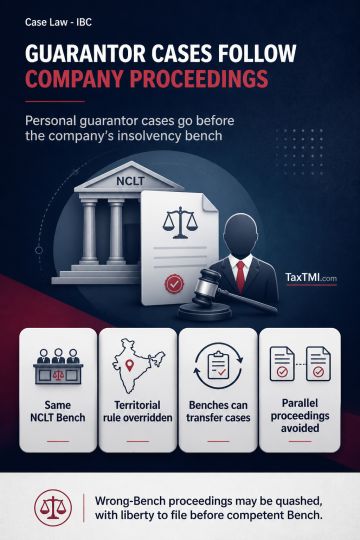
    Personal guarantor insolvency jurisdiction follows the corporate debtor's CIRP Bench, enabling inter-territorial transfer and preventing parallel proc...
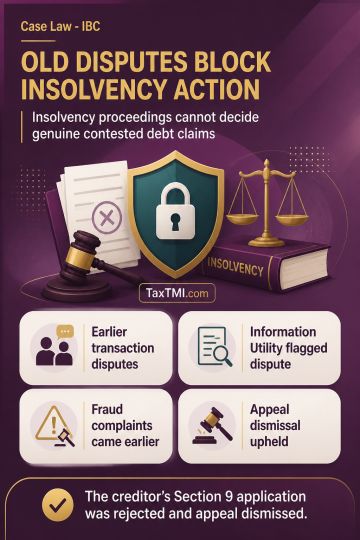
    Pre-existing operational-debt disputes prevent insolvency proceedings from determining contested transactions, sustaining rejection of the creditor's ...
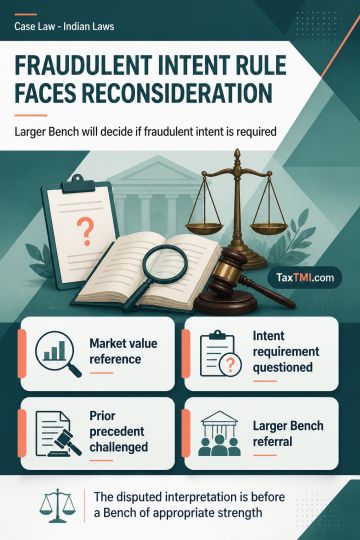
    Section 47-A undervaluation threshold: fraudulent intent requirement faces reconsideration after referral to a larger Bench for authoritative resoluti...
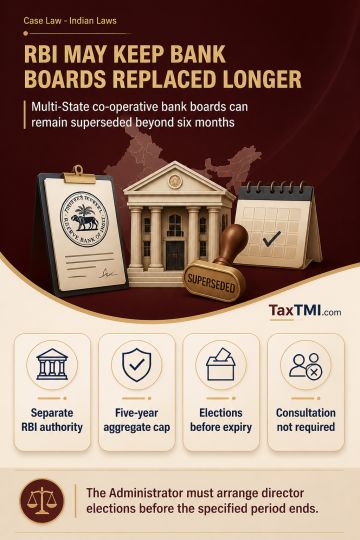
    RBI supersession powers over multi-State co-operative banks operate independently of the constitutional six-month ceiling and permit statutory extensi...
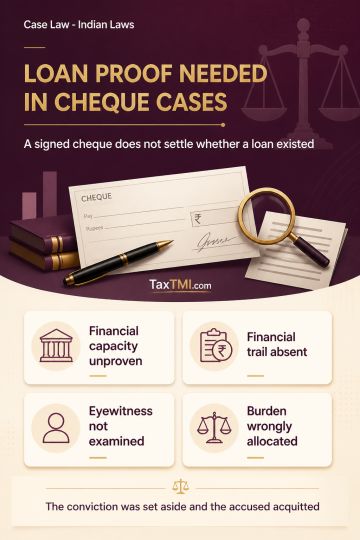
    Rebuttable cheque dishonour presumption fails where the complainant cannot prove loan capacity, financial trail, or material witness.
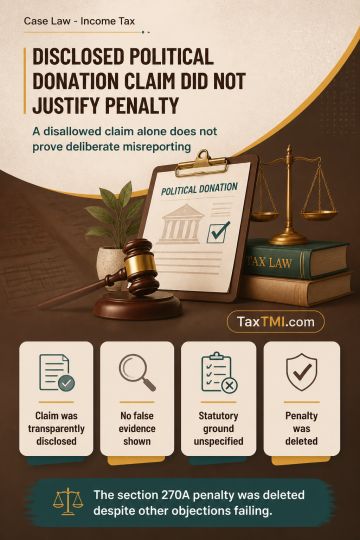
    Misreporting penalties require identified statutory grounds and evidence beyond a transparently claimed but disallowed political donation deduction.
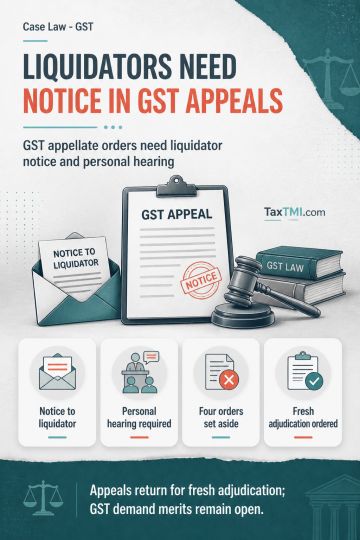
    Ex parte GST appellate orders against a wound-up company require notice and a personal hearing for its liquidator.
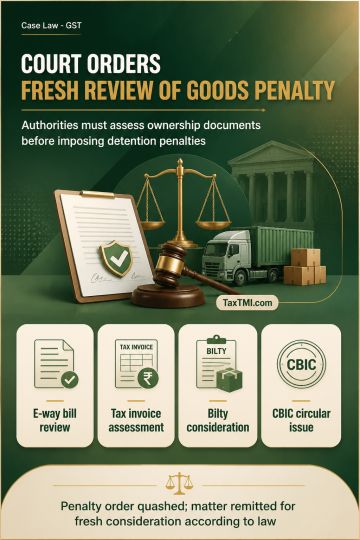
    Owner's transport documents in goods detention proceedings require consideration before penalties are imposed, requiring fresh adjudication.
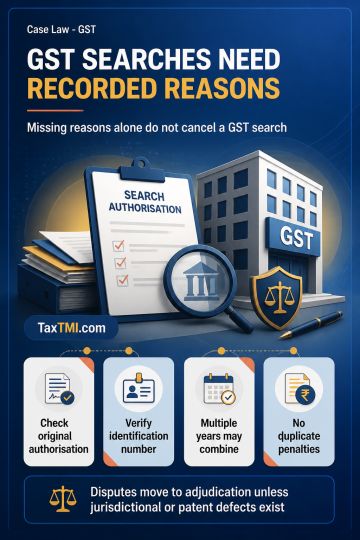
    GST search authorisations require recorded reasons, while investigation-based demands can proceed without prior return scrutiny.
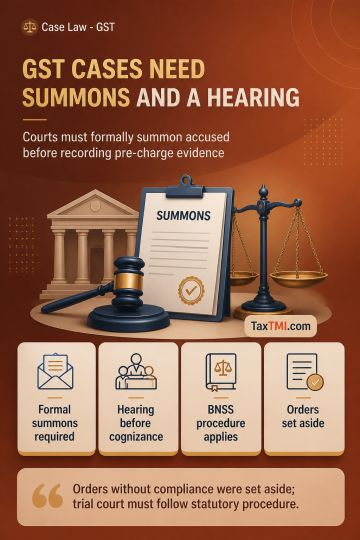
    Pre-charge evidence in GST prosecutions requires formal summoning and a hearing before cognizance under prescribed criminal procedure.
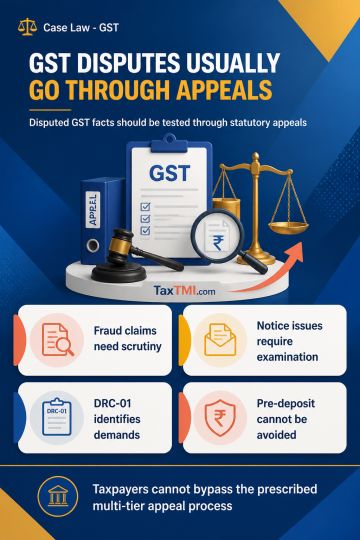
    Alternative statutory remedy limits writ challenges to GST determinations involving disputed factual questions and available appellate review.
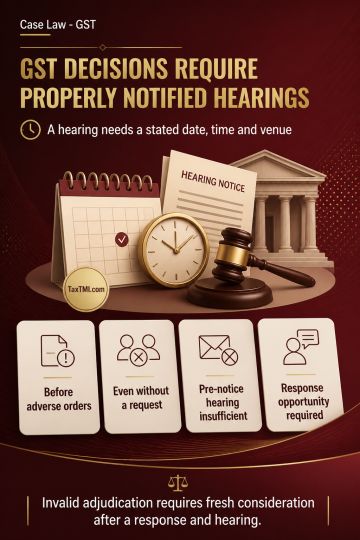
    Mandatory personal hearing in GST adjudication requires notice of a specific date, time and venue before adverse orders.
❮
❯
❯❯
Maximize Maximize Maximize
0 / 200
Expand Note
Add to Folder

No Folders have been created

+

Are you sure you want to delete "My most important" ?

NOTE:

Highlights
Showing Results for :
Reset Filters
Results Found:
Show All Summaries Hide All Summaries

Highlights

Back

All Highlights

Showing Results for :
Reset Filters
No Records Found

Highlights

Back

All Highlights

Clause 2(c) of the 2006 interest waiver/reduction scheme...

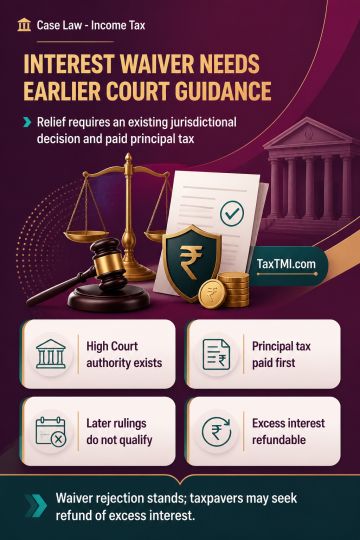
Interest waiver requires a pre-existing jurisdictional ruling and payment of principal tax; excess demand interest may be refunded.

Contents
Summary
Note

Note

-

Bookmark

Print

Print

Income Tax September 14, 2026 Case Laws HC
Clause 2(c) of the 2006 interest waiver/reduction scheme requires non-payment of tax to result from a jurisdictional High Court ruling that governed the taxpayer when advance tax was paid or the return was filed. A later ruling does not satisfy that condition, and waiver also requires prior payment of the principal income-tax demand. Challenges to the underlying interest liability cannot be pursued in proceedings confined to a waiver application. Interest under section 220(2) arises only after default in paying a demand served under section 156 within the prescribed period. Waiver rejection was sustained, while taxpayers may seek refund of excess section 220(2) interest if charged from the return-filing date.

Topics

Acts Income Tax