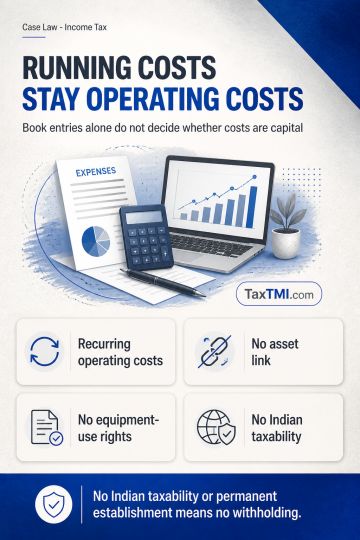
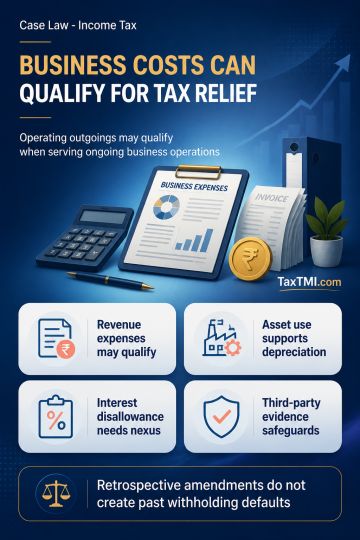
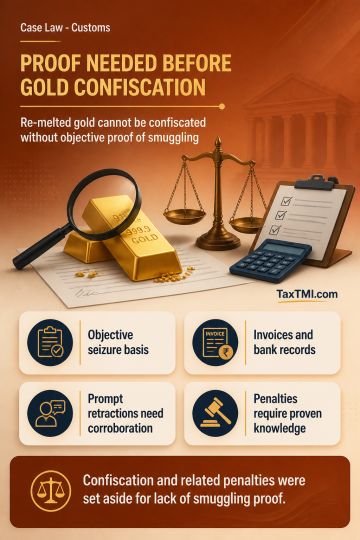
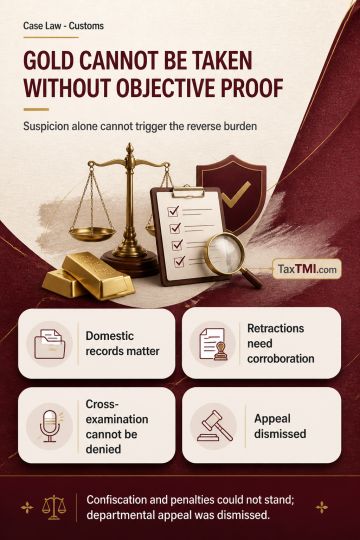
Business expenditure and depreciation rules allow operational outgoings while limiting disallowances for personal elements and unsupported third-party...
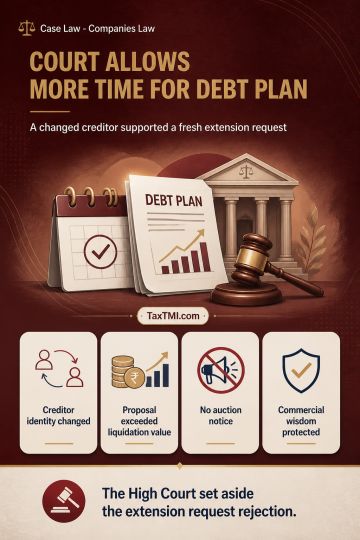
Compromise-and-arrangement extensions may accommodate debt assignment where creditor commercial judgment supports value maximisation and avoids proced...
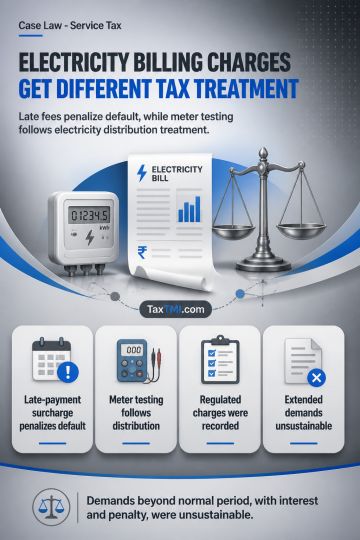
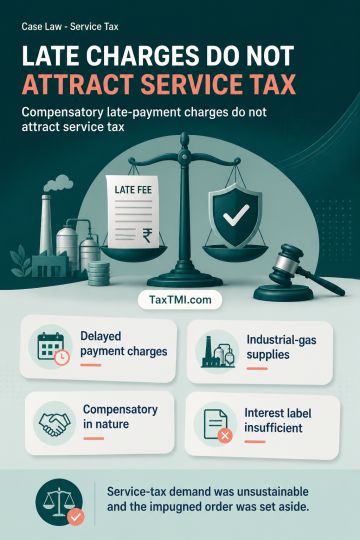
Delayed-payment surcharge is not taxable tolerance consideration where it penalises default, while meter testing follows electricity distribution trea...
Sufficient cause for delayed revenue income-tax appeals requires bona fides, due diligence and a credible explanation; otherwise limitation bars appea...
Inverted-duty-structure refunds remain available for unchanged-rate apparel supplies despite trader status and require tax-period-specific computation...
Page of 4881
Press 'Enter' after typing page number.
781 to 800 of 97618 Results
❮
❯
❯❯
0 / 200
Expand Note
Add to Folder
No Folders have been created
+
Are you sure you want to delete "My most important" ?
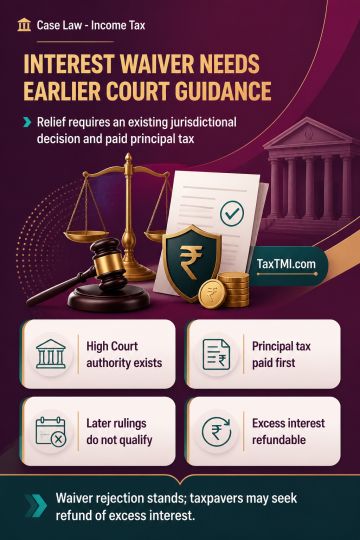
Clause 2(c) of the 2006 interest waiver/reduction scheme requires non-payment of tax to result from a jurisdictional High Court ruling that governed the taxpayer when advance tax was paid or the return was filed. A later ruling does not satisfy that condition, and waiver also requires prior payment of the principal income-tax demand. Challenges to the underlying interest liability cannot be pursued in proceedings confined to a waiver application. Interest under section 220(2) arises only after default in paying a demand served under section 156 within the prescribed period. Waiver rejection was sustained, while taxpayers may seek refund of excess section 220(2) interest if charged from the return-filing date.
Clause 2(c) of the 2006 interest waiver/reduction scheme requires non-payment of tax to result from a jurisdictional High Court ruling that governed the taxpayer when advance tax was paid or the return was filed. A later ruling does not satisfy that condition, and waiver also requires prior payment of the principal income-tax demand. Challenges to the underlying interest liability cannot be pursued in proceedings confined to a waiver application. Interest under section 220(2) arises only after default in paying a demand served under section 156 within the prescribed period. Waiver rejection was sustained, while taxpayers may seek refund of excess section 220(2) interest if charged from the return-filing date.
Note: It is a system-generated summary and is for quick reference only.
 TaxTMI
  TaxTMI
 of 4881