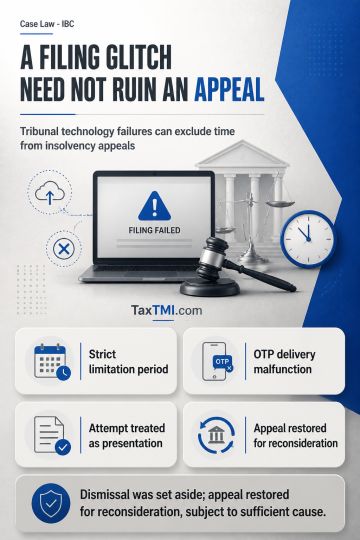
E-filing system failure permits exclusion of affected time in insolvency appeals, preventing tribunal technology defects from defeating timely filings...
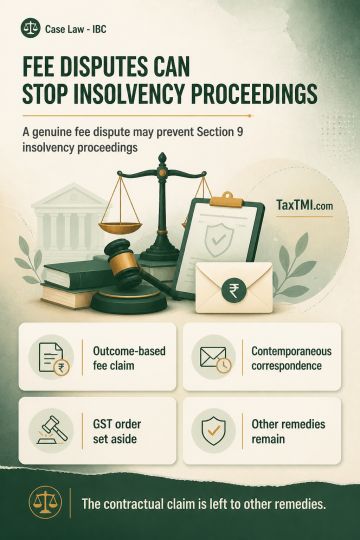
Pre-existing disputes over outcome-based professional fees can bar Section 9 insolvency proceedings where contractual entitlement requires investigati...
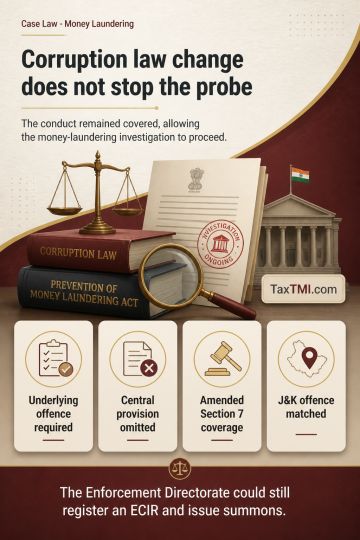
Corresponding scheduled offences preserve money-laundering jurisdiction despite repeal of the central corruption provision where conduct remains cover...
Section 147A, enacted retrospectively to exclude faceless Assessing Officers from issuing reassessment notices, was declared unconstitutional for violating separation of powers. A validating enactment may neutralise a judicial ruling only by curing the underlying defect or removing its legal basis; Section 147A neither amended the statutory faceless reassessment scheme nor addressed its requirement of randomised automated allocation. Notices under Section 148 must be issued through faceless, randomised automated allocation under the scheme framed under Section 151A. Jurisdictional Assessing Officers therefore lacked concurrent authority to issue such notices, and notices issued outside that process were set aside.
Section 147A, enacted retrospectively to exclude faceless Assessing Officers from issuing reassessment notices, was declared unconstitutional for violating separation of powers. A validating enactment may neutralise a judicial ruling only by curing the underlying defect or removing its legal basis; Section 147A neither amended the statutory faceless reassessment scheme nor addressed its requirement of randomised automated allocation. Notices under Section 148 must be issued through faceless, randomised automated allocation under the scheme framed under Section 151A. Jurisdictional Assessing Officers therefore lacked concurrent authority to issue such notices, and notices issued outside that process were set aside.
Note: It is a system-generated summary and is for quick reference only.
 TaxTMI
  TaxTMI
 of 4884