Effective hearing in GST adjudication requires actual opportunity to respond; ineffective service through a former auditor invalidated ex parte procee...
Third-party search material requires special assessment route, rendering general reassessment notices without jurisdiction when it forms the proceedin...
Transfer-pricing adjustments must be confined to international associated-enterprise transactions, while functionally dissimilar comparables remain ex...
Insolvency moratorium bars income-tax revision proceedings against corporate debtors until the moratorium ends, preserving merits for later determinat...
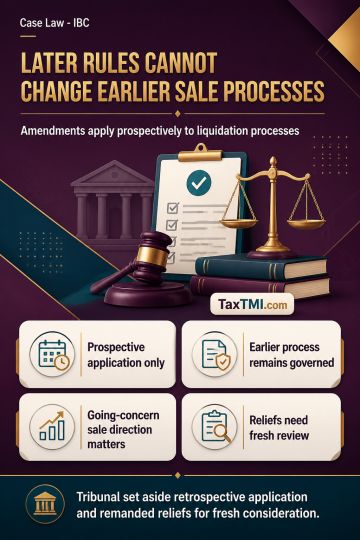
Liquidation-process amendments apply prospectively unless expressly made retrospective. A liquidation order fixing the liquidation commencement date and directing the liquidator to explore sale of the corporate debtor as a going concern initiates the governing process; later auction and sale steps merely implement it. A subsequent amendment therefore cannot alter rights and obligations under the regime applicable on that date. The Tribunal set aside retrospective application of the amendment and remanded consequential reliefs and concessions for fresh consideration according to law.
Liquidation-process amendments apply prospectively unless expressly made retrospective. A liquidation order fixing the liquidation commencement date and directing the liquidator to explore sale of the corporate debtor as a going concern initiates the governing process; later auction and sale steps merely implement it. A subsequent amendment therefore cannot alter rights and obligations under the regime applicable on that date. The Tribunal set aside retrospective application of the amendment and remanded consequential reliefs and concessions for fresh consideration according to law.
Note: It is a system-generated summary and is for quick reference only.
 TaxTMI
  TaxTMI
 of 4881