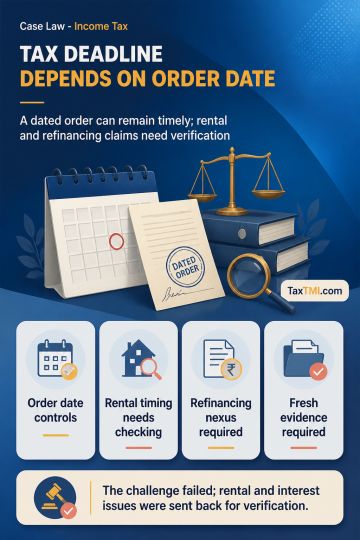
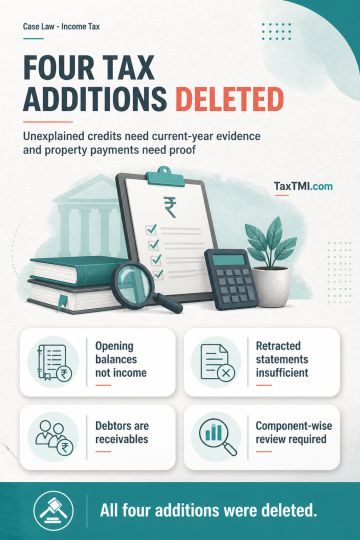
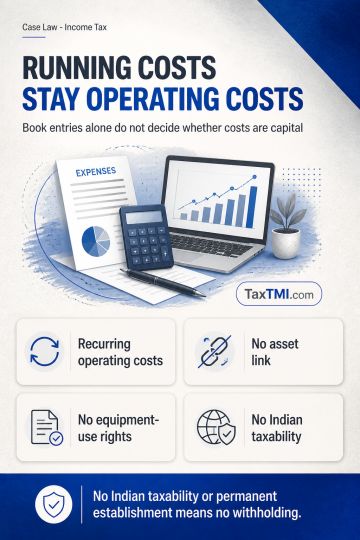
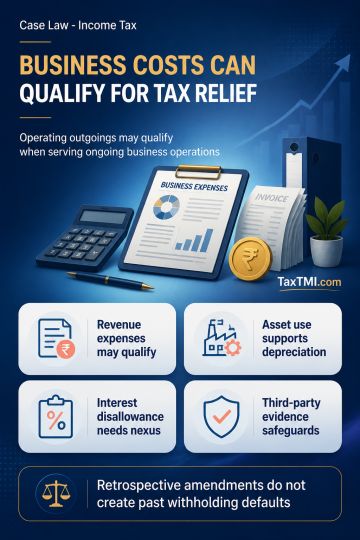
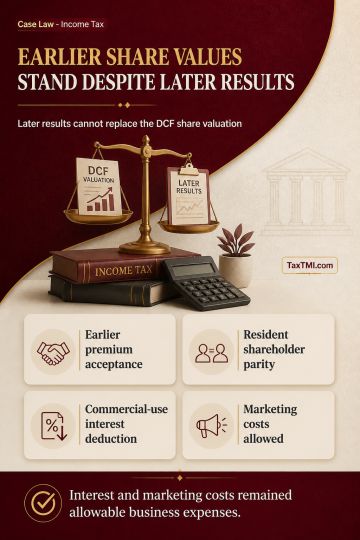
Business expenditure and depreciation rules allow operational outgoings while limiting disallowances for personal elements and unsupported third-party...
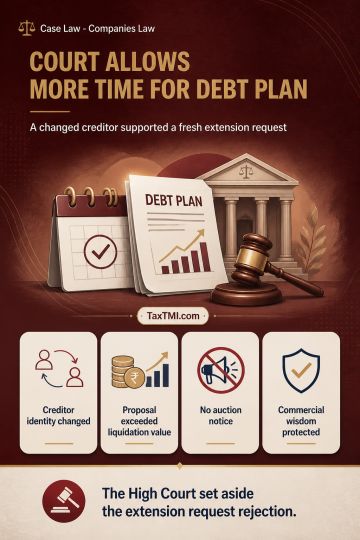
Compromise-and-arrangement extensions may accommodate debt assignment where creditor commercial judgment supports value maximisation and avoids proced...
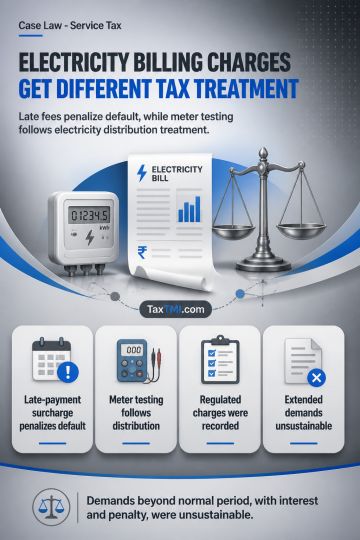
Delayed-payment surcharge is not taxable tolerance consideration where it penalises default, while meter testing follows electricity distribution trea...
Sufficient cause for delayed revenue income-tax appeals requires bona fides, due diligence and a credible explanation; otherwise limitation bars appea...
Inverted-duty-structure refunds remain available for unchanged-rate apparel supplies despite trader status and require tax-period-specific computation...
Page of 4881
Press 'Enter' after typing page number.
781 to 800 of 97618 Results
❮
❯
❯❯
0 / 200
Expand Note
Add to Folder
No Folders have been created
+
Are you sure you want to delete "My most important" ?
Section 14 of the Insolvency and Bankruptcy Code, read with its...
Insolvency moratorium bars income-tax revision proceedings against corporate debtors until the moratorium ends, preserving merits for later determination.
Contents
Summary
Note
Bookmark
Share
✓ Copied successfully !
Print
Print Options
For full text, please login
Login to TaxTMI
Verification Pending
The Email Id has not been verified. Click on the link we have sent on
Section 14 of the Insolvency and Bankruptcy Code, read with its overriding provision, prohibits the institution or continuation of proceedings against a corporate debtor during the insolvency moratorium. Income-tax revisional proceedings initiated or continued during that period cannot be sustained. A revisional order passed after commencement of the moratorium was set aside without examination of the proposed revision on merits. The proceedings may be revived and reframed after the moratorium ceases, if permitted by law, with a reasonable opportunity of hearing; all merits issues remain open.
Section 14 of the Insolvency and Bankruptcy Code, read with its overriding provision, prohibits the institution or continuation of proceedings against a corporate debtor during the insolvency moratorium. Income-tax revisional proceedings initiated or continued during that period cannot be sustained. A revisional order passed after commencement of the moratorium was set aside without examination of the proposed revision on merits. The proceedings may be revived and reframed after the moratorium ceases, if permitted by law, with a reasonable opportunity of hearing; all merits issues remain open.
Note: It is a system-generated summary and is for quick reference only.
 TaxTMI
  TaxTMI
 of 4881