Faceless assessment and registration procedures are updated through electronic communication, revised recovery rules, extended deadlines, and replacem...
Risk-based selective vessel boarding requires accurate declarations and preserves master and agent liability where physical inspections are not select...
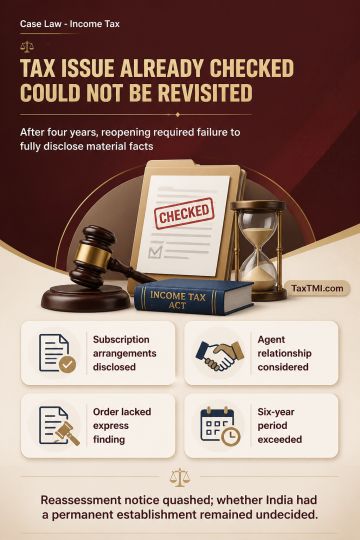
Permanent-establishment reassessment cannot revisit scrutinised disclosures; extended reopening fails without undisclosed material facts and within st...
Page of 4888
Press 'Enter' after typing page number.
661 to 680 of 97750 Results
❮
❯
❯❯
0 / 200
Expand Note
Add to Folder
No Folders have been created
+
Are you sure you want to delete "My most important" ?
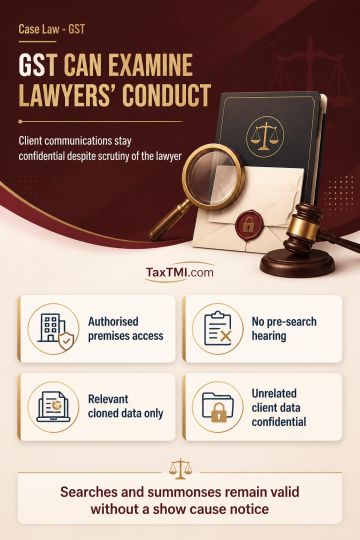
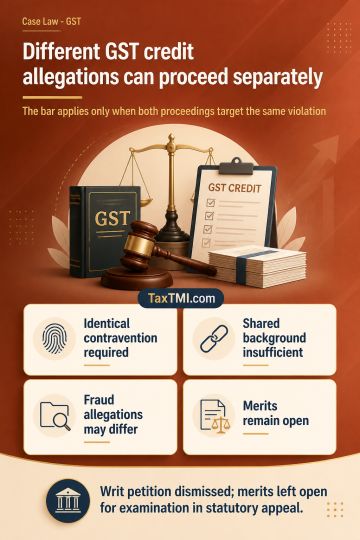
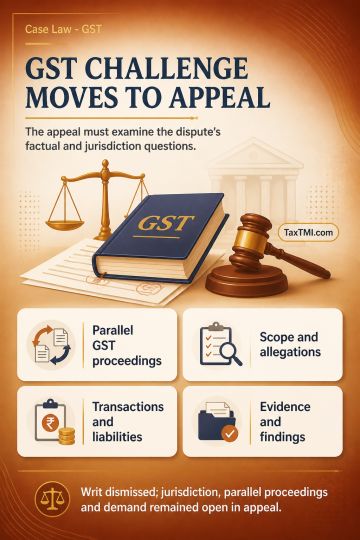
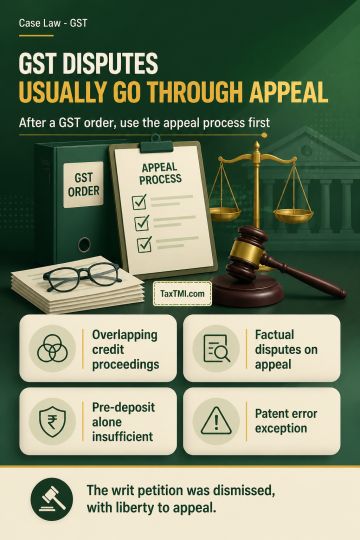
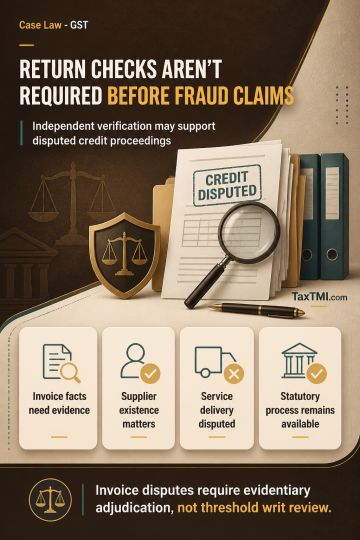
Section 61 return scrutiny is a pre-adjudicatory verification mechanism and is not a mandatory prerequisite for tax-determination proceedings under Section 74A. Rule 99 applies only where return scrutiny has actually commenced. Independent verification alleging that works-contract sub-contractors were fictitious or non-existent may provide the factual foundation for fraud-based input tax credit proceedings. Disputes over the actual existence of suppliers, provision of services, and genuineness of invoices require evidentiary adjudication rather than threshold writ review. A show-cause notice should not ordinarily be challenged in writ jurisdiction where statutory adjudication remains available and no jurisdictional defect or recognised exception is established.
Section 61 return scrutiny is a pre-adjudicatory verification mechanism and is not a mandatory prerequisite for tax-determination proceedings under Section 74A. Rule 99 applies only where return scrutiny has actually commenced. Independent verification alleging that works-contract sub-contractors were fictitious or non-existent may provide the factual foundation for fraud-based input tax credit proceedings. Disputes over the actual existence of suppliers, provision of services, and genuineness of invoices require evidentiary adjudication rather than threshold writ review. A show-cause notice should not ordinarily be challenged in writ jurisdiction where statutory adjudication remains available and no jurisdictional defect or recognised exception is established.
Note: It is a system-generated summary and is for quick reference only.
 TaxTMI
  TaxTMI
 of 4888